Clifton Karachi: Pakistan's Most Demanding Construction Market
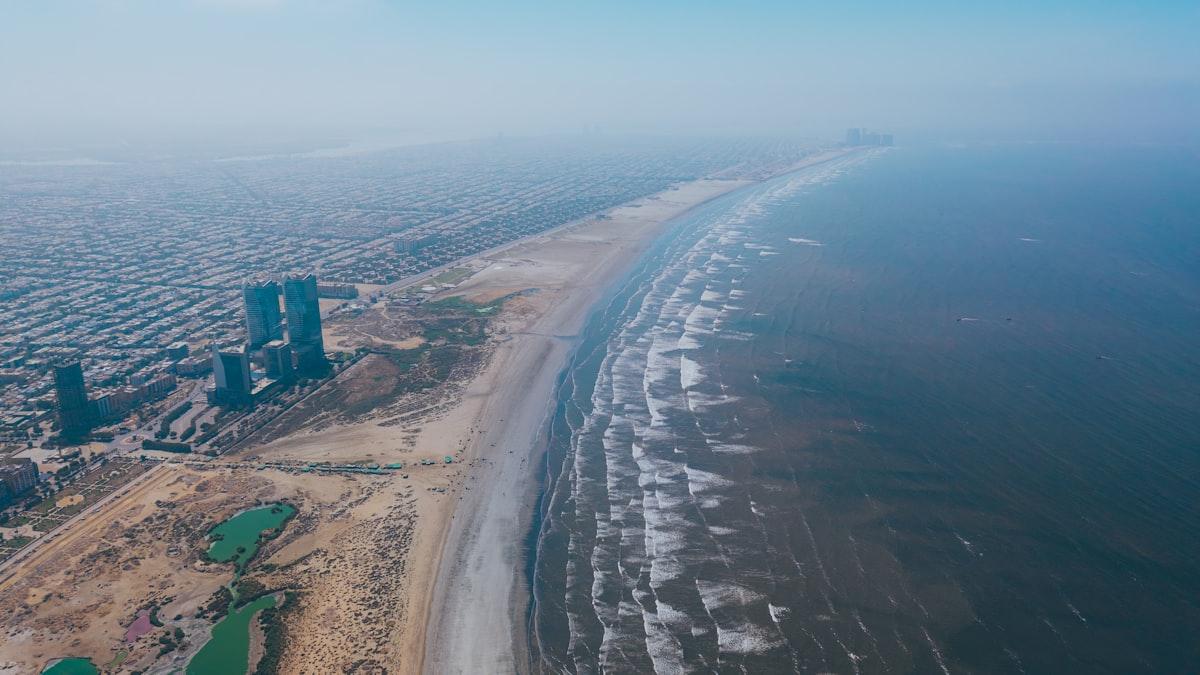
Clifton is Karachi's most prestigious residential and commercial address. Stretching across nine blocks from Do Talwar roundabout to the Arabian Sea, bordered by the Boat Basin to the north and Bath Island to the east, Clifton supports some of the country's highest-value properties, the city's most active luxury apartment development, and a renovation market driven by an affluent homeowner base that expects, and pays for, genuine quality.
Building or renovating in Clifton is not simply a matter of hiring any contractor and starting work. Three forces shape every construction decision here in 2025–2026:
- SBCA jurisdiction, Clifton falls under the Sindh Building Control Authority, which went through significant regulatory turbulence in 2025 before returning to stable ground
- Premium market standards, the Clifton buyer and rental market demands finishing specifications that differ materially from the rest of Karachi, and structures that fall short are measurably harder to sell or let
- Environmental factors, salt air, high humidity, and the physical proximity of many blocks to the Arabian Sea impose structural material requirements that are non-negotiable if long-term building integrity is the goal
This guide, current as of mid-2026, gives you the complete picture.
Clifton Block by Block: Development Character in 2025–2026
Clifton's nine blocks, plus Bath Island and Old Clifton, each have a distinct development profile. Knowing this before you commission work, whether new build or renovation, directly affects your brief, your budget, and your expectations.
Blocks 1–3: Established, Renovation-Heavy
The oldest residential zones in Clifton, Blocks 1–3 are characterised by established street grids, mature trees, and a housing stock largely built between the 1970s and early 1990s. The dominant construction activity here in 2025–2026 is full renovation and second-floor additions rather than new builds, most plots are already developed, but the underlying structures are ageing significantly.
Plumbing in these blocks often dates to original construction and is a high-priority remediation item. Electrical systems in older properties frequently predate modern load requirements (split ACs, inverters, CCTV, and smart home systems) and need comprehensive rewiring. External facades in Blocks 1–3 also show weathering from decades of salt-air exposure, making exterior remediation a standard component of any serious renovation here.
Block 4: Dense, High Demand
Block 4 is one of the most densely populated residential zones in Clifton and commands high property values for its central location. Construction here is driven by full demolition-and-rebuild projects, investors acquiring ageing properties at land value and constructing fresh builds to current market specification. Access is often the primary logistical challenge: streets are narrow, plot frontages are limited, and coordinating material deliveries requires an experienced site manager.
Block 5: Premium Residential Near the Sea
Block 5 carries the highest residential values among Clifton's block-based zones, owing to its proximity to Seaview and the broader seafront corridor. Construction and renovation projects here are predominantly high-specification, with homeowners investing in imported finishes, custom joinery, and smart home integrations. The sea-proximity material requirements described later in this guide apply most acutely to Block 5.
Block 6: The High-Rise and Mixed-Use Corridor
Block 6 is where Clifton's vertical transformation is most visible. A combination of SBCA approvals for high-rise commercial and mixed-use development, large amalgamated plot sizes, and investor demand has driven a wave of tower construction along Block 6's main arteries.
The COM-3 project in Block 6, Clifton, which received a revised SBCA NOC, is a 34-floor development comprising basement and upper basement parking, ground-floor showrooms, a recreation area, and luxury apartments and duplex units across the upper floors. Projects of this scale are now the benchmark for commercial development in Clifton's high-rise belt.
Block 7: The Commercial Core
Block 7 contains Clifton's most intensive commercial concentration, offices, restaurants, retail, and hospitality. Construction activity here focuses on commercial fit-outs, office renovation, and retail shopfront upgrades rather than residential. The Do Talwar and Boat Basin area in Block 7 is among Karachi's highest-footfall commercial zones, and commercial real estate here commands premium rental rates.
Blocks 8 and 9: The Off-Plan Frontier
Blocks 8 and 9 are the most active zones for new off-plan residential tower launches in 2025. With remaining undeveloped parcels becoming scarce elsewhere in Clifton, these blocks are attracting significant developer investment. Emaar's Bayview Towers Phase 2, featuring a mix of luxury sea-view apartments and smart-home-integrated units, is among the most anticipated launches in this corridor.
Buyers investing in off-plan projects in Blocks 8 and 9 are looking at handover timelines of 2026–2028, with developers projecting capital appreciation as these phases complete and the Clifton coastal corridor continues to mature.
Bath Island: Karachi's Most Exclusive Enclave
Bath Island, situated between Clifton and PIDC on Mohammed Ali Bogra Road, is surrounded by the Mai Kolachi Bypass, Boat Basin, Teen Talwar, and the PIDC flyover. It is Karachi's most exclusive residential enclave, with a property market almost entirely dominated by ultra-high-net-worth buyers. High-rise buildings are increasingly replacing individual houses as Bath Island's land values have made villa-scale construction economically transformative, developers are able to justify 30+ storey towers where individual houses once stood.
The Royal Elite Bath Island project is among the current flagship luxury developments, featuring high-rise apartments with limited units per floor for privacy and sea-view maximisation.
For bespoke villa builds and complete gut renovations on existing Bath Island properties, budgets for the project alone (excluding land) regularly exceed PKR 50–100M for high-specification builds.
Old Clifton: Heritage Character, Regulatory Sensitivity
Old Clifton, between Aga Khan Road and the older residential streets toward Saddar, has strong heritage character. Properties here include colonial-era bungalows and older apartment blocks that sit adjacent to historically sensitive streetscapes. Renovation projects in Old Clifton require careful handling, not simply for structural reasons, but because the area's character has been the subject of significant civic attention around Karachi's planning debates in recent years.
SBCA Regulations in Clifton: The Full 2025 Story
The regulatory environment in Clifton was one of the most dynamic in Karachi's construction history during early 2025. Understanding exactly what happened, and where things stand now, is essential before commissioning any project.
The Governing Framework: KBTPR 2002
Unlike DHA Karachi, which operates its own TP&BC Directorate, Clifton falls entirely under the Sindh Building Control Authority (SBCA). The governing document is the Karachi Building and Town Planning Regulations (KBTPR) 2002, administered by the SBCA under the authority of the Sindh government.
SBCA licenses architects, engineers, builders, and developers, approves building plans, issues construction NOCs, and enforces regulations across Karachi's SBCA-jurisdiction areas, which covers most of the city outside DHA and Cantonment-controlled zones.
March 2025: The Controversial Amendment
In March 2025, the SBCA Director General issued an amendment to the KBTPR 2002 that caused immediate and significant reaction across Clifton and other established residential areas. The amendment:
- Changed the "commercial use" category to "commercial / residential cum commercial use"
- Amended the "residential use" definition to permit educational, health, and recreational uses in residential premises
- Defined "recreational use" to include cafes, food courts, and social establishments in residential zones
For homeowners in Clifton's established blocks, particularly Old Clifton, Block 4, and Block 5, the implications were serious. Residential streets could effectively be commercialised under the new definition, threatening neighbourhood character, adding traffic load to already-strained roads, and undermining property values predicated on residential exclusivity.
Approximately two dozen residents of Old Clifton filed a petition in the Sindh High Court (SHC) challenging the amendments almost immediately after they were issued.
May 2025: The Amendment is Withdrawn
On 13 May 2025, SBCA issued Notification No. SBCA/PS to DG/2025/31, withdrawing the March amendments with immediate effect. The notification reinstated that:
- Residential zones must be used strictly for residential purposes
- All commercial activity permissions previously granted under the March notification were void
- The original KBTPR 2002 residential use definitions were restored
The withdrawal came in response to the SHC petition and the broader public backlash. It represents a significant win for residents of Clifton and other established residential areas who argued the amendments were a recipe for neighbourhood degradation.
What This Means for Your Project Today
As of mid-2026, the regulatory position in Clifton is stable:
- Residential plots remain strictly residential, any contractor or developer suggesting the 2025 amendments remain operative is incorrect
- Commercial development is appropriately confined to purpose-built commercial zones in Blocks 6, 7, and 9
- SBCA plan approval remains mandatory before any construction begins
- The high-rise tower developments in Blocks 6, 8, and 9 proceed under separately issued SBCA NOCs that have been in place regardless of the residential zone controversy
Getting SBCA Approval in Clifton: The Process
Building in Clifton requires an approved building plan from SBCA before any ground is disturbed. The process:
- Engage an SBCA-licensed architect to prepare drawings in compliance with KBTPR 2002, this is not optional; self-drawn plans are not accepted
- Submit building plans to SBCA along with:
- Ownership documents (registered sale deed or allotment letter)
- Site plan and scaled location plan
- Structural drawings (mandatory for buildings above G+1)
- SBCA application form with fee payment
- SBCA site inspection, an inspector visits the plot to verify ownership, access, and any existing structures
- Technical scrutiny, drawings are reviewed for compliance with plot coverage limits, setbacks, height restrictions, and parking requirements
- NOC / Approval Letter issued upon successful clearance
- Construction may commence; further inspections may be conducted at structural stages
Height and Coverage Limits in Clifton
Under current KBTPR 2002 provisions:
- Residential plots up to 399 sq yd: Maximum height of Ground + 2 floors (G+2); buildings are limited to 33 feet overall
- Larger residential plots: Subject to SBCA review with structural certification, additional floors may be approved with appropriate engineering sign-off
- Commercial and high-rise developments in approved zones require separate Director General-level NOCs and Environmental Impact Assessment clearances for tall buildings
These limits have been inconsistently enforced historically, Dawn has reported extensively on SBCA's challenges in controlling high-rise development in Clifton and Bath Island. However, the legal position is clear, and obtaining proper approvals protects your investment.
Construction Costs in Clifton Karachi: 2025–2026 Rates
Clifton commands a premium over the Karachi average. The main drivers: higher skilled-labour concentration, imported materials specification, salt-air structural requirements, access and logistics costs in a dense urban setting, and the finishing quality that the Clifton market demands.
Per Square Foot Rates
| Construction Type | Rate (PKR/sq ft) |
|---|---|
| Grey Structure | 2,800 – 3,400 |
| Standard Finishing | 4,000 – 5,500 |
| Luxury / High-Spec Finishing | 6,000 – 10,000+ |
| Basement (waterproofed to Clifton standard) | +600 – 900 |
| Seafront / Bath Island premium | +15–20% on all categories |
These rates are materially higher than the DHA Karachi averages for a reason: the Clifton rental and resale market prices in quality. Luxury apartments in Clifton are currently achieving 8–11% annual rental yields, and Clifton property values have appreciated at over 15% annually for the five years to 2025. The market punishes under-specification.
The Salt-Air Problem: Why Clifton Construction Requires Different Materials
This section is the most technically important in this guide for anyone building within 1 kilometre of Clifton's seafront, which includes all of Block 5, most of Bath Island, parts of Blocks 4 and 8, and Old Clifton.
Salt-laden air from the Arabian Sea penetrates building envelopes, attacks reinforcement steel through a process called chloride-induced corrosion, and degrades external masonry through salt crystallisation. In unprotected structures, this damage becomes visible within 5–7 years and accelerates rapidly: spalling concrete facades, rust staining from corroding rebar, failing external paint, and, in serious cases, structural integrity concerns.
The correct specification for Clifton seafront construction is not a premium upgrade. It is the baseline:
Structural elements (foundations, columns, beams, slabs):
- Sulphate-resistant cement (SRC), resists the sulphate and chloride attack that degrades ordinary Portland cement in coastal environments
- Epoxy-coated or marine-grade reinforcement bars, inhibit chloride penetration to the steel
- Increased concrete cover, KBTPR 2002 minimum cover requirements should be exceeded for seafront sites; 50mm clear cover rather than the standard 25–40mm
External envelope:
- Anti-carbonation facade coatings, specialised paints that prevent CO₂ and salt penetration into external brickwork and masonry
- Sealed window reveals and parapets, salt-air entry points at window junctions are a primary failure site; requires sealant specification beyond standard practice
- Stainless steel or hot-dip galvanised ironmongery, standard mild steel fixings, handrails, and brackets corrode rapidly in this environment
Waterproofing: Basement waterproofing in Clifton, particularly for seafront plots with high water tables, requires crystalline waterproofing systems (Xypex or equivalent) rather than basic bituminous membrane. Budget PKR 600–900/sq ft for basements in this zone, compared to PKR 400–600 in non-seafront DHA areas.
The cost premium for these specifications over standard construction is approximately 8–12% on the structural phase. The cost of remediating a building built without them, which routinely runs to PKR 5–15M on a mid-sized property, makes the investment straightforward.
Luxury Finishing Standards in Clifton: What the Market Expects
The Clifton rental and resale market has specific finishing expectations that differ from the rest of Karachi. Properties that meet these standards transact and let significantly faster, and at materially higher values, than those that do not:
Flooring: Italian or Spanish large-format marble and porcelain tiles are the Clifton standard for main living areas. Local quality tiles (Master Tiles, Shabbir Tiles, available from Karachi's Hyderi, Shershah, and Korangi markets) are acceptable for secondary spaces but will not satisfy the expectations of high-end tenants or buyers in Blocks 4, 5, or Bath Island.
Climate systems: Ducted central air conditioning is increasingly the standard for mid-to-large Clifton residences. Concealed splits are acceptable in apartments; visible wall-mounted units in a luxury property will draw negative comment in any valuation or letting appraisal.
Kitchen: Modular European-style kitchens with quartz or granite countertops. The local kitchen fabrication market in Karachi (primarily concentrated in SITE and Shah Faisal) produces quality work, but imported modular kitchen systems (available through dealers in Korangi and DHA commercial areas) are the expectation at the top of the Clifton market.
Ceilings: Gypsum board false ceilings with integrated LED cove lighting and concealed downlights are standard. POP (Plaster of Paris) ornamental designs have fallen out of favour in modern Clifton interiors.
Smart home and security: Adoption of smart home systems has accelerated sharply since 2022 across DHA and Clifton. Video intercom, CCTV integration, automated lighting and climate control, and solar panel installation (given Karachi's persistent load-shedding) are now features that buyers in Bath Island and Blocks 4–5 expect rather than appreciate as extras.
The Clifton Renovation Market: What is Driving Demand
The bulk of construction enquiries in Clifton's established blocks (1–5, Old Clifton) in 2025–2026 are for renovation and extension rather than demolition and new build. Four forces are driving this:
Ageing infrastructure. Properties built in the 1980s–1990s have plumbing and electrical systems approaching or past their design life. Galvanised iron water pipes corrode internally, restricting flow and contaminating water quality. Electrical boards rated for 1990s loads are inadequate for modern homes running ACs in every room, solar inverters, EV chargers, and smart home systems.
Lifestyle transformation. The post-2020 shift to home working has driven significant demand for home-office conversions, open-plan kitchen renovations, and master bedroom suite upgrades. Homeowners who have not touched their properties in 15 years are finding that their layouts do not support modern living patterns.
Rental yield optimisation. Landlords who invest in upgraded bathrooms, modular kitchens, and cosmetic finishes are achieving meaningfully higher monthly rents. Given Clifton's 8–11% rental yield environment, renovation expenditure on a Clifton property can generate very strong payback.
Energy independence. Solar panel installation has become a standard component of any serious Clifton renovation since Karachi's load-shedding crisis intensified. Inverter-grade battery systems, rooftop solar arrays, and LED-throughout replacements are being added to renovation scopes across all Clifton blocks.
Typical Renovation Costs in Clifton (2025)
| Renovation Type | Estimated Cost (PKR) |
|---|---|
| Full bathroom renovation (mid-range) | 350,000 – 600,000 |
| Full bathroom renovation (luxury) | 700,000 – 1,500,000+ |
| Kitchen renovation – standard modular | 600,000 – 1,200,000 |
| Kitchen renovation – premium import | 1,500,000 – 3,000,000+ |
| Full electrical rewire (3-bed apartment) | 250,000 – 450,000 |
| Plumbing replacement (3-bed apartment) | 200,000 – 400,000 |
| Exterior facade remediation + paint | 180 – 350/sq ft |
| False ceiling installation (per sq ft) | 180 – 280 |
For a full room-by-room renovation cost breakdown across Karachi, see our Home Renovation Cost Guide 2025.
Infrastructure Realities in Clifton: What to Factor In
Clifton's infrastructure is under sustained pressure. As Dawn and The News have reported extensively, the city's underground pipeline systems, laid for a much lower density, are inadequate for the load that high-rise development has imposed on them. Residents near Teen Talwar and along the Block 6 commercial belt report recurrent sewage overflow issues.
For those building or renovating in Clifton, the practical implications are:
Water supply: Maintain adequate storage (a minimum of 2–3 days' reserve capacity is standard in Clifton). Karachi Water and Sewerage Board (KWSB) supply is erratic across DHA and Clifton, and experienced builders factor in overhead and underground tank sizing that accommodates real-world supply patterns.
Sewage connections: Verify your connection to the main sewer line before starting any extension or addition that will increase load. New connections in Block 6 and adjacent areas have faced SBCA scrutiny in the context of the broader high-rise infrastructure debate.
Road access during construction: Clifton's dense residential blocks have narrow streets. Material delivery scheduling, crane positioning for high-floor work, and temporary road occupancy need to be coordinated with local traffic realities. Experienced Clifton contractors know which approaches work and which create problems.
Choosing a Construction Company for Clifton Karachi
Building in Clifton requires a contractor who understands both the SBCA approval process and the premium standards the market demands. Five things to verify:
- SBCA-licensed architect partnership: The firm should work with a registered architect for plan preparation, this is a legal requirement, not a recommendation.
- Seafront construction experience: Can they demonstrate that they specify and use the correct materials for salt-air environments? Ask specifically about their concrete specification for coastal sites.
- Premium finishing track record: Can they show completed projects in Clifton, particularly in Blocks 4, 5, or Bath Island, at the finish level the area demands?
- Transparent pricing: Itemised quotes only. Lump-sum contracts in Clifton regularly obscure specification downgrades that only become visible after handover.
- Renovation depth: In Clifton's established blocks, renovation expertise is as important as new-build capability. Ask for examples of full renovation projects, gut refits, plumbing replacements, facade work, not just new construction.
- Labour management capability: Clifton's premium market attracts experienced tradesmen, but scope creep disputes are a reality at every specification level. When a design changes mid-project or an unforeseen condition arises, unmanaged labour will inflate their rates significantly and may become hostile. An experienced Clifton contractor handles all scope variations through a structured change order process and negotiates with subcontractors on your behalf, you should never have to manage a confrontation with a tiler or plumber over a mid-project change.
- SBCA approval experience in Clifton specifically: Clifton's regulatory history, including the March 2025 amendment controversy and its reversal, makes it essential that your builder has current, active SBCA submission experience in this area. General SBCA knowledge is not the same as knowing how Clifton submissions are actually handled.
Naffees & Sons has completed residential and commercial projects across Clifton's blocks for over five decades, including high-specification renovations in Bath Island, new builds in Blocks 4 and 5, and commercial fit-outs in the Block 7 commercial belt. Our team manages the complete SBCA approval process and every stage of construction and handover. Request a free Clifton consultation →
Frequently Asked Questions: Building in Clifton Karachi
Which regulatory body governs construction in Clifton? The Sindh Building Control Authority (SBCA) governs all construction in Clifton. All building plans must be approved by SBCA, not DHA, not the Cantonment Board, before construction begins.
Can I build commercially on a residential plot in Clifton after the 2025 SBCA amendments? No. The March 2025 amendments were formally withdrawn by SBCA on 13 May 2025 following a Sindh High Court challenge. Residential plots in Clifton are strictly residential.
How many floors can I build on a residential plot in Clifton? For plots up to 399 sq yd, the current limit is Ground + 2 floors (G+2). Larger plots may qualify for additional floors with structural certification and SBCA approval. High-rise development is limited to purpose-built commercial and mixed-use zones.
Do I really need to use special materials near the sea? Yes, and this is one of the most important decisions in any Clifton build. Properties within approximately 1 km of the seafront need sulphate-resistant cement, epoxy-coated rebar, and sealed external systems. The cost premium is 8–12% on structural phase. Structures built without these specifications show visible deterioration within 5–7 years.
What is driving the renovation boom in Clifton? Primarily: ageing infrastructure in properties built in the 1980s–90s, lifestyle renovation demand (home offices, open-plan kitchens), rental yield optimisation by landlords, and solar/energy system integration. All are converging to drive strong renovation demand across Blocks 1–5 and Old Clifton.
What are current rental yields for Clifton properties? Luxury apartments in Clifton are yielding 8–11% annual rental returns. Properties renovated to current market specification achieve the upper end of this range significantly faster than unimproved stock.
Start Your Clifton Project with Naffees & Sons
Whether you are building from ground up in Bath Island, renovating a Block 3 family home, or commissioning a commercial fit-out in the Block 7 corridor, our team brings the expertise, material knowledge, and SBCA experience your project requires.
Chat with our team on WhatsApp: Message us on WhatsApp
Also read: Construction Company in DHA Karachi – Complete Guide | House Construction Cost in Karachi 2025 | Best Construction Company in Karachi | Our Project Portfolio