Liaquatabad was originally known as Lalukhet, agricultural land bought from a man named Lalu before Partition, and was renamed after Pakistan's first Prime Minister, Liaquat Ali Khan, as it filled with Urdu-speaking migrant families in the years following 1947. Formalised as Liaquatabad Town in 2001 under the Sindh Local Government Ordinance, it now comprises 11 union councils, including Rizvia Society, Firdous Colony, Super Market, Sharifabad, and Qasimabad, and sits just south of Nazimabad and southwest of North Nazimabad. With a population of 547,706 recorded in the 2023 census packed into roughly 6 sq km, Liaquatabad is one of the most densely built residential areas in this part of Karachi, density that shapes almost every practical decision a builder makes here. This guide covers what building or renovating in Liaquatabad actually costs and requires in 2025–2026.
Construction Costs in Liaquatabad at a Glance (2026)
Liaquatabad's density, core zones exceed 50,000 people per square kilometre, means the biggest cost variable here isn't material pricing, which is the same as everywhere in Karachi, but logistics: how easily materials, equipment, and labour can actually move in and out of a given plot.
| Specification | Cost Per Sq Ft (PKR) | What You Get |
|---|---|---|
| Demolition (existing structure) | 90,000 – 310,000 (lump sum) | Full demolition and debris clearance, size-dependent, higher where lane access is tight |
| Grey structure only | 2,900 – 3,600 | Foundation, columns, slabs, brickwork, no finishing |
| Economy turnkey | 3,900 – 5,000 | Local tiles, standard fixtures, minimal design |
| Standard turnkey | 4,900 – 6,400 | Quality cement and steel, tiled bathrooms, mid-range woodwork |
| Premium turnkey | 6,900 – 10,800+ | Imported tiles, designer bathrooms, premium woodwork |
For a 100–120 sq yd plot, the common size across most of Liaquatabad's older residential blocks, a full double-storey rebuild at standard specification runs roughly PKR 62 lacs to 86 lacs, excluding land value, demolition, professional fees, and SBCA permits. Add a further logistics premium of roughly 5–10% for plots on lanes too narrow for standard-size delivery trucks, a genuinely common condition in the older parts of Liaquatabad.
Cement currently runs PKR 1,330–1,440 per 50kg bag and Grade 60 steel rebar PKR 238–258 per kg across Karachi (CementRate.pk, June 2026), the same city-wide input costs that apply everywhere, since neither cement nor steel pricing varies meaningfully by neighbourhood.
Why Liaquatabad Construction Is Different: Density and Party-Wall Building
Liaquatabad's construction market is shaped more by physical density than by any other single factor, more than in Nazimabad, more than in F.B. Area, and considerably more than in newer, wider-laid-out North Karachi:
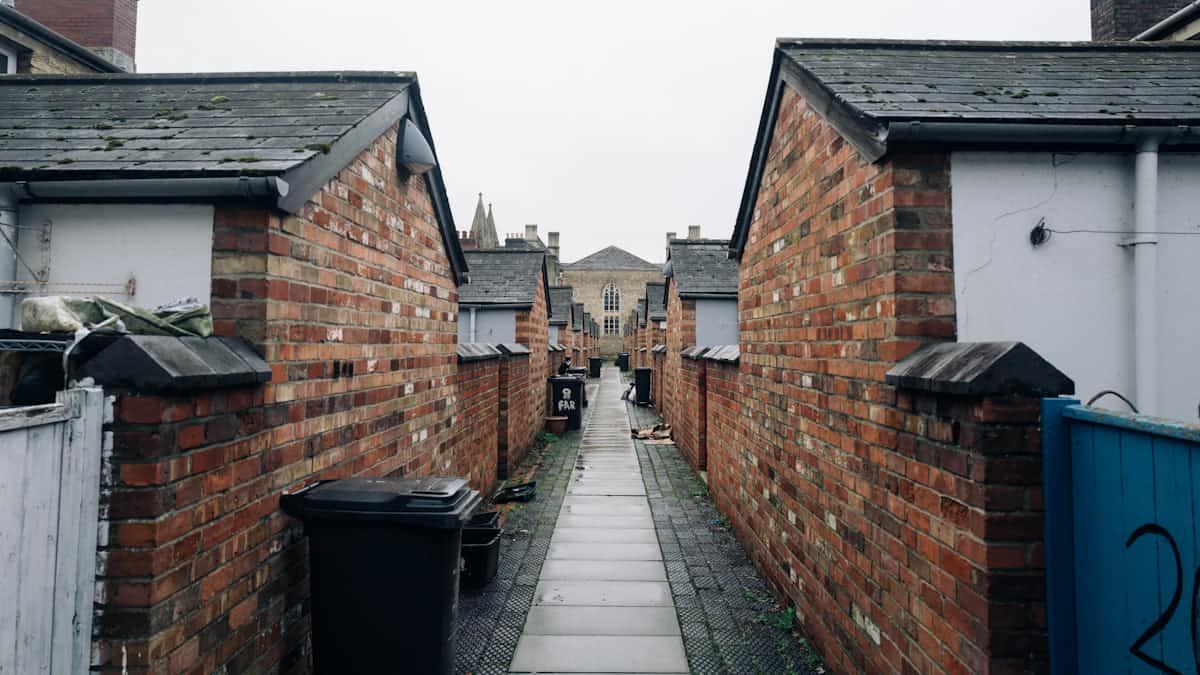
Narrow lanes are the default, not the exception. Much of Liaquatabad, particularly in the older core around Lalukhet and parts of Firdous Colony, was built up organically over decades of post-Partition settlement rather than platted to a wide modern road standard from the outset. Many internal lanes cannot accommodate a standard ready-mix concrete truck or a full-size material delivery vehicle, smaller trucks, hand-carrying, and staged material delivery are routine here, and any cost estimate that doesn't account for this will run over budget.
Party-wall construction is the norm across most of the area. With plots built directly against their neighbours on most sides, a Liaquatabad rebuild almost always involves at least one, often two, shared or immediately adjacent boundary walls. This requires careful coordination with neighbours before excavation, informal, undocumented boundary understandings from decades ago are common, and disputes during foundation work are one of the most frequent sources of delay we see in this area specifically.
Rizvia Society and Firdous Colony have distinct construction profiles worth knowing. Rizvia Society is a more organised residential enclave with multi-storey apartment blocks and row housing, generally with somewhat better planned access than the older core. Firdous Colony, by contrast, is characterised by compact housing with informal vertical expansion in many buildings, floors added over time without always following a unified structural plan. A builder assessing a Firdous Colony rebuild needs to look harder at the existing structure's actual condition than one working in the more uniformly planned Rizvia Society.
Building Regulations in Liaquatabad: What You Must Know
Liaquatabad falls under KDA (Karachi Development Authority) land jurisdiction and SBCA (Sindh Building Control Authority) building control, the same regulatory structure as Nazimabad, North Nazimabad, and F.B. Area.
Step 1: Building Plan Approval
- Plot allotment or ownership documents, including clear chain of title, inheritance-related informal subdivision is common here, similar to Nazimabad
- Site plan showing plot boundaries, setbacks, and all party-wall conditions with neighbouring structures, this needs to be thorough given how tightly built most Liaquatabad blocks are
- Architectural drawings and structural drawings, both signed by a registered architect and PEC-registered structural engineer
Step 2: Plot Coverage and Height Rules
| Building Parameter | KDA Requirement (Liaquatabad) |
|---|---|
| Maximum ground floor coverage | 65–75% of plot area |
| Front setback | 3–6 ft, often minimal or waived on narrow-lane plots |
| Side setbacks | Frequently waived given the prevalence of genuine party-wall conditions, subject to documented neighbour consent |
| Maximum height (residential) | 4 storeys without special approval |
| Parking requirement | Mandatory in principle, though a significant share of older Liaquatabad plots are too small or too access-constrained to accommodate off-street parking, verify feasibility before finalising the design |
Important: SBCA has increased enforcement in dense, older areas like Liaquatabad in recent years, including against informal vertical additions built without approved drawings, a pattern that was historically common in parts of Firdous Colony. An unapproved addition cannot be sold or mortgaged cleanly and faces demolition risk regardless of how long it has stood.
Some pockets of Liaquatabad and neighbouring older colonies originated as katchi abadis and carry a separate regularization history from the standard KDA/SBCA framework above, with a different lease structure and a tighter Ground Plus One height cap. If your specific plot's title traces back to an informal settlement rather than a standard allotment, confirm its status before assuming the coverage and height table above applies; our katchi abadi regularization guide covers what that separate process actually requires.
Step 3: Utility Connections
- KWSB water: Most Liaquatabad plots have an existing connection from decades past, but pressure and reliability vary block to block. A rebuild or added floor typically needs a capacity reassessment, start this early.
- K-Electric: New or upgraded meter connection required post-construction; budget 1–3 months for a permanent connection.
- Sewerage: Liaquatabad's sewerage network is old and, in the densest blocks, has seen informal modifications and diversions over the decades that don't always match official scheme maps. Confirm the exact main line location with KDA before finalising your foundation layout.
Soil and Foundation Considerations in Liaquatabad
Liaquatabad sits on generally stable ground consistent with the surrounding central Karachi townships, but its density introduces specific foundation planning concerns:
Excavation directly against existing neighbouring foundations. With party-wall construction the norm, foundation work in Liaquatabad frequently requires careful shoring to avoid disturbing or undermining an adjacent, already-standing structure, a technical and coordination challenge that is more central to a Liaquatabad rebuild than almost anywhere else on this list.
Decades of informal additions affect fill consistency. Similar to Nazimabad, many Liaquatabad plots have seen informal room additions, boundary changes, and, in parts of Firdous Colony, informal vertical extensions over the decades, often without engineering oversight. This can leave uneven or partially compacted fill that a proper soil test will reveal before it becomes a foundation problem.
Soil testing: A basic geotechnical investigation (3–4 bore holes to 5–8m depth) costs PKR 25,000–60,000 in Karachi. On a Liaquatabad rebuild with party-wall conditions and an unknown fill history, this is inexpensive insurance against both foundation issues and neighbour disputes.
How Naffees & Sons Works in Liaquatabad
Naffees & Sons is headquartered in nearby North Nazimabad, putting Liaquatabad, Rizvia Society, Firdous Colony, Sharifabad, and the surrounding union councils, well within our regular service area. We have delivered residential rebuild and renovation projects across Liaquatabad's dense blocks for decades.
Site visit and access assessment: We assess lane width and truck access, review party-wall conditions with you, and coordinate with neighbours on shared boundaries before any excavation begins, this upfront diligence prevents the mid-project disputes that most commonly stall Liaquatabad rebuilds.
Design and permits: We prepare or coordinate architectural and structural drawings to KDA/SBCA requirements, with particular attention to documenting party-wall consent where side setbacks are waived. Our in-house structural engineers handle technical submissions. Approval for a straightforward Liaquatabad residential rebuild typically takes 6–10 weeks.
Construction: A standard 100–200 sq yd double-storey rebuild in Liaquatabad takes 7–10 months from foundation start to handover, with a built-in 15–20 day buffer per phase, Karachi's real construction calendar includes Friday work patterns, Eid shutdowns, and occasional political disruptions. In Liaquatabad's narrower lanes, we also plan material staging and smaller-vehicle delivery schedules from the outset rather than discovering access constraints mid-project. We operate seven days a week with labour and craftsmen in rotation, so your project keeps moving on days most Karachi contractors sit idle.
Post-completion: 12-month defect liability period on all structural and finishing work.
Also see our guide on how to choose a contractor in Karachi for the full checklist to run before signing with anyone.
Getting Materials and Crews to Your Liaquatabad Site
Liaquatabad's union councils each have a somewhat different logistics profile, which is worth understanding before you plan a project timeline. Rizvia Society and Sharifabad, both closer to the Nazimabad Chowrangi side of the area, tend to have somewhat more workable road access than the older core around Super Market and Dak Khana, where lanes narrow considerably and were never platted for modern delivery vehicles. Firdous Colony sits in between, some blocks are reasonably accessible, others require the same staged-delivery approach as the tightest lanes in Nazimabad No. 1.
For steel, we source primarily from Shershah, roughly 15–20 minutes from most Liaquatabad blocks given its relatively central location, one of the shorter supply runs on this list of four areas. For tiles, electrical fittings, and plumbing fixtures, Jodia Bazaar is similarly close. As elsewhere, sourcing from these established wholesale zones rather than nearby retail shops typically saves 10–30% on material costs, though on narrow-lane Liaquatabad plots, the bigger cost lever is usually logistics, smaller delivery vehicles and additional labour for hand-carrying materials the last stretch, rather than the wholesale-versus-retail price gap itself.
If your plot sits on one of Liaquatabad's narrower internal lanes, particularly in the older sections near Super Market or Dak Khana, flag this at your first site visit. We'll plan the delivery and staging approach around actual lane width rather than discovering the constraint once a full-size truck is already stuck at the entrance.
Liaquatabad vs Nearby Areas: Cost Comparison
| Area | Standard Turnkey (PKR/sq ft) | Key Characteristic |
|---|---|---|
| Liaquatabad | 4,900 – 6,400 | Very dense, narrow lanes, mostly party-wall builds |
| Nazimabad | 4,900 – 6,300 | Oldest stock, mostly rebuilds, subdivision issues common |
| North Nazimabad | 5,000 – 6,500 | Central, established, mid-market |
| F.B. Area | 5,000 – 6,400 | Dense, mixed residential-commercial |
| North Karachi | 4,500 – 6,000 | Newer (1974-era), sector-based, lower land premium |
Liaquatabad's per-square-foot pricing sits close to Nazimabad and F.B. Area, with its own premium driven specifically by narrow-lane logistics and party-wall coordination rather than by land value or finishing specification. For the full city-wide picture, see our house construction cost guide for Karachi.
Real Costs: A Liaquatabad Rizvia Society Rebuild Case Study
A family in Rizvia Society demolished their original single-storey house, built directly against neighbouring structures on two sides, and rebuilt as a double-storey home. Plot size: 100 sq yd. Total built area: approximately 1,550 sq ft.
| Component | Cost (PKR) |
|---|---|
| Party-wall survey and neighbour coordination | 0.8 lacs |
| Demolition and site clearing (narrow-lane access) | 1.3 lacs |
| Foundation, with shoring for adjacent structures | 7 lacs |
| Grey structure, columns, beams, brickwork, slabs | 29 lacs |
| Plastering, internal and external | 4.5 lacs |
| Flooring, tiles throughout | 6 lacs |
| Electrical wiring and fittings | 5.8 lacs |
| Plumbing and sanitary | 5.5 lacs |
| Woodwork, doors, windows, kitchen | 9 lacs |
| Paint | 3 lacs |
| SBCA permit and drawings | 2 lacs |
| Total | ~73.9 lacs |
This works out to roughly PKR 4,768 per sq ft on covered area, within standard Liaquatabad turnkey pricing. The project ran 8.5 months from demolition to handover, longer than a comparable North Karachi build on an equivalent covered area, primarily due to the narrow-lane material logistics and the extra time needed for foundation shoring against two adjacent structures.
Common Mistakes to Avoid When Building in Liaquatabad
1. Starting excavation without a proper party-wall survey. This is the single most Liaquatabad-specific mistake on this list. With most plots built directly against neighbours, skipping a formal boundary and party-wall assessment before digging is a near-guaranteed way to trigger a dispute mid-project.
2. Underestimating how much narrow-lane access affects cost and schedule. A standard concrete delivery plan built around normal truck access simply doesn't work on many internal Liaquatabad lanes. Confirm access realistically during the site visit, not after the concrete order is placed.
3. Assuming an informally added upper floor is structurally sound. Parts of Firdous Colony in particular have seen informal vertical additions over the years. Get a proper structural assessment before building on top of, or renovating around, an existing addition of unknown provenance.
4. Treating undocumented boundary "understandings" with neighbours as sufficient. Verbal or historical agreements about shared walls and boundaries are not a substitute for a documented survey and written consent before construction, this protects you as much as it protects the neighbour.
5. Skipping the soil test given the area's fill history. Decades of informal additions and boundary changes make foundation conditions less predictable here than in newer, more uniformly planned areas.
6. Underestimating finishing costs. As everywhere in Karachi, finishing (tiling, electrical, plumbing, woodwork, paint) runs 40–45% of total construction cost. Budget for it from day one, see our full house construction cost guide.
7. Hiring labour directly without an experienced builder managing it. Karachi's unmanaged labour market routinely inflates rates the moment anything changes mid-project, and narrow-lane logistics create more opportunities for exactly that kind of scope creep. An experienced builder absorbs this friction on your behalf, see our guide to choosing a contractor in Karachi.
Frequently Asked Questions
What does it cost to build a house in Liaquatabad Karachi in 2026?
Construction in Liaquatabad in 2026 runs PKR 2,900–3,600 per sq ft for grey structure only, and PKR 4,900–6,400 per sq ft for a standard turnkey build. A typical 100–120 sq yd double-storey rebuild costs roughly PKR 62–86 lacs excluding land, demolition, and permits, with narrow-lane plots running a further 5–10% higher due to logistics.
My house shares walls with neighbours on both sides, what do I need before I rebuild?
Get a proper party-wall and boundary survey done before any excavation, along with written, documented consent from your neighbours where side setbacks will be waived or a shared wall is involved. This is the single most important step for a smooth Liaquatabad rebuild, skipping it is the most common cause of mid-project disputes we see in this area.
Can construction trucks access houses in Liaquatabad's older lanes?
Not always. Many internal lanes in the older parts of Liaquatabad, particularly around Lalukhet and parts of Firdous Colony, cannot accommodate a standard ready-mix concrete truck or full-size delivery vehicle. Confirm access with your builder during the initial site visit, it affects both material logistics and construction method, and should be priced into your quote from the start.
Is it safe to add a floor to an existing Liaquatabad building?
It depends heavily on the building's history. In more organised areas like Rizvia Society, a proper structural assessment can sometimes support an additional floor. In areas like Firdous Colony, where informal vertical additions have occurred over the years without unified structural planning, a full structural assessment is essential before assuming the existing frame can safely support more height.
Do I need SBCA approval to build in Liaquatabad?
Yes. Liaquatabad falls under KDA land jurisdiction and SBCA building control, the same framework as Nazimabad and North Nazimabad. You need approved architectural and structural drawings signed by a PEC-registered structural engineer before construction begins. A straightforward residential approval typically takes 6–10 weeks.
How long does a typical Liaquatabad rebuild take?
A standard 100–200 sq yd double-storey rebuild takes 7–10 months from foundation start to handover, with narrow-lane logistics and party-wall coordination typically adding some time compared to a build on a more open, easily accessed plot elsewhere in Karachi.
Ready to Build or Rebuild in Liaquatabad?
Get a free, no-obligation site visit and construction estimate from Naffees & Sons, headquartered in nearby North Nazimabad since 1972, with decades of project history throughout Rizvia Society, Firdous Colony, and the wider Liaquatabad area. We handle party-wall surveys, SBCA permits, structural engineering, and full construction to handover. See our Nazimabad construction guide and North Nazimabad construction guide for wider area context, or browse our completed project portfolio.