Adding a second floor, or "upper portion" as it is universally called across Karachi, is one of the most common construction decisions a Karachi plot owner makes. The logic is simple: land prices in every established neighbourhood from North Nazimabad to DHA have climbed so steeply that buying a larger plot or a separate property is often out of reach. Building upward on land you already own is the most cost-effective way to create additional living space, generate rental income from an upper portion, or accommodate a growing family under one roof.
But second floor addition in Karachi is not straightforward. The existing structure must be assessed to confirm it can carry additional load. Regulatory approvals are required in most areas. And the construction itself involves working over an occupied home, which adds complexity and cost that first-time builders underestimate.
This guide covers the actual costs, the structural and regulatory requirements by area, what a proper upper portion build involves, and how to choose the right construction contractor in Karachi for the job.
Second Floor Addition Cost in Karachi, 2026 Rates
Cost depends primarily on four variables: the size of the addition, the structural condition of the existing ground floor, the finishing specification, and the area. Here are current market benchmarks:
Cost Per Sq Ft, Second Floor Addition Karachi 2026
| Scope | PKR Per Sq Ft | What Is Included |
|---|---|---|
| Grey structure only (no finishing) | 2,800 – 3,800 | Foundation strengthening, columns/beams, slab, brickwork |
| Standard turnkey | 4,000 – 5,500 | Grey structure + tiling, basic woodwork, MEP, paint |
| Premium turnkey | 5,500 – 7,500 | Grey structure + quality finishes, full MEP, fitted rooms |
| Luxury (DHA/Clifton spec) | 7,500 – 12,000+ | Premium imported tiles, custom woodwork, designer finish |
Total Budget by Plot Size, Karachi Upper Portion 2026
| Plot Size | Grey Structure Only | Standard Turnkey | Premium Turnkey |
|---|---|---|---|
| 80 sq yd (small plot) | PKR 700K – 1.1M | PKR 1.0M – 1.6M | PKR 1.4M – 2.4M |
| 120 sq yd | PKR 1.1M – 1.7M | PKR 1.5M – 2.5M | PKR 2.2M – 3.6M |
| 200 sq yd | PKR 1.8M – 2.8M | PKR 2.5M – 4.2M | PKR 3.8M – 6.0M |
| 240 sq yd (DHA standard plot) | PKR 2.2M – 3.5M | PKR 3.0M – 5.0M | PKR 4.5M – 7.5M |
| 500 sq yd (1 kanal) | PKR 4.5M – 7.0M | PKR 6.5M – 10.5M | PKR 9.5M – 16.0M |
These figures assume the existing ground floor structure is in adequate condition. If structural strengthening of the existing columns, beams, or foundation is required before the second floor can be added, add PKR 300,000–1,500,000 depending on severity.
SBCA Rules for Second Floor Addition in Karachi
The Sindh Building Control Authority (SBCA) governs second floor additions for most residential properties in Karachi outside of DHA, Cantonment, and Bahria Town jurisdictions.
What SBCA Rules Say About Adding a Floor
SBCA requires a building permit for any structural addition, including adding a floor to an existing structure. The key regulations:
Plot size determines maximum permissible floors:
- Plots up to 120 sq yd: Ground floor + 2 upper floors maximum (G+2) in specified zones of Gulshan-e-Iqbal, Gulberg, North Nazimabad, Liaquatabad, and Jamshed Town. Many other areas remain at G+1 for this plot size.
- Plots 120–240 sq yd: Generally G+2 permissible, subject to SBCA building plan approval and setback compliance
- Plots above 240 sq yd: G+3 and above may be permissible; consult SBCA plan approval before designing
Setback compliance: SBCA requires specific front, rear, and side setbacks at each floor level. Ground-floor setbacks and upper-floor setbacks are not necessarily the same. Many Karachi homes that cover 100% of the ground floor do not have the required setbacks to build the same covered area on the upper portion.
Structural certification required: SBCA requires a licensed structural engineer to certify the existing structure before approval of an upper-floor addition. This assessment must confirm that columns, beams, and foundations are adequate for additional load.
The practical reality of SBCA approval in Karachi: Obtaining formal SBCA approval for an upper portion addition is theoretically required but is inconsistently enforced across different areas of the city. Many upper portions are built without formal approval, particularly in established residential areas like Gulshan, North Nazimabad, and FB Area. However, unapproved additions create risks: difficulty in obtaining utilities connections, complications in property sale, and potential for demolition notice in areas where SBCA enforcement campaigns are active. We recommend obtaining proper approval.
DHA Rules for Second Floor Addition
DHA Karachi operates under its own building control authority, the DHA Town Planning & Building Control (TP&BC) directorate, and its rules differ meaningfully from SBCA.
What DHA Allows
DHA Karachi residential plots are governed by the DHA Bylaws 2020 (Revised):
Maximum height: Basement + Ground floor + 1 upper floor (B+G+1) for standard residential plots
Covered area limits:
- Plots up to 250 sq yd: up to 90% ground coverage; typically 75–80% on upper floor
- Plots 251–450 sq yd: up to 75% ground; 65–70% on upper
- Plots above 450 sq yd: up to 65% ground; 60% on upper
Approval process: DHA TP&BC must approve plans before any construction begins. The process involves three reviewing bodies, DHA TP&BC, the City Board of Cantonment (CBC), and the Cantonment Executive Officer (MEO), and takes a minimum of 15 working days for plan sanction.
For DHA homeowners: This means your second floor addition is generally permissible under DHA bylaws (you are allowed one upper floor), but it requires DHA approval, cannot exceed the covered area limits, and must be designed by an architect whose plans DHA will review. A construction contractor in Karachi with DHA experience knows this process and can manage the coordination for you.
For detailed DHA regulation coverage, see our DHA Karachi Construction Rules 2026 guide.
The Structural Assessment, the Step Most Homeowners Skip
The single biggest mistake Karachi homeowners make when planning an upper portion addition is skipping the structural assessment of the existing ground floor. This is not a formality, it is the document that tells you whether the project is safe and what it will actually cost.
What a Structural Assessment Covers
A competent structural engineer will assess:
Foundation capacity: The existing foundation was designed to carry the weight of the ground floor as built. An upper portion approximately doubles the load on the columns and ultimately on the footing. Shallow foundations on Karachi's clay-heavy soils, prevalent in North Nazimabad, Gulshan-e-Iqbal, FB Area, and parts of PECHS, may need widening or deepening (underpinning) before an upper floor is safe.
Column size and reinforcement: Pakistani residential construction from the 1960s–1990s commonly used undersized columns and insufficient reinforcement for what the building code now requires. A structural engineer takes column cores to assess concrete quality and exposes reinforcement at the base of representative columns to verify bar size and condition.
Beam and slab condition: The roof slab of the ground floor becomes the floor slab of the upper portion. It must be designed and in adequate condition to carry the new load. Flat roofs (dum chhat) that have been repeatedly waterproofed, resurfaced, and loaded with KWSB overhead tanks over the decades often have hidden deterioration.
Concrete quality: Carbonation testing and visual assessment indicate whether concrete in columns and beams has deteriorated below structurally adequate levels. DHA and Clifton properties in coastal or humid zones are at higher risk.
Cost of structural assessment: A thorough structural assessment by a licensed structural engineer in Karachi costs PKR 30,000–80,000 for a standard residential plot. If strengthening works are recommended, the assessment cost is trivially small relative to what it prevents.
What Strengthening Might Be Required
If the structural assessment finds inadequacies:
- Column jacketing: Adding reinforced concrete around existing undersized columns to increase load capacity. PKR 40,000–90,000 per column depending on size.
- Foundation widening: Excavating around existing footings and pouring additional concrete to widen the bearing area. PKR 80,000–200,000 per footing depending on depth and soil conditions.
- Beam reinforcement: Adding steel brackets or new secondary beams if existing beams are undersized.
- Slab stitching: Repairing and reinforcing cracked or deteriorated slabs before they become the structural floor of the upper portion.
Factoring in a PKR 500,000–1,500,000 structural strengthening budget in advance, rather than discovering the requirement mid-project, is the mark of realistic second-floor addition planning in Karachi.
The Unique Risks of Upper Portion Construction in Karachi's Labour Market
Second floor additions expose homeowners to a specific set of Karachi construction market risks that cost guides rarely address. Understanding them prevents the most common sources of budget overrun and project distress.
Scope creep is weaponised in structural projects. Once the slab is poured and formwork is in place, a homeowner has no practical option but to continue with the contractor on site. Unscrupulous construction contractors in Karachi know this and use it. Any unforeseen structural condition, a corroded column bar, a cracked footing, unexpected soil depth, becomes a renegotiation event. Labour will refuse to continue at original rates, demand renegotiation of the entire contract, or threaten to abandon the project at its most critical structural phase. The answer is a full BoQ with pre-agreed unit rates for every foreseeable item, including structural contingency items, signed before any money changes hands.
The programme will absorb Karachi's unavoidable disruptions. For a structural project lasting 6–9 months, expect: two Eid shutdowns (10–14 days each), regular Friday half-days across the labour force, at least one hartal or political disruption, and a potential monsoon slowdown in July–August when concrete curing and waterproofing quality suffer in sustained rainfall. Build a 15–20 day buffer per phase into any upper portion programme. Contractors who quote tight timelines and then run over are not incompetent, they quoted what won the job, not what the project actually required.
Material sourcing knowledge directly affects structural quality. Steel rebar for an upper portion must be Grade 60, sourced from traceable manufacturers (Ittefaq, Amreli, AISHA, or equivalent). The Shershah market and SITE industrial area in Karachi stock secondary and uncertified rebar that looks identical on site but fails at a fraction of the certified load. A construction contractor in Karachi who does not specify the steel source by manufacturer in the BoQ is leaving the door open to substitution. Ask. Specify. Verify deliveries at site.
Working Over an Occupied Home, The Karachi Reality
The overwhelming majority of second floor additions in Karachi are built while the homeowner continues to live on the ground floor below. This is normal, but it creates specific construction challenges that affect both cost and programme:
Dust and Debris Management
Column drilling, shuttering installation for the slab, concrete pouring, and concrete curing all generate significant dust, vibration, and debris. Proper hoarding and protective sheeting over the ground floor living areas is essential, not just for comfort but for the health of occupants. Budget PKR 30,000–60,000 for proper dust containment.
Concrete Pouring Over an Occupied Home
When the roof slab of the ground floor is being poured, which becomes the floor of your upper portion, your home below will be under active construction for the pour day and subsequent curing period (typically 28 days to full strength). During this period, avoid any impact loads or heavy traffic on the new slab from above.
Temporary Access and Staircase
Before the permanent staircase is built, workers need access to the upper level via a temporary ladder or scaffold stair. Permanent staircase construction is typically done at the end of the structural phase and requires decisions on staircase location that must be agreed with the structural engineer (since the staircase opening penetrates the slab).
Utility Interruptions
Electrical, plumbing, and gas connections for the upper floor must be drawn from the ground floor mains. This typically requires 1–3 days of utility interruption per service while connections are made. Coordinate timing to minimise disruption to ground-floor occupants.
Second Floor Addition, Construction Programme
A realistic programme for a 200 sq yd second floor addition in Karachi, standard turnkey:
| Phase | Duration | Key Activities |
|---|---|---|
| Structural assessment and approval | 3–6 weeks | Engineer assessment, SBCA/DHA approval submission |
| Structural strengthening (if required) | 2–4 weeks | Column jacketing, foundation work |
| Column extension and beam casting | 2–3 weeks | Extend columns from ground roof level; cast ring beam |
| Slab shuttering and reinforcement | 1–2 weeks | Install formwork, place steel, pour slab |
| Slab curing | 4 weeks | No loading on fresh slab; minimum 28-day curing |
| Brickwork and internal walls | 2–3 weeks | External and internal partition walls |
| MEP rough-in | 2 weeks | Electrical conduit, plumbing, gas |
| Plaster and waterproofing | 2–3 weeks | Roof waterproofing, wall plaster |
| Finishing trades | 4–8 weeks | Tiling, woodwork, paint, fixtures |
| Total | 22–35 weeks |
A realistic full-scope upper portion addition takes 6–9 months from approval to handover. Contractors promising 3–4 months either do not include the approval phase, skip structural precautions, or will not finish on time.
Cost Drivers Specific to Karachi Upper Portions
Cement and Steel, Current Prices
The structural phase of a second floor addition is material-intensive:
- Cement: PKR 1,520–1,560 per 50kg bag in Karachi (June 2026). A 200 sq yd slab requires approximately 100–120 bags. Budget PKR 155,000–190,000 for slab cement alone.
- Steel rebar (Grade 60): PKR 228,000–242,000 per tonne. A 200 sq yd residential slab uses approximately 4–6 tonnes of steel. Budget PKR 960,000–1,450,000 for structural steel.
The Federal Budget 2025-26 doubled cement FED (adding PKR 125/bag) but eased steel tariffs 10–15%. Net effect on second-floor addition costs versus 2024: modest increase of 5–8%.
Labour Rates
Skilled structural labour (formwork carpenter, steel fixer, mason) in Karachi:
- Formwork carpenter: PKR 3,000–4,500/day in DHA and Clifton; PKR 2,200–3,200/day in Gulshan and North Nazimabad
- Steel fixer: PKR 2,800–4,000/day (premium, skilled trade, short supply in quality workers)
- Mason: PKR 2,500–3,500/day standard areas; PKR 3,500–5,000/day DHA/Clifton
Labour costs for the structural phase of a 200 sq yd second floor addition: PKR 400,000–700,000 depending on area.
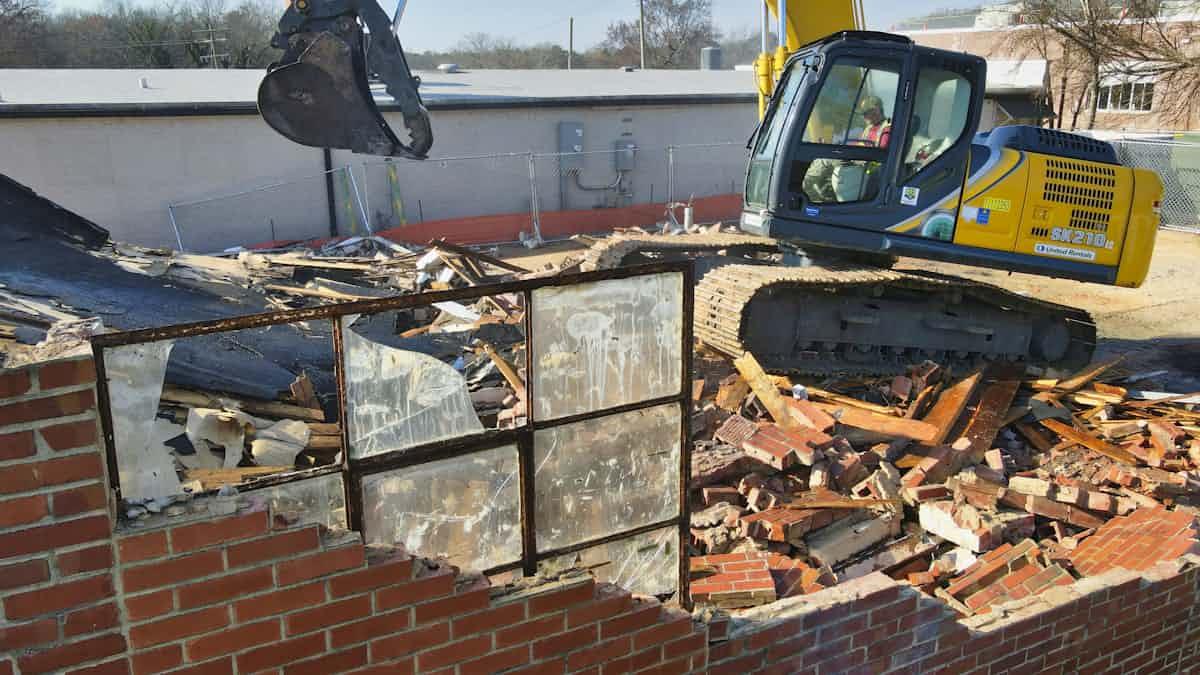
Removing the Existing Roof and Parapet
Before an upper portion goes up, the existing roof waterproofing layer, parapet wall, and sometimes an old water tank or roof structure have to come off. This is a real cost, not a minor prep step, and it is often left off a lowball quote. It also produces recoverable material: the parapet's reinforcement steel, any structural steel from a removed water tank stand, and old aluminium or timber roof fixtures all carry scrap value. We assess and sell this before the addition starts and credit what it realises against the project cost, a financial offset from the scrap sale rather than old steel reused in the new structure above. See our demolition scrap value guide for current rates and how the credit is documented.
Second Floor Addition, Area by Area in Karachi
| Area | Key Regulatory Body | Typical Approval Complexity | Per Sq Ft (Standard Turnkey) |
|---|---|---|---|
| DHA (all phases) | DHA TP&BC | Medium, 3-body process, 15+ working days | PKR 5,500 – 9,000 |
| Clifton | SBCA + CBC | Medium | PKR 5,000 – 9,000 |
| PECHS / Bahadurabad | SBCA | Low-medium | PKR 4,200 – 6,500 |
| Gulshan-e-Iqbal | SBCA | Low, volume market | PKR 3,800 – 5,500 |
| North Nazimabad | SBCA | Low | PKR 3,500 – 5,200 |
| FB Area / Nazimabad | SBCA | Low | PKR 3,200 – 4,800 |
| Gulistan-e-Johar | SBCA | Low | PKR 3,500 – 5,000 |
| Scheme 33 | SBCA | Low, developing area | PKR 3,200 – 4,800 |
| Bahria Town | Bahria Town Authority | Medium-high, strict internal approval | PKR 4,500 – 7,000 |
| Askari IV / Malir Cantt | Cantonment Board | Medium-high | PKR 4,500 – 6,500 |
Frequently Asked Questions, Second Floor Addition Karachi
Can I add a second floor to any house in Karachi? Not automatically. The plot size, zoning, and existing structural condition all determine whether a second floor is permissible and safe. Under SBCA rules, most residential plots in Karachi are permissible for G+1 at minimum. SBCA has also extended G+2 to 120 sq yd plots in five specific towns. DHA allows G+1 (one upper floor) for standard plots. Always get a structural assessment and regulatory confirmation before committing.
Do I need to vacate my home during construction of the upper floor? Not necessarily, most Karachi homeowners remain on the ground floor during upper-portion construction with proper dust and debris management. The exception is during concrete pours and during any structural strengthening work that involves significant vibration. Discuss a detailed protection plan with your contractor before starting.
What is the difference between grey structure and turnkey for an upper portion? Grey structure covers the structural shell: columns, beams, roof slab, external brickwork, and internal masonry walls, no plaster, no tiling, no electrical, no plumbing. Turnkey adds all those finishing trades to produce a liveable space. Grey structure is typically 55–65% of the total turnkey cost.
How do I know if my existing ground floor can support a second floor? Only a structural engineer who physically inspects your property can confirm this. Do not rely on the original contractor's verbal assurance, the contractor who built your ground floor may not have used the specification they were paid for. Get an independent structural engineer assessment.
Can I build the upper portion myself in stages to manage cash flow? Yes, many Karachi homeowners do grey structure in one phase and finishing in later phases as funds allow. Structure can safely wait for 1–2 years before finishing is added, provided the slab is waterproofed to prevent deterioration. However, MEP rough-in (electrical conduit, plumbing) should be done before plastering in each phase to avoid cutting into finished walls later.
What happens if I build without SBCA approval? In most areas of Karachi, unapproved upper portions are widely built and infrequently demolished. However: you will not be able to obtain a separate electricity or gas meter for the upper portion without documentation; property sale and transfer is complicated without an approved building plan; and SBCA does periodically run enforcement campaigns in specific areas. The risk is yours to evaluate, but approval is the correct and legally safe path.
Rental Income Potential, The Financial Case for a Karachi Upper Portion
For many Karachi homeowners, the upper portion is not just additional living space, it is a rental income asset. The financial case is compelling in most established areas:
Rental Yield by Area, Upper Portion 2026
| Area | Monthly Rent (2-bed upper portion) | Annual Rental Income | Typical Upper Portion Build Cost (200 sq yd, standard) | Gross Payback Period |
|---|---|---|---|---|
| North Nazimabad / FB Area | PKR 60,000 – 90,000 | PKR 720K – 1.1M | PKR 2.5M – 4.0M | 3–5 years |
| Gulshan-e-Iqbal | PKR 75,000 – 120,000 | PKR 900K – 1.4M | PKR 3.0M – 5.0M | 3–4 years |
| PECHS / Bahadurabad | PKR 90,000 – 150,000 | PKR 1.1M – 1.8M | PKR 3.5M – 6.0M | 3–4 years |
| DHA (Phase 2–5) | PKR 150,000 – 250,000 | PKR 1.8M – 3.0M | PKR 5.0M – 8.0M | 2–4 years |
| DHA (Phase 6–8) | PKR 200,000 – 400,000+ | PKR 2.4M – 4.8M | PKR 7.5M – 13.0M | 2–4 years |
These are gross payback periods, they do not account for maintenance, vacancy periods, or income tax. But even on conservative assumptions, a second floor addition in Karachi provides rental returns that significantly outperform bank deposit rates (currently 14–17% annualised in Pakistan as of mid-2026), and the capital asset appreciates alongside.
The abolition of Federal Excise Duty on property transfers in the Federal Budget 2025-26 (previously 7%) and the ~50% reduction in withholding tax for filer property buyers make rental property investment more attractive than it has been in several years.
What to Ask a Construction Contractor in Karachi Before Starting an Upper Portion
Choosing the right construction contractor in Karachi for a second floor addition is a higher-stakes decision than for a cosmetic renovation, the structural work is permanent and must be engineered correctly. Questions to ask any contractor before committing:
1. Who is your structural engineer? Any construction company in Karachi building a second floor addition should use a licensed structural engineer (registered with the Pakistan Engineering Council, PEC) who designs the additional column and slab specifications and is available for queries during construction. If the contractor does not have a structural engineer on their team or retainer, proceed with caution.
2. Can I see your concrete test results from recent projects? Concrete cylinder tests (compression tests at 7 and 28 days) verify that the concrete poured on site meets the specified grade. Contractors who do not test their concrete are guessing at strength. This matters enormously in load-bearing structural elements.
3. How do you manage the occupied ground floor during slab pour? A contractor with genuine experience in occupied-property upper portion work will have a clear protocol: ground-floor protection, utility isolation procedure, pour schedule agreed with occupants. A vague answer here suggests they have not managed this situation before.
4. What is your reinforcement specification for the columns and slab? The structural engineer's drawings will specify bar diameter, spacing, and concrete grade. If the contractor cannot tell you these numbers from their current site drawings, they are either not using a structural engineer or not following the drawings.
5. Will you manage SBCA/DHA approvals, or is that our responsibility? Different contractors handle this differently. Naffees & Sons manages the approval process for clients as part of the project, we have established relationships with SBCA and DHA TP&BC and understand their documentation requirements. Contractors who say "you handle the approvals" are passing a significant administrative burden to clients who are not familiar with the process.
For the full contractor evaluation framework, see How to Choose a Construction Company in Karachi.
Start Your Upper Portion Project with Naffees & Sons
Naffees & Sons has managed second floor additions across Karachi's residential belt, from North Nazimabad (our home base) to DHA and Clifton, for over 50 years. We provide structural assessments, manage SBCA and DHA approvals, and deliver completed upper portions on written contracts with milestone payments.
Get a Free Site Assessment for Your Upper Portion →
Related guides:
- House Renovation Company in Karachi, Full Service Overview
- Home Renovation Cost in Karachi 2026, Room-by-Room Guide
- DHA Karachi Construction Rules 2026, NOC, Bylaws and What Builders Must Know
- SBCA Building Regulations in Karachi, Permits and Plan Approval
- Construction Company in Askari and Cantonment Areas
- House Construction Cost in Karachi 2026
- How to Choose a Construction Company in Karachi