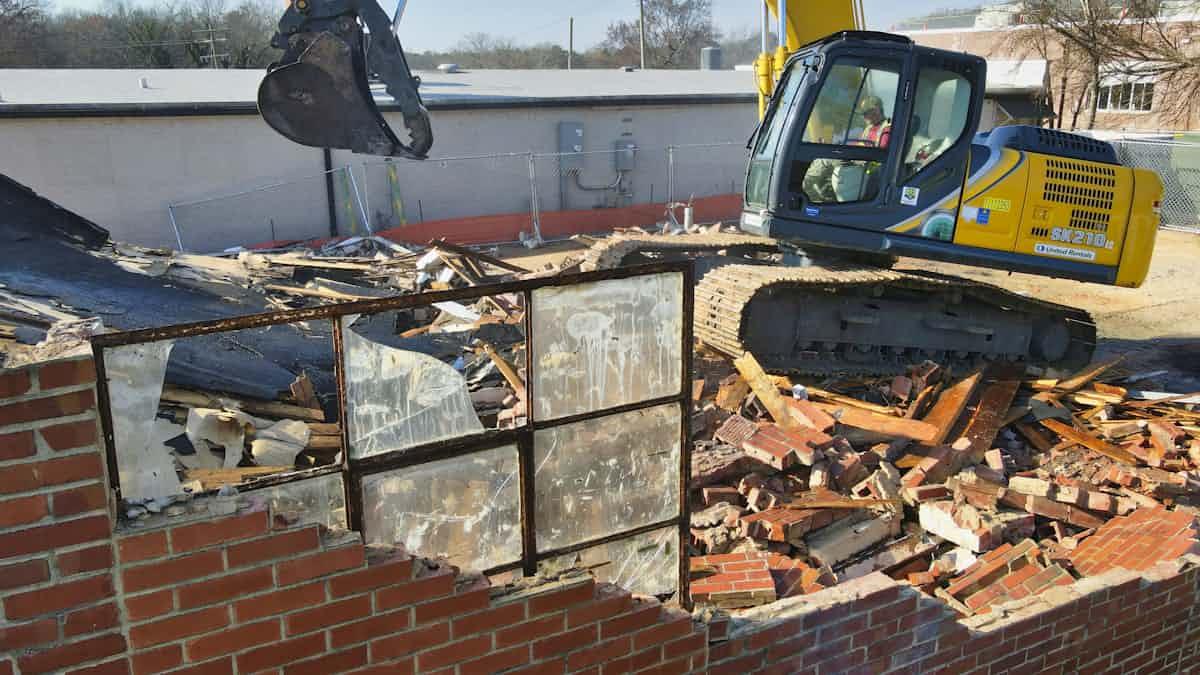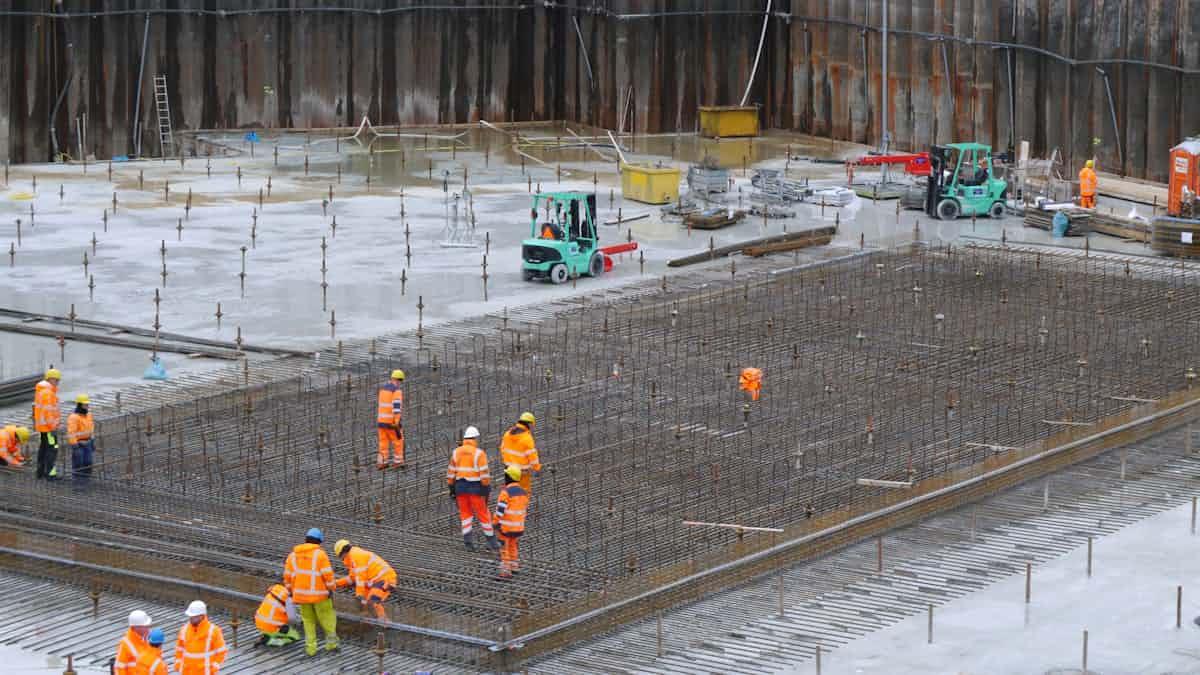
Cost overruns are near-universal in construction, and in developing countries they sometimes exceed 100% of the original budget (academic research on construction cost overruns in developing economies, cited via Mehran University Research Journal, 2023). That is not a Karachi-specific finding, but it explains exactly what happens to homeowners who decide hiring labour directly will save them the contractor's margin. It usually does, right up until the first design change, the first missed delivery, or the first dispute, at which point the saving evaporates and often reverses. This guide lays out what direct-hire labour actually costs once every real risk is counted, not just the headline day rate.
Direct Labour vs Contractor: The Real Comparison
| Direct-hire labour | Managed contractor | |
|---|---|---|
| Upfront quoted cost | Lower, no management fee | Higher, includes coordination and risk absorption |
| Who manages daily site presence | You | Contractor's supervisor |
| Who negotiates scope changes | You, directly with the worker | Contractor, on your behalf |
| Who absorbs a missed material delivery | You | Contractor |
| Who resolves a quality dispute | You | Contractor |
| Realistic budget outcome | Often 20–40% over original estimate | Fixed at signing, phase by phase |
| Time commitment | Near-daily, for the project duration | Periodic site visits and milestone approvals |
What's Actually Driving the Cost Gap in 2026
Labour costs 35–45% of a typical build, and that is the portion where a direct-hire client has zero buffer between themselves and every price and availability swing in the market.
Material and transport disruptions are a real, recurring risk in Pakistan. In December 2025, a nationwide 10-day goods transporters' strike halted freight movement across the country before the government resolved the underlying dispute (Dawn, December 2025). A managed contractor with pre-stocked material and established supplier relationships absorbs a disruption like that far more easily than a direct-hire client relying on a single delivery scheduled for a specific week.
Cost overruns are the norm, not the exception, in construction generally, and research on developing economies specifically has found overruns exceeding 100% of the original estimate in the worst cases. A managed contract does not eliminate this risk, but it transfers most of it onto the party contractually obligated to absorb it, the contractor, rather than leaving it entirely with a first-time client learning as they go.
Karachi's construction calendar works against unsupervised timelines. Friday half-days, one-to-two week Eid closures, and unpredictable political disruptions all shrink the number of productive days in a typical month. A contractor experienced in this market prices these gaps into the schedule from day one; a direct-hire client discovers them as delays.
Cost overruns are almost universal across construction projects, with the trend more severe in developing countries where overruns sometimes exceed 100% of the anticipated project cost (Mehran University Research Journal of Engineering and Technology, 2023).
Why Scope Creep Is the Real Cost of Direct-Hire Labour
How it starts
Almost every construction project changes somewhere along the way, a doorway moves, a room gets a slightly different layout, a client sees a finish they prefer partway through. This is normal and expected. What is not normal, and what a direct-hire client has no protection against, is what happens next.
How labour responds when you have no buffer
Without an experienced builder standing between you and the workforce, a scope change becomes leverage. Labour that quoted a fair original price for a defined scope will frequently quote a dramatically inflated price for the same category of work once it's a mid-project addition, not because the work itself changed in difficulty, but because they know you have no easy alternative mid-phase. Refusing the new price risks the crew slowing down, becoming difficult to reach, or in the worst cases walking off the job entirely, at exactly the point where you have the least leverage to find a replacement quickly.
Why this is different from a simple price negotiation
A single instance of this might cost a family an uncomfortable argument and an inflated invoice. Across a nine-to-twelve month build with dozens of small decisions and at least a few genuine changes, it compounds. This is the primary mechanism, more than raw material price inflation, behind direct-hire clients regularly finishing 20–40% over their original budget. The overrun rarely shows up as one dramatic event; it accumulates in a series of individually-justifiable renegotiations that only look large in total once the project is finished.
What a managed contract does differently
We define scope in writing, phase by phase, before work begins on that phase. When a change genuinely arises, and it usually does, at least once, we price it against the same rate basis as the original scope and handle the conversation with labour internally. You never stand on your own plot negotiating with a mistri over the price of a doorway, because that conversation happens between us and our own crew, at rates we have already established and they have already accepted.
Beyond Scope Creep: The Other Direct-Hire Risks
Quality verification falls entirely on you
A managed contractor has an ongoing relationship with the crew working on your site and a professional incentive to catch mistakes before they're covered by the next phase of work. A direct-hire client, checking the site periodically around their own job, is far more likely to discover a structural or finishing defect after it's already buried under subsequent work, at which point fixing it costs multiples of what catching it early would have.
Supplier and delivery risk sits with you
If a steel delivery is short, delayed, or doesn't match the specification you ordered, resolving it, chasing the supplier, arranging a replacement, absorbing the schedule slip, is your problem on a direct-hire project. On a managed contract, it's a routine part of the contractor's job, handled through relationships built over years rather than a one-off transaction.
There is no single point of accountability
When something goes wrong on a direct-hire site, a plumbing fault discovered after tiling, a wall that isn't quite plumb, every trade involved has an incentive to point at the trade before them. On a managed contract, one party is accountable for the finished result regardless of which crew member's work is actually at fault, which matters enormously when something needs to be corrected after the fact.
What Each Direct-Hire Risk Typically Costs
None of these risks are certain to happen on any given project, but across enough Karachi direct-hire builds, most projects encounter at least two or three of them.
| Risk | How it typically shows up | Rough cost impact |
|---|---|---|
| Scope-change renegotiation | A design change mid-phase priced 2–3x the original rate | 5–15% of total budget |
| Delivery delay or mismatch | Idle labour-days while a replacement material is sourced | 3–8% of total budget, mostly in lost time |
| Undetected quality defect | Rework needed after the fault is covered by later work | Highly variable, can exceed 10% if structural |
| Your own time cost | Site visits, supplier trips, dispute resolution | Rarely budgeted, easily 100+ hours over a full build |
Individually, each of these looks manageable. A direct-hire project rarely encounters only one.
Direct-Hire Risk by Project Type
New full builds
A ground-up build has the most phases, the most trades, and the most opportunity for a scope change to arise, which is exactly why it carries the highest direct-hire risk of the three project types. A change to one phase (say, a room layout) frequently has knock-on effects on plumbing and electrical roughing that were already completed, compounding the rework cost.
Second-floor additions
Adding a floor to an existing structure introduces a risk direct-hire clients often underestimate: verifying that the existing foundation and columns can safely bear the new load is a technical judgement, not a negotiation point, and it needs to happen before labour starts, not after a dispute arises about who is responsible if a crack appears. Our second-floor addition cost guide covers the structural assessment this project type specifically requires.
Renovations
Renovation work frequently uncovers issues once walls or flooring are opened, old wiring, damp, or structural wear invisible before work starts. This is the project type where scope "creep" is often not even really creep, since the additional work is often genuinely necessary once discovered. The direct-hire risk here isn't the discovery itself, it's negotiating a fair price for necessary but unplanned work with a crew that knows you have little alternative once the wall is already open. Our home renovation cost guide covers typical renovation-specific cost drivers in more depth.
When Direct-Hire Labour Genuinely Makes Sense
This is not an argument that direct-hire labour is always the wrong choice. It works reasonably well for small, single-trade jobs with a clearly bounded scope, a specific repair, a boundary wall, a single room where the finish is simple and unlikely to change once started. It also works for people with genuine construction industry background, an engineer, an architect, or someone who has personally managed sites before, who understand both the technical verification and the negotiating dynamics involved. Outside those cases, the theoretical saving on a full build or renovation is easy to project and difficult to actually realise. For a fuller breakdown of how the two contract structures compare financially, see our with-material vs labour-rate contract guide.
How Naffees & Sons Manages This Differently
We absorb the friction that makes direct-hire labour risky, as a defined part of our scope rather than an afterthought. Every phase starts with a written scope agreed before work begins. Every design change gets priced against the original rate basis, in writing, before the crew starts on it, never negotiated informally on-site under time pressure. We source materials from established Karachi supplier relationships built over fifty years, which means a delivery problem gets resolved through a standing relationship rather than a one-off dispute. And because we run a seven-day rotating crew model, a single worker's unavailability doesn't stall your entire schedule the way it would on a direct-hire site. Our construction contractor page describes the full scope of what sits inside that arrangement, and our labour rate guide breaks down what you'd actually be paying per trade under either model.
6-Point Checklist Before Choosing Direct-Hire Labour
- Is your scope genuinely fixed, with low risk of a mid-project design change?
- Do you have real, recurring time, not just weekends, to supervise daily?
- Can you personally verify structural and finishing quality, or would defects go unnoticed until covered by later work?
- Do you have an existing relationship with reliable material suppliers, or would you be sourcing cold?
- What happens to your other commitments, work, family, during the months a project like this typically takes?
- Have you priced in a realistic contingency, given that overruns are the norm rather than the exception across the industry?
Real Costs: A Direct-Hire Project in North Karachi
A client began a second-floor addition in North Karachi in 2025 as a direct-hire project, quoting the labour and material separately at roughly 22% below a comparable managed quote. Partway through, a decision to add an extra bathroom to the new floor, a reasonable, common mid-project change, was priced by the existing mason crew at nearly triple the rate the same work would have cost as part of the original scope, on the basis that it was "extra" work outside what they'd originally agreed to. The client negotiated it down but still paid a meaningful premium, and the crew's pace visibly slowed for the following two weeks. A separate delay, when a tile order didn't match the sample and had to be reordered, added another eleven idle days that still incurred standing labour cost. By handover, the total spend had closed almost the entire 22% gap with the managed quote it had been compared against at the outset, without accounting for the client's own time spent managing the dispute and the reorder.
Frequently Asked Questions
Is it cheaper to build a house without a contractor in Karachi?
The initial quote usually is cheaper, by roughly 15–25% in most comparisons. The final cost frequently is not, once scope-change renegotiation, delivery delays and quality-correction costs are counted. Research on developing-economy construction projects generally has found cost overruns can exceed 100% of budget in the worst cases, and direct-hire projects with no managing buffer are more exposed to that risk than managed ones.
What is the biggest risk of hiring labour directly in Karachi?
Scope creep during a mid-project design change. Labour that quoted fairly for the original defined scope frequently prices a mid-project addition at two to three times the equivalent rate, knowing the client has limited leverage to find a replacement crew mid-phase. This single dynamic accounts for more of the typical 20–40% direct-hire overrun than raw material inflation does.
Can I manage labour myself if I have construction experience?
Yes, direct-hire labour is a reasonable choice for someone with genuine technical background (an engineer, architect, or prior site-management experience) or for a small, well-bounded job like a single repair or boundary wall. The risk profile changes substantially for a full build or renovation with a longer timeline and more room for scope to evolve.
How do I protect myself if I do decide to hire labour directly?
Get every agreement in writing before work starts on that phase, including an explicit procedure for how any future change will be priced. Never let a scope change be negotiated verbally, on-site, under time pressure. Our construction contract agreement guide includes a downloadable template covering exactly this.
Does a managed contractor really absorb scope-change disputes, or just delay them?
A properly managed contract prices a change before the work happens, using the same rate basis as the original scope, and the client never negotiates directly with the labour crew. That is meaningfully different from a direct-hire arrangement where every change is a fresh, unstructured negotiation between the client and whoever is doing the work at that moment.
What should I compare when weighing direct-hire against a contractor's quote?
Not just the headline number. Compare who bears the cost of a scope change, who absorbs a delivery delay, who verifies quality before it's covered by later work, and how much of your own time each option genuinely requires across the project's full length. Our construction labour rate guide shows what the underlying day rates actually are, and our guide to what contractors charge in Pakistan explains the margin on top of them, so you can judge how much of any quoted gap is real saving versus risk transfer. Two further guides cover the specific exposures direct hiring creates: our construction scope of work guide on how to price variations before they arise, and our material sourcing guide on which materials you can realistically buy yourself.
Ready to Build in Karachi?
Get a free, no-obligation site visit and a written scope from Naffees & Sons, Karachi's builders since 1972. We absorb the scope negotiations, supplier disputes and schedule risk so you don't have to.
Request a Free Quote → | Chat on WhatsApp