House renovation in Karachi in 2026 is, for a growing number of homeowners, the smarter move than buying or building new. Land prices in every established neighbourhood have climbed beyond easy reach, the abolition of the federal excise duty on property transfers has made improving what you own more attractive than churning into a new purchase, and the city's huge stock of 1960s–1990s homes is reaching the age where renovation is no longer optional. This is the complete guide to doing it well: how a renovation actually works from first survey to final handover, what it costs, the regulations that apply, how the job changes from one Karachi neighbourhood to the next, and, most importantly, how to choose a renovation contractor who will still be standing by the work a year later.
This is the pillar guide. Throughout, it links to deeper guides on cost, on specific renovation types, and on individual areas, so you can go as deep as your project needs.
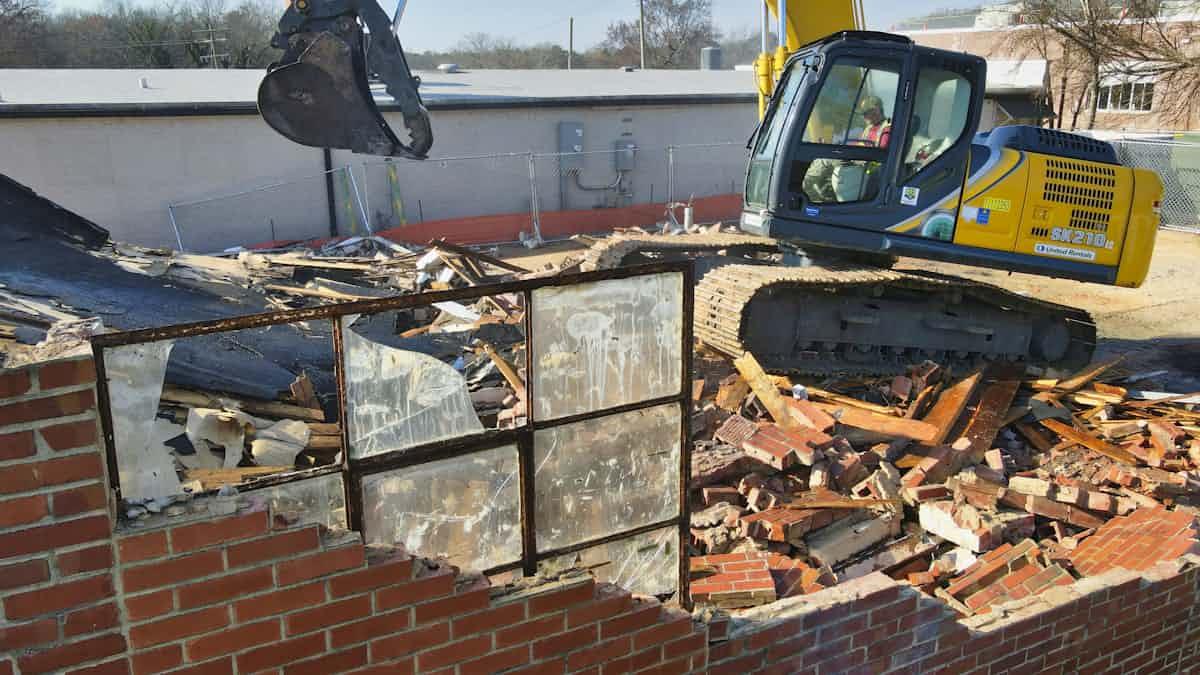
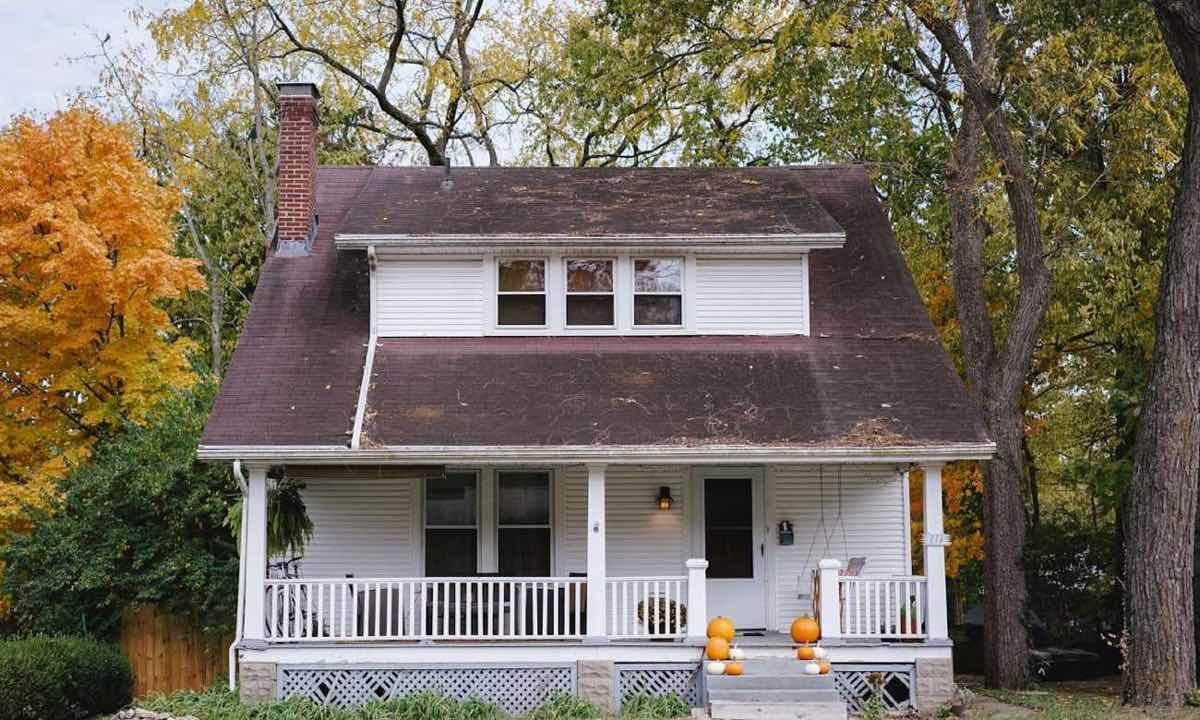 A full Karachi house renovation mid-programme, structure addressed before finishes, the sequence that separates a renovation that lasts from one that fails.
The 2026 Renovation Market in Karachi, What's Changed
A few shifts make 2026 a particular moment for renovation in Karachi, and they affect your budget directly:
- Cement is more expensive, steel is slightly cheaper. The 2025–26 federal budget doubled the federal excise duty on cement (adding roughly PKR 125 to a 50kg bag, pushing Karachi prices to around PKR 1,520–1,560), while steel prices eased 10–15% from their 2024 peak on tariff rationalisation. The net effect on a typical renovation is roughly flat year-on-year, but cement- and ceramic-heavy finishing work costs a little more than it did in mid-2024.
- Property-transfer tax relief favours staying put. With the 7% federal excise duty on property transfers abolished and withholding tax on purchases reduced for filers, the maths increasingly favours renovating the home you have over the friction and cost of moving.
- The non-filer purchase bar. Non-filers have been barred from buying property since July 2025, nudging many owners toward improving existing holdings rather than transacting.
- A recovering construction sector. The industry contracted 2.8% in 2025 but is projected to average 4.6% growth across 2026–2029, which means rising demand and, over time, rising contractor rates. Renovation costs are unlikely to get cheaper.
The practical takeaway: build your budget on current numbers, and do not assume waiting a year will make the project cheaper.
How a House Renovation Actually Works in Karachi
Renovation is not one trade, it is a sequenced programme of overlapping trades and approvals, and getting the sequence wrong is what costs people time and money. A proper full renovation runs roughly in this order:
- Structural assessment. On any property over 20 years old, this comes first. Karachi's older stock routinely hides concrete carbonation, corroded reinforcement (especially in coastal Clifton and creek-side DHA), and settlement on clay-heavy soils. You cannot finish over a compromised structure and expect it to last.
- Scope, drawings, and approvals. The renovation scope is fixed, drawings are prepared where structural changes are involved, and the relevant approval, SBCA, DHA, or Cantonment, is filed before demolition, not after.
- Demolition and structural works. Removing what is being replaced, then repairing or strengthening the frame, blockwork for new partitions, and waterproofing.
- MEP replacement. Older Karachi homes were wired and plumbed for the loads of decades ago, rewiring with proper earthing, new DB boards, re-plumbing, and provision for solar and backup power belong here, before walls are closed up.
- Finishing. Plaster, tiling, woodwork, false ceilings, paint, sanitaryware, and fittings.
- Snagging and handover. A joint defect walk, rectification, and a documented handover with a defect-liability period.
For the full company process, how we run each of these stages with itemised pricing and milestone payments, see our house renovation company in Karachi page. The structural fundamentals are covered in our grey structure cost guide.
What House Renovation Costs in Karachi (2026)
Renovation cost in Karachi spans an order of magnitude depending on scope and area. As a quick orientation:
| Renovation Type | Cost Per Sq Ft (PKR) |
|---|---|
| Cosmetic refresh (paint, tiling only) | 600 – 1,200 |
| Standard renovation (MEP + finishes) | 1,500 – 2,800 |
| Full gut renovation (structural + MEP + all finishes) | 2,800 – 4,500 |
| Luxury renovation (DHA / Clifton spec) | 4,500 – 8,000+ |
These are starting benchmarks. The figure for your project is driven by how much structural work is needed, the MEP upgrade level, the finishing specification, and the area. For the full room-by-room and area-by-area breakdown, bathrooms, kitchens, flooring, and full-house numbers across every quality tier, see our dedicated home renovation cost in Karachi 2026 guide.
The single most important cost principle: insist on an itemised Bill of Quantities with named material specifications before any money changes hands. A lump-sum quote is where mid-project "discoveries" and silent material substitution live.
Renovation by Area, Karachi Is Not One Market
The same renovation brief produces a different project in different parts of Karachi, because the housing stock, the regulator, and the buyer expectations all change. We have written a dedicated guide for each major area:
- Renovation in DHA Karachi, a two-market problem of older-phase structural refurbishment versus new-phase luxury upgrades, governed by DHA Town Planning & Building Control (not SBCA), with gate-pass labour logistics to manage.
- Renovation in Clifton Karachi, defined by the coastal environment that corrodes ordinary materials, and by high-rise apartment logistics inside managed blocks with society NOCs.
- Renovation in PECHS and Bahadurabad, Karachi's largest pool of ageing homes, where renovation is structural rehabilitation, and where old leasehold documentation complicates SBCA approval.
- Renovation in Gulshan-e-Iqbal, a mid-market belt driven by rental-income upper portions and value engineering, where load-shedding has to be designed into the electrical work.
- Renovation in North Nazimabad and F.B. Area, the city's oldest planned stock, where heritage-restoration decisions and low water-pressure infrastructure define the work. (This is also our home base.)
If your area is not listed, we still serve it, these are simply the markets distinct enough to warrant their own guide.
Renovation by Type
Beyond area, the kind of renovation you are doing changes the playbook:
- Apartment / flat renovation. Working inside a managed building brings society NOCs, service-lift scheduling, façade and riser restrictions, and load-bearing-wall constraints. Our apartment renovation in Karachi guide covers it in full.
- Second-floor / upper-portion additions. One of the most common Karachi renovations, building upward on land you already own, often for rental income. It hinges on whether your existing foundations and columns can take the load, and on SBCA/DHA approval. See our second floor addition cost in Karachi guide.
- Full gut renovation. Stripping a home back and rebuilding the interior, structure-up. This is the territory of older PECHS, Gulshan, and North Nazimabad stock.
- Cosmetic refresh. Paint, tiling, and fixtures with no structural change, the only category that needs no formal approval.
The Rules: SBCA, DHA, and Cantonment Approvals
Knowing whether your renovation needs approval saves you from both unnecessary cost and, worse, an unapproved alteration that surfaces as a problem at resale.
- Purely cosmetic renovation, tiling, paint, non-structural partitions, fixtures, needs no formal approval anywhere in Karachi.
- Structural changes, adding a floor, altering or removing load-bearing walls, changing the footprint or façade, require approval. Under SBCA (Sindh Building Control Authority) for most of the city; under DHA Town Planning & Building Control for DHA properties; and under the relevant Cantonment Board for Askari and Malir Cantonment.
SBCA in particular is a process that rewards experience, applications are assessed against your last approved building plan, and decades of unrecorded additions on an old home can stall things until the discrepancy is resolved. For the DHA-specific regime, our DHA construction rules and regulations guide covers setbacks, FAR, height limits, and the NOC process in detail.
How to Choose a Renovation Contractor in Karachi
This is where renovations are won or lost. Karachi's market is full of operators who quote low to win the job and renegotiate once you are committed and your home is half-demolished. The patterns to guard against:
- Lump-sum quotes with no Bill of Quantities, these invite mid-project "discoveries" billed at whatever rate the contractor chooses on the day.
- Timelines with no buffer, Friday stoppages, Eid shutdowns (1–2 weeks each), monsoon disruption, and material lead times mean an honest programme builds in a 15–20 day contingency. A quote promising an unrealistic finish date is setting up a missed one.
- Date-based payment milestones instead of progress-based ones, a payment triggered by a calendar date rewards a contractor who has not actually done the work.
- Vague material specifications, without named brands and grades in writing, you have no recourse against silent substitution.
- No verifiable track record, anyone can claim experience; ask for documented, completed projects.
Our full guide on how to choose a construction company in Karachi expands each of these into questions you can put to any contractor before signing.
Why Naffees & Sons
We have been renovating and building in Karachi since 1972, a 50-year, government-audited track record spanning residential renovation and full institutional structural refurbishment. What that buys you on a renovation: a contractor who has seen the hidden problems before and prices them honestly rather than "discovering" them later; a seven-day-a-week operation with labour in rotation that absorbs the idle-day losses baked into the Karachi market; genuine material sourcing at commercial rates through long-standing supplier relationships; and the regulatory experience to move SBCA and DHA approvals without passing the stress to you.
A Realistic Renovation Timeline, and Why "2 Months" Is a Red Flag
One of the most common ways a Karachi renovation goes wrong is the timeline, because an unrealistic schedule is usually a sign of an unrealistic everything-else. A properly resourced full gut renovation of a typical 200 sq yd house runs on roughly this shape:
| Phase | Typical duration | What happens |
|---|---|---|
| Survey, scope, approvals | 1–3 weeks | Structural assessment, drawings, SBCA/DHA filing where needed |
| Demolition and structural | 3–5 weeks | Strip-out, concrete repair, strengthening, blockwork, waterproofing |
| MEP rough-in | 3–4 weeks | Rewiring with earthing, re-plumbing, solar/backup provision |
| Finishing | 5–8 weeks | Plaster, flooring, tiling, joinery, false ceilings, paint |
| Sanitaryware, fittings, snagging | 2–3 weeks | Fixtures, defect walk, rectification, handover |
That is a four-to-six-month honest programme, and it already assumes a seven-day operation. A contractor promising two to three months is either under-scoping the work or planning to overrun once your deposit is paid. The Karachi-specific time-killers an honest schedule accounts for are Friday half-days, Eid shutdowns of one to two weeks each, monsoon disruption between July and September, and material lead times on anything imported. A 15–20 day contingency is realism, not padding.
Renovating Without Getting Overcharged: The Contract Layer
The renegotiation tactics common in this market are defeated not by finding an honest contractor by luck, but by structuring the deal so that dishonesty has nowhere to hide. Four protections do most of the work:
- An itemised Bill of Quantities with named materials and grades. This is your single most powerful protection. It prices every item up front and removes the room for both mid-project "discoveries" and silent substitution of cheaper materials.
- Progress-based payment milestones, never date-based. Money is released against completed, inspected stages, grey structure done, MEP roughed in, finishes complete, so you never pay ahead of work actually performed.
- A written defect-liability period. A contractor confident in the work will stand behind it for a defined period after handover; one who will not is telling you something.
- Specifications in writing, not conversation. "Good quality tiles" is unenforceable; a named brand and grade is. Everything that matters belongs in the document.
Get these four right and the contractor's honesty matters far less, because the structure protects you regardless. Our full guide on how to choose a construction company in Karachi turns each of these into questions you can ask before signing.
Renovate or Rebuild: How to Actually Decide
For Karachi's ageing stock this is often the first real question, and the honest answer turns almost entirely on the condition of the structural frame:
- Renovate when the columns, beams, and slabs are sound or economically repairable, the layout is fundamentally usable, and structural remediation stays under roughly a quarter of the renovation budget. With 2026's property-transfer tax relief favouring staying put, this is increasingly the stronger play.
- Lean toward rebuild when structural remediation would consume 25–30% or more of the renovation budget, when the frame is genuinely compromised, or when the layout is so obsolete that renovating still leaves you with a fundamentally dated home.
The mistake in both directions is expensive: pouring renovation money into a building that needed rebuilding, or demolishing a sound frame out of caution. A proper structural survey, which any serious contractor should provide before quoting, is what settles it on evidence rather than guesswork. The area guides above go into how this calculation shifts across DHA, Clifton, PECHS, Gulshan, and North Nazimabad stock.
Frequently Asked Questions, House Renovation in Karachi
Is it better to renovate or rebuild in Karachi in 2026? If the structural frame is sound or economically repairable and the layout is fundamentally usable, renovation usually wins, especially with property-transfer tax relief favouring staying put. If structural remediation would consume 25–30%+ of the renovation budget, or the layout is obsolete, rebuilding may offer better value. A structural survey settles it.
How long does a full house renovation take in Karachi? A full gut renovation of a typical 200 sq yd house runs 4–6 months with a properly resourced team, including a realistic buffer for approvals, public holidays, and material lead times. Quotes promising 2–3 months are usually under-scoping or will overrun.
Do I need SBCA approval to renovate my house? Only for structural changes, adding a floor, altering load-bearing walls, or changing the footprint. Cosmetic renovation needs none. DHA properties go through DHA TP&BC instead of SBCA.
What does house renovation cost per square foot in Karachi? From around PKR 600/sq ft for a cosmetic refresh to PKR 8,000+/sq ft for luxury DHA/Clifton work, with standard renovation around PKR 1,500–2,800/sq ft. See our home renovation cost in Karachi 2026 guide for the full breakdown.
Can I live in my house during renovation? For cosmetic, room-by-room work, yes, with dust and access management. For a full structural gut renovation, vacating is strongly recommended for safety and pace.
How do I avoid being overcharged mid-project? Insist on an itemised Bill of Quantities with named materials and progress-based payment milestones before work starts. This is the single most effective protection against the renegotiation tactics common in the Karachi market.
Start Your Renovation
If you own a home anywhere in Karachi and are planning a renovation, cosmetic refresh, full structural overhaul, apartment remodel, or an upper-portion addition, contact Naffees & Sons for a free site visit and a written, itemised quotation.
Book a Free Renovation Consultation →
Go deeper: