Ask three contractors in Karachi how long a build takes, and you will get three optimistic numbers designed to win the job, not three honest ones. The gap between quoted timeline and actual timeline is one of the most common sources of client frustration in this city, and it is entirely avoidable. This guide gives you the real phase-by-phase durations by plot size, the disruption calendar every honest contractor has to plan around, and the buffer rule that separates a realistic schedule from a sales pitch, so that if you are actively hiring a construction company in Karachi right now, you can tell in one conversation whether their timeline is real.
Demand for new construction is rising across the city, cement dispatches nationally reached 50.58 million tonnes in FY26, up 7.21% year-on-year, driven almost entirely by domestic building activity (Pakistan Today, 7 July 2026). More active sites citywide means more competition for experienced masons and tilers, which is precisely why timeline honesty matters more this year than it did two years ago, a contractor who could book a full crew on short notice in 2023 may not be able to in 2026.
The Honest Answer: Timeline by Plot Size
| Plot Size | Grey Structure | Full Turnkey (Standard Spec) | Full Turnkey (Premium Spec) |
|---|---|---|---|
| 120 sq yd | 4 – 5 months | 9 – 11 months | 11 – 13 months |
| 240 sq yd | 5 – 7 months | 10 – 12 months | 13 – 16 months |
| 500 sq yd | 7 – 9 months | 13 – 16 months | 16 – 20 months |
These figures include the SBCA or DHA approval period, and they assume a 15–20 day per-phase buffer is built in from the start, not added later when a delay happens. A contractor who quotes below these ranges is either omitting the approval period, running an unrealistic five-day schedule with no allowance for disruption, or simply overpromising to win the contract.
Phase-by-Phase Breakdown
1. Pre-Construction: Approvals and Design (6–10 weeks)
Before a single brick is laid, structural drawings need a PEC-registered engineer's sign-off and SBCA (or DHA/Cantonment Board, depending on your area) needs to approve the building plan. A complete, correctly formatted submission takes 6–10 weeks to clear. Incomplete documentation, wrong plot dimensions, missing ownership papers, an engineer's certificate without a valid PEC number, restarts this clock. Treat this as a construction phase, not paperwork that happens "in the background," because it sets the start date for everything after it.
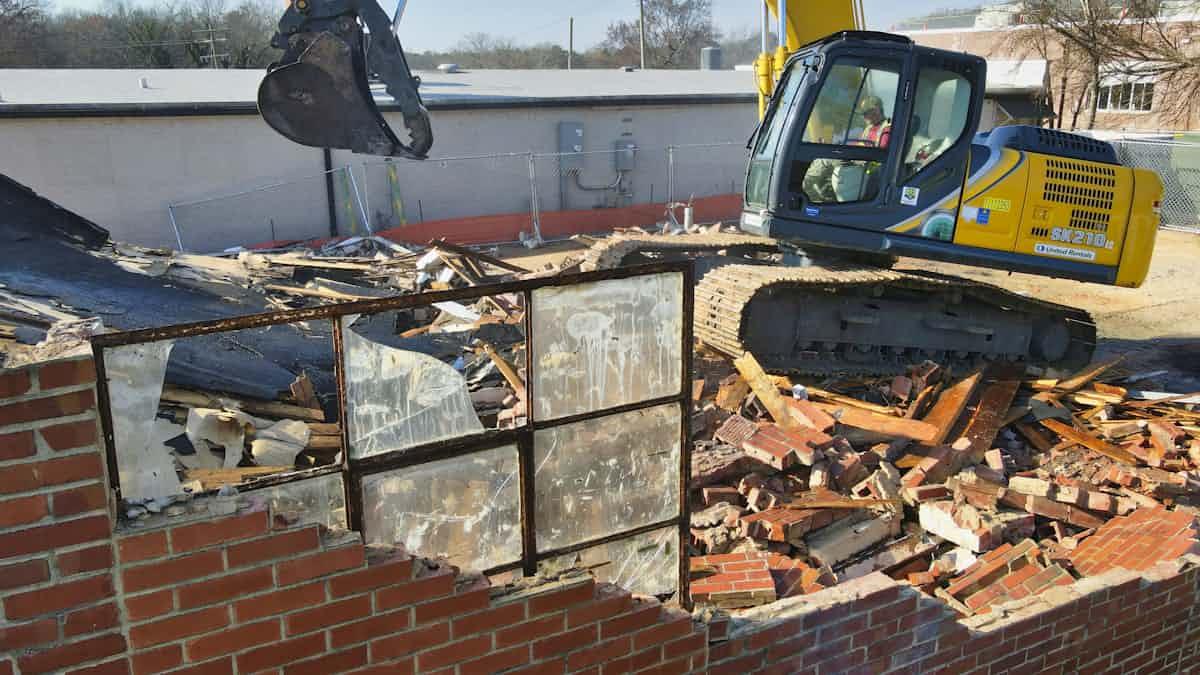
If you are demolishing an existing structure first, add 4 days to 3 weeks depending on storey count, before this timeline starts. A single-storey teardown is quick; a double-storey or multi-storey structure has to come down floor by floor, which takes longer than area alone suggests. Our demolition cost guide and single-storey vs multi-storey demolition guide cover realistic durations by structure type.
2. Foundation and Grey Structure (4–9 months depending on plot size)
Foundation, columns, slabs, brickwork, and plaster, grey structure is 55–60% of total build time and the phase most exposed to Karachi's labour disruption calendar (see below), because it is the most labour-intensive stage and the one where mason availability matters most.
3. MEP Rough-In (3–5 weeks, runs partially parallel to grey structure)
Electrical conduit, plumbing lines, and gas piping go in as walls and slabs are completed floor by floor, rather than as a fully separate phase, a well-run site overlaps this with the tail end of grey structure to save weeks.
4. Finishing: Flooring, Bathrooms, Kitchens, Woodwork (2–4 months)
This is where specification tier changes duration the most. Economy tile and fixture finishing moves faster; large-format imported porcelain, custom joinery, and concealed AC systems add weeks because these trades cannot be rushed without visible quality loss.
5. Snagging and Handover (2–3 weeks)
Final inspection, snag list resolution, and completion certificate. Contractors who skip a formal snagging period are the ones whose clients find defects after moving in.
Why Karachi's Labour Market Makes Timeline Deception So Common
This deserves stating plainly rather than politely: over-promising on a completion date to win a contract, then delaying once the deposit is paid, is not an occasional failure of a few bad contractors, it is a structural feature of how construction labour is priced and won in this city. A mason or small contractor competing for your job knows that a realistic 12-month quote loses to an unrealistic 8-month one at the negotiation stage, so the incentive runs directly against honesty unless a client specifically knows to check for it. Understanding this is the single most useful piece of leverage a first-time builder has when comparing quotes, treat a suspiciously fast timeline as a red flag, not a selling point, and ask every contractor directly how they arrived at their number.
Karachi's Disruption Calendar, What Every Timeline Must Plan For
This is the part most contractors don't put in writing, because it makes their headline timeline look worse. We publish it because a client who knows this can tell the difference between an honest schedule and a sales number.
| Disruption | Typical Impact |
|---|---|
| Friday half-days | 0.5 day/week lost across the whole project |
| Eid ul-Fitr | 1–2 weeks, full site stoppage |
| Eid ul-Adha | 1–2 weeks, full site stoppage |
| Muharram (9th–10th and surrounding days) | 2–4 days, reduced labour availability |
| Hartals / political disruptions | Unpredictable, zero-notice stoppages of 1–3 days |
| Monsoon season (July–September) | Reduced productivity on external work and concrete pours |
Added up, these routinely cost a standard five-day-schedule site 40–60 working days a year. A contractor who does not account for this in the original quote is not being optimistic, they are quoting a timeline they already know is false, and the client absorbs the difference in rent, EMI, and stress.
The 15–20 Day Buffer Rule
Every phase in our schedules carries a 15–20 day buffer, not as a pessimistic hedge but as an acknowledgment of how Karachi construction actually runs. Labour in this city routinely quotes fast timelines to win a job and delays once work begins, this is not incompetence, it is a known industry pattern, and building around it from day one is the only way a schedule survives contact with reality. We also run a 7-day craftsman rotation specifically to recover the days a standard five-day schedule loses to Fridays, Eid, and holidays, on a typical build this recovers 3–4 weeks versus a standard schedule.
Why We Tie Payments to Progress, Not Dates
Milestone payments should be tied to verified physical progress, foundation complete, grey structure complete, MEP rough-in complete, finishing complete, never to calendar dates alone. A date-based payment schedule gives a delayed contractor no incentive to catch up, because they get paid regardless. Progress-based milestones keep the incentive aligned for both sides.
Political and Labour Disruptions Beyond the Standard Calendar
Beyond the predictable Islamic and national calendar, Karachi carries a longer history of politically motivated strikes (hartals) and labour union actions that can halt site activity with zero notice, for anywhere from a day to several days at a stretch. These are genuinely unpredictable, no honest contractor can tell you in advance exactly when one will happen, but planning for them is still possible. We actively monitor the political and labour climate and front-load material procurement ahead of periods of elevated risk (elections, major public holidays, known flashpoint dates), so that even if labour is unavailable for a few days, the site is not simultaneously waiting on a delayed cement or steel delivery. This is a large part of why our published timelines hold even in years when the city's disruption calendar runs heavier than usual.
What Rising Material and Labour Costs Mean for Your Schedule, Not Just Your Budget
Most homeowners think of cement, steel, and labour cost increases purely as a budget problem, but they affect timeline too. When a mason's day rate rises (Karachi masons now charge PKR 2,200–2,800/day in 2026, up 40–60% from 2021 levels), experienced tradesmen become harder to book on short notice because demand for their time outstrips supply faster than new skilled labour enters the market. A contractor with long-standing crew relationships can hold a booked schedule; one relying on the open labour market each phase is more exposed to exactly the kind of delay this guide is about. The State Bank of Pakistan held its policy rate at 11.5% in July 2026 with inflation easing to 11.1%, and the Asian Development Bank projects 3.5% real GDP growth for FY2026, a lending and demand environment that is pulling more clients into construction at the same time labour supply is tightening. Booking a contractor with a standing crew, rather than one who sources labour fresh for each project, is increasingly a timeline decision as much as a quality one.
Case Study: Timeline vs. Quote on a 240 Sq Yd Build in Gulshan-e-Iqbal
A client came to us after a previous contractor quoted "8 months, guaranteed" for a 240 sq yd standard-turnkey build in Gulshan-e-Iqbal Block 7, and had already fallen four months behind that quote elsewhere before switching contractors. Our own quote for the same scope was 12 months, and here is what actually consumed the extra time versus the original promise:
| Phase | Duration |
|---|---|
| SBCA approval | 8 weeks |
| Foundation and grey structure | 6.5 months |
| MEP rough-in (overlapping tail of grey structure) | 4 weeks |
| Finishing (flooring, bathrooms, kitchen, woodwork) | 3 months |
| Snagging and handover | 3 weeks |
| Total | ~12 months |
The build finished within two weeks of the quoted 12 months, inside the buffer we had built in, not because nothing went wrong. A hartal cost 3 days in month 4. Eid ul-Adha cost 9 days in month 6. A tile delivery from Jodia Bazaar was delayed 4 days during monsoon season. None of it derailed the schedule because the buffer already assumed disruption would happen, it just hadn't been assigned a specific cause yet. That is the actual value of publishing a schedule with a buffer built in from day one, rather than a headline number that looks better on paper and worse in practice.
What Happens When a Timeline Slips Without a Buffer
Contractors who quote without a buffer don't have a plan for absorbing disruption, they have a plan that only works if nothing goes wrong, which never happens in Karachi. When a Friday, an Eid stoppage, or a hartal eats into a schedule that had zero slack built in, the contractor has three options: extend the timeline (and usually blame the client's "delayed decisions" rather than admit the original number was false), rush the remaining phases (which is where corners get cut on curing time, waterproofing, and finishing quality), or both. Clients who have been through this once recognise the pattern immediately, a fast, confident timeline at the quoting stage, followed by a slow drip of excuses once the contract is signed and the deposit is paid.
Questions to Ask Before You Hire, A Timeline Checklist
If you are comparing construction companies in Karachi right now and want to know whether a quoted timeline is real before you sign anything, ask these directly:
- "What is your per-phase buffer, and is it in the written schedule?" No answer, or a vague "we'll try to finish early," is a warning sign.
- "How do you handle Eid ul-Fitr and Eid ul-Adha stoppages in your schedule?" A contractor who hasn't thought about this hasn't built a real schedule.
- "Do you run a five-day or seven-day crew rotation?" This single answer predicts a 3–4 week schedule difference on an average build.
- "Are payments tied to calendar dates or verified physical progress?" Insist on the latter.
- "Can I see a completed project that finished on or near its original quoted timeline?" Ask for the address and call the client directly.
Frequently Asked Questions
How many months does it take to build a 240 sq yd house in Karachi?
A 240 sq yd house at standard turnkey specification takes 10–12 months from SBCA application to handover, including approvals. Premium specification with imported finishes runs 13–16 months.
Why do Karachi construction timelines get delayed so often?
Three main reasons: labour quoting unrealistic timelines to win work, Karachi's disruption calendar (Eid, Muharram, hartals, monsoon) not being accounted for upfront, and contractors running a five-day schedule without a buffer. All three are avoidable with honest planning.
How long does SBCA approval take in Karachi?
A complete, correctly formatted submission takes 6–10 weeks. Incomplete documentation resets the clock, which is the single most common cause of pre-construction delay.
Does grey structure or finishing take longer?
Grey structure is the longer phase by duration, typically 55–60% of total build time, because it is the most labour-dependent stage and the most exposed to Karachi's disruption calendar.
Is a turnkey build slower than a grey-structure-only contract?
Not proportionally, a turnkey build adds finishing trades but many run in parallel with the tail end of grey structure and MEP rough-in, so the added time is closer to 3–4 months than a full separate phase. See our turnkey construction contractor page for how that scope and schedule work together.
Can I speed up my construction timeline in Karachi?
The only reliable lever is a contractor running a 7-day rotation rather than a standard 5-day week, this recovers the 40–60 working days a year most sites lose to Fridays and holidays. Rushing individual trades (curing time, waterproofing cure periods, paint drying) to hit an artificial deadline is the most common cause of post-handover defects, not a genuine speed-up.
How much does construction cost rise year over year, and does that affect timelines?
Cement carries a Federal Excise Duty that doubled in the 2025-26 budget, adding roughly PKR 125 per bag, while mason day rates have risen 40–60% since 2021. Rising demand and tighter skilled-labour availability that come with these cost increases are exactly why booking early with a contractor who holds a standing crew, rather than one who sources labour fresh per project, increasingly protects your schedule as well as your budget.
What should I do if my current contractor's timeline has already slipped?
Ask for a revised, phase-by-phase schedule with an explanation for each delay, tied to verified physical progress rather than a new date alone. If the contractor cannot explain specifically where the extra time is going, that is itself informative. We regularly take over stalled projects, see our construction contractor page for how we structure a scope review before taking on an in-progress build.
For plot-specific budgets alongside these timelines, see our house construction cost guides by plot size, our grey structure cost breakdown, and our turnkey construction contractor page for what a full end-to-end schedule includes. The approval period at the front of every schedule is set out in detail in our SBCA building regulations guide.
Want a realistic timeline for your own plot?