Karachi gets most of its annual rainfall in a handful of days, and those days find every weakness in a building at once. That is why the phone starts ringing in late August: not because the roof failed this monsoon, but because it has been failing quietly for three or four years and this was the season the ceiling finally showed it.
This guide gives you current waterproofing costs in Karachi for 2026-2027, broken down by system and by application area, along with the part most quotes skip entirely: how to work out where the water is actually coming from before you spend money treating the wrong surface.
Waterproofing Cost in Karachi at a Glance
| Application | Typical rate (PKR per sq ft) | Typical project total |
|---|---|---|
| Roof, basic bituminous coating | 40 – 90 | 40,000 – 120,000 |
| Roof, acrylic elastomeric coating | 90 – 180 | 90,000 – 220,000 |
| Roof, cementitious crystalline | 80 – 170 | 80,000 – 200,000 |
| Roof, torch-applied bitumen membrane | 130 – 240 | 140,000 – 300,000 |
| Roof, polyurethane liquid membrane | 200 – 380 | 200,000 – 450,000 |
| Roof, traditional mud phuska with tile | 150 – 300 | 160,000 – 350,000 |
| Roof, insulated waterproofing system | 260 – 480 | 280,000 – 600,000 |
| Bathroom, full membrane system | 200 – 400 | 45,000 – 90,000 per bathroom |
| Underground water tank | 180 – 350 | 35,000 – 90,000 |
| Overhead tank | 200 – 400 | 25,000 – 60,000 |
| Basement, negative side treatment | 250 – 500 | 200,000 – 700,000 |
| External wall damp proofing | 70 – 160 | 60,000 – 250,000 |
Project totals assume a typical Karachi house with roughly 1,000 to 1,300 sq ft of roof area. Rates cover supply and application, and move with material prices, so treat them as current market orientation rather than a fixed quotation.
Why Karachi Buildings Leak
Four conditions combine here in a way they do not in most Pakistani cities.
Flat RCC roofs with marginal falls. Karachi builds flat. A flat roof only drains if the screed has been laid to a genuine fall toward the outlets, and on a great many houses it has not. Water ponds, and standing water finds any defect given enough time. Ponding is the single most common root cause we find, and no membrane fixes a drainage geometry problem permanently.
Concentrated rainfall. The city can take a substantial share of its annual rain in a few hours. A roof that copes with light rain fails under that volume, and outlets sized or maintained for normal conditions back up.
Sustained heat and UV. Surface temperatures on an exposed Karachi roof are punishing. Cheap bituminous coatings become brittle and crack within two to three summers, which is why the cheapest option so often turns out to be the most frequently repeated one.
Salt exposure near the coast. In Clifton, the seaward DHA phases, and similar zones, salt-laden air and groundwater accelerate concrete deterioration and rebar corrosion. Water penetration in these areas is not just a comfort problem, it is a structural one, and it is why sulphate-resistant specification matters below grade.
Roof Waterproofing Systems Compared
The right choice depends on roof condition, budget, and how long you want to go before doing it again.
| System | Rate (PKR/sq ft) | Expected life | Best for |
|---|---|---|---|
| Bituminous coating | 40 – 90 | 2 – 4 years | Short-term patching, tight budgets, rental property |
| Acrylic elastomeric coating | 90 – 180 | 5 – 8 years | Sound roofs with hairline cracking, reflective heat benefit |
| Cementitious crystalline | 80 – 170 | 8 – 12 years | Water tanks, wet areas, sound concrete substrates |
| Torch-applied bitumen membrane | 130 – 240 | 10 – 15 years | The Karachi workhorse for full roof treatment |
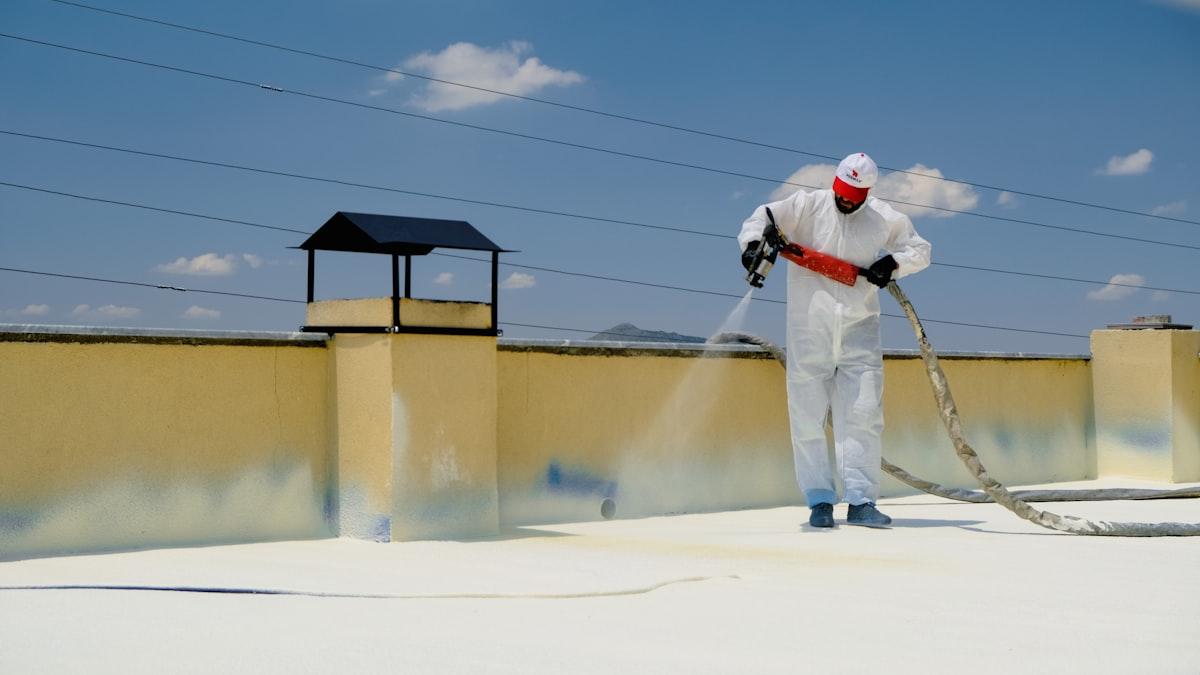
| Polyurethane liquid membrane | 200 – 380 | 12 – 20 years | Complex roofs, many penetrations, seamless requirement |
| Mud phuska with tile finish | 150 – 300 | 15 – 25 years | Traditional, excellent thermal performance, adds dead load |
| Insulated composite system | 260 – 480 | 12 – 20 years | Top-floor rooms with heat problems as well as leaks |
A few notes that matter more than the table.
Torch-applied membrane is the default for good reason, but its performance depends almost entirely on the quality of the substrate preparation and the detailing at upstands, parapets, and outlets. A perfectly good membrane laid over an unprepared surface, or terminated badly at the parapet, will fail at the edges within two seasons. When you compare quotes, compare the preparation and detailing, not the membrane brand.
Mud phuska is genuinely good and genuinely heavy. It performs well thermally and lasts a long time when done properly, but it adds significant dead load. On an older structure, do not add it without a structural opinion.
Insulated systems solve a different problem. If your top floor is unbearable in summer as well as leaking, the incremental cost over a plain membrane buys you a real reduction in heat gain. If heat is not an issue, it is money spent on the wrong problem.
Bathroom Waterproofing
Bathrooms cause more internal damage than roofs, because the leak is inside the building envelope and usually appears on someone else's ceiling.
A proper bathroom system costs PKR 200 to 400 per sq ft of treated area, which works out to roughly PKR 45,000 to 90,000 for a standard bathroom, and includes:
- Surface preparation and levelling of the substrate
- Treatment of the floor-to-wall junction, which is where the majority of bathroom leaks originate
- A continuous membrane across the full floor, turned up the walls to at least 150 mm, and to full height in the shower area
- Sealing around every penetration: floor traps, waste outlets, pipe entries
- A flood test before tiling, and this is the item most often omitted
That flood test is worth insisting on. Plug the outlets, fill the floor with water, leave it 24 hours, and check the ceiling below. It costs nothing and it is the only proof you will get that the system works before it is buried under tile.
If a bathroom renovation quote does not show waterproofing as its own line item with a defined system, it has usually been cut. Our bathroom renovation cost guide breaks down where it sits within the overall job.
Water Tanks, Basements, and External Walls
Underground water tanks need waterproofing on both faces and a food-safe, non-toxic system on the internal face, because this is drinking water. Cementitious crystalline treatment is the usual choice. Budget PKR 35,000 to 90,000 depending on tank size. Karachi's coastal water table makes external groundwater pressure a real factor in some areas, which is why the external face matters as much as the internal one.
Overhead tanks are smaller and simpler, generally PKR 25,000 to 60,000, but they are also the tanks most often ignored until the ceiling below them stains.
Basements are the hardest and most expensive case. The correct approach is external tanking applied during construction, before backfill. Once a basement is built and leaking, you are limited to negative side treatment from the inside, working against water pressure rather than with it, at PKR 250 to 500 per sq ft and with a lower success ceiling. If you are building a basement now, spend the money on external tanking. Retrofitting is always worse and always dearer.
External walls with a damp history, particularly on the weather-facing elevation and at the base of walls, take a water-repellent or elastomeric treatment at PKR 70 to 160 per sq ft. In salt-exposed coastal areas this also slows chloride ingress into the structure.
Find the Leak Before You Buy a Solution
This is the section that saves people money. A stain on a ceiling tells you where water arrived, not where it entered, and water travels along slabs and conduits before it shows itself.
Roof leak. Appears or worsens during and shortly after rain, generally on the top floor, and is often worst near parapets, outlets, or around water tank bases and pipe penetrations.
Plumbing leak. Present regardless of the weather, often steady rather than seasonal, and frequently traceable to a wall or floor shared with a bathroom or kitchen. On older Karachi houses with original galvanised iron supply lines, this is extremely common, and the fix is replacing the pipework, not coating the wall.
Bathroom membrane failure. Shows on the ceiling directly below a bathroom, worsens with use rather than with rain.
Rising damp. Confined to the lower part of walls, often with salt efflorescence on the plaster, present year round.
Condensation. No defined source, worse in humid months, typically on cool surfaces and in poorly ventilated rooms. This is a ventilation problem and waterproofing will not touch it.
Treating a plumbing leak with a roof membrane is a real and expensive mistake, and it happens because the roof is the easier thing to sell. A competent contractor investigates first: an inspection of the roof falls and outlets, a check on plumbing pressure, and where necessary a flood test to isolate the source.
What Moves the Price
Roof condition and preparation. A roof needing crack repair, screed correction to establish a proper fall, or removal of failed previous layers can add 30 to 60 percent over a straightforward application on a sound surface. Correcting the fall is often the difference between a permanent fix and a repeat visit.
Number of penetrations and details. Every pipe, outlet, parapet junction, and tank base is a detail that has to be worked by hand. A simple rectangular roof costs less per square foot than a complex one of the same area.
Access. Upper floors in dense areas without service lift access add material handling cost.
Removal of previous layers. Multiple failed coatings applied over the years often have to come off before anything new goes on. This is labour, and it is frequently absent from a low quote.
Area of the city. Rates in DHA and Clifton typically run 15 to 30 percent above the same work in North Nazimabad or F.B. Area, partly on labour rates and partly on specification defaults.
Timing. Doing waterproofing in the pre-monsoon rush, roughly May and June, means peak demand and peak pricing.
When to Do It
The work needs dry conditions and a dry substrate, so the practical windows in Karachi are the dry months, roughly October through May.
October to December is the best time. Monsoon damage is visible and diagnosable, the substrate is drying out, demand has fallen from its pre-monsoon peak, and you have a full season in hand before the next rain.
January to April works well and is comfortable weather for the trades.
May and June is the rush. Everyone who ignored the problem all year calls at once. Rates are at their highest and the good contractors are booked.
July to September is the worst time. You cannot apply most systems reliably to a wet substrate, and what gets done in that window is emergency patching rather than a proper system. If you have an active leak now, get the source diagnosed and a temporary patch applied, then schedule the permanent work for the dry season.
Mistakes That Cost the Most
Buying the cheapest coating repeatedly. Three applications of a PKR 60 per sq ft coating over six years costs more than one PKR 200 per sq ft membrane that lasts fifteen, and you have lived with leaks in between.
Treating the symptom rather than the fall. If water ponds because the roof does not drain, no membrane survives long. Fix the fall.
Skipping surface preparation. The most common cause of premature failure. A membrane bonds to what is under it, and it cannot bond to dust, laitance, or an old failed coating.
Ignoring the details. Most roofs fail at the parapet upstand, the outlet, and the pipe penetration, not in the open field. Ask specifically how those are being detailed.
Waterproofing over an unresolved plumbing leak. Money spent on the wrong surface entirely.
Accepting a quote with no written warranty. A serious contractor warrants the work. Ask for the term, ask what voids it, and ask who honours it.
Getting Waterproofing Done Properly
Naffees & Sons has worked on Karachi buildings since 1972, which means we have also been called back to a great many roofs that were waterproofed badly by someone else. The pattern is consistent: the material was usually adequate, and the preparation, the fall, and the detailing were not.
We diagnose the source before quoting, we correct drainage falls rather than covering them, we detail upstands and penetrations properly, and we flood test wet areas before anything is tiled over. Materials are sourced through supplier relationships built over fifty years, and the price we quote is the price at contract signing.
Frequently Asked Questions, Waterproofing Cost in Karachi
How much does roof waterproofing cost in Karachi? Between PKR 40 and PKR 480 per sq ft depending on the system. Basic bituminous coating sits at PKR 40 to 90, torch-applied bitumen membrane at PKR 130 to 240, and polyurethane liquid membrane at PKR 200 to 380. A typical Karachi house roof of 1,000 to 1,300 sq ft treated with a proper membrane system runs roughly PKR 140,000 to 300,000.
Which waterproofing is best for a Karachi roof? Torch-applied bitumen membrane is the practical default for most houses, at 10 to 15 years of service life. Polyurethane liquid membrane is better on complex roofs with many penetrations. What matters more than the choice is substrate preparation, correct falls to the outlets, and proper detailing at parapets and penetrations.
How long does waterproofing last in Karachi? Two to four years for basic bituminous coating, five to eight for acrylic elastomeric, ten to fifteen for torch-applied membrane, twelve to twenty for polyurethane, and fifteen to twenty five for traditional mud phuska with tile. Karachi's heat and UV shorten the life of every system relative to its rated figure, and poor preparation shortens it dramatically.
How much does bathroom waterproofing cost in Karachi? PKR 200 to 400 per sq ft of treated area, which is roughly PKR 45,000 to 90,000 for a standard bathroom. That should include substrate preparation, floor-to-wall junction treatment, a continuous membrane turned up the walls, sealing at all penetrations, and a flood test before tiling.
When is the best time of year for waterproofing in Karachi? October to December is ideal: the damage is visible, the substrate is dry, demand has dropped from the pre-monsoon peak, and you have a full dry season before the next rain. Most systems cannot be applied reliably to a wet substrate, so July to September is only suitable for emergency patching.
Can waterproofing be done during the rainy season? Not properly. Membranes and coatings need a dry, prepared substrate to bond. Work done on a wet roof during monsoon is temporary patching and should be treated as such, with the permanent system scheduled for the dry season.
Why does my roof still leak after waterproofing? The most common reasons are ponding caused by an inadequate fall to the outlets, poor surface preparation so the membrane never bonded, failure at parapet upstands and pipe penetrations rather than in the open roof area, or a leak that was never a roof leak at all and is actually plumbing.
Is waterproofing included in a normal construction contract? It should be, but it is one of the most commonly reduced line items on a low quote. Ask for the system to be named, the areas to be listed, and the warranty term stated in writing rather than accepting waterproofing as a bundled line in a package price.
How do I know if my leak is from the roof or from plumbing? A roof leak appears or worsens with rain and usually shows on the top floor. A plumbing leak is present regardless of weather and is typically near a wall or floor shared with a bathroom or kitchen. Damp confined to the base of walls with salt deposits is rising damp, and damp with no source that worsens in humid weather is condensation, which is a ventilation problem.
Get a Waterproofing Quote
Naffees & Sons diagnoses the source before quoting a solution, corrects the drainage falls rather than coating over them, and warrants the work in writing.
Book a Waterproofing Inspection →
Related guides: