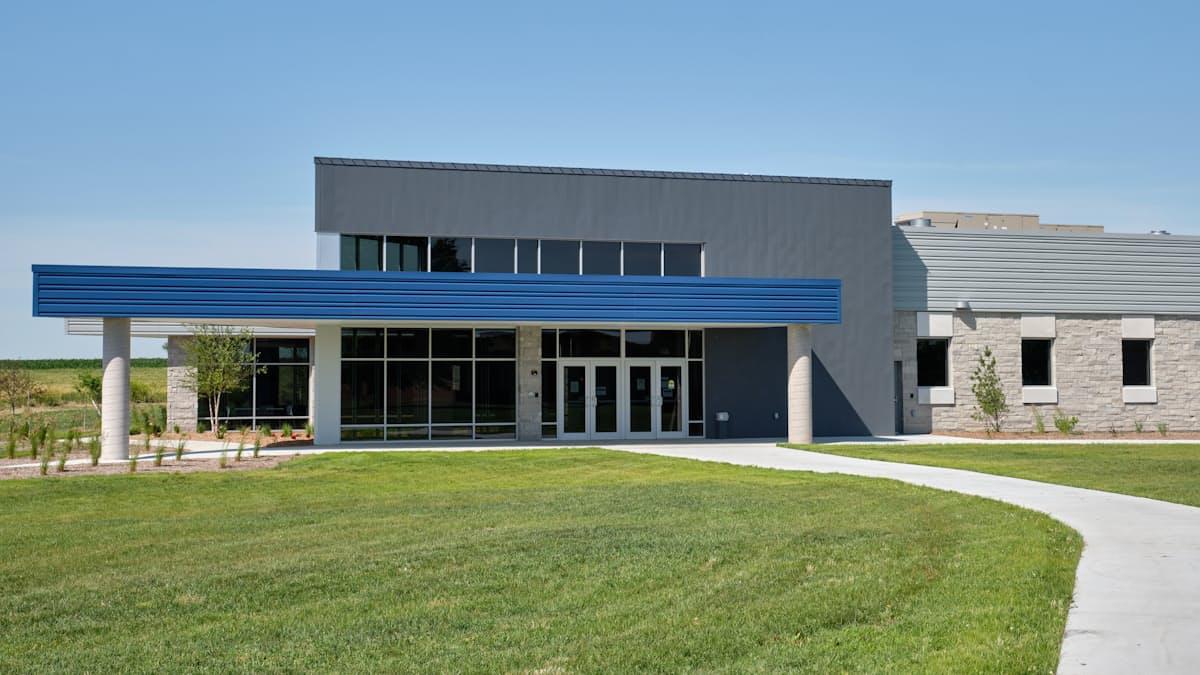
School Construction in Gizri, Karachi – Ground-Up Institutional Build
Gizri, Karachi — 2013
Building a school from scratch in an urban Karachi neighbourhood is one of the more demanding types of project a construction company takes on. The structural requirements are straightforward enough, but the context around the build makes it complicated. Tight streets that restrict delivery access. A community watching what you are doing and forming an impression of whether it will last. A brief that prioritises function and durability over anything decorative. And the knowledge that what you build will be used by children, which means there is no acceptable margin for cutting corners on safety, structural integrity, or finish quality.
Naffees & Sons built a school in Gizri, Karachi in 2013. This is the full account of that project, what was built, how it was built, and what it takes to do institutional construction properly in Karachi.
About Gizri and the Site
Gizri is a neighbourhood in Karachi's southern belt, sitting between Clifton to the west and the DHA phases to the east and south. It is a mixed-use area, residential lanes, small commercial strips, educational institutions, and community infrastructure compressed into the kind of dense urban fabric that characterises much of Karachi south of the Lyari.
The location matters for construction. Gizri's road network is functional but not generous. The streets in the residential parts of the area are not built for large construction vehicles, and access to many sites requires careful pre-planning of delivery routes, vehicle sizes, and off-loading arrangements. A contractor who does not think through these logistics before breaking ground will spend the project firefighting access problems that should have been solved on paper.
The site for this school was within this neighbourhood, a plot that would become a functional educational building for a local community that needed it.
The Brief
The brief for this project was uncomplicated in its requirements and demanding in its implications. Build a school. Make it safe, functional, and durable. Keep the cost where it needs to be for an institutional budget. Do not build something that will need significant remedial work within five years.
That last point is not a throwaway requirement. It is the thing that distinguishes a school built to last from a school that looks acceptable on handover and begins deteriorating within a few monsoon seasons. Karachi's climate is hard on buildings. The combination of extreme heat in the pre-monsoon months, concentrated rainfall during the monsoon, and year-round humidity levels that would be considered high by most international standards means that buildings that have not been properly waterproofed, properly detailed, and properly finished will show it quickly.
The specification for this project was driven by durability requirements. Every material choice, every system decision, and every finish selection was made on the basis of what would perform reliably over a ten-to-twenty-year service life, not what would look best in a photograph taken on completion day.
Scope of Work
Site Investigation and Foundation Design
No responsible contractor starts placing concrete without understanding what is underneath the site. Karachi's southern belt, the Gizri, Clifton, and DHA corridor, sits on ground that includes areas of filled land, former coastal zones, and varying soil conditions depending on exact location. The founding conditions for a building have a direct bearing on the type and depth of foundation required, and getting this wrong is expensive in ways that are very difficult to fix after the fact.
A ground investigation was carried out before foundation design was finalised. Soil bearing capacity was confirmed. The foundation design was set accordingly, a reinforced concrete foundation system sized to the actual ground conditions of this site, not a generic assumed specification.
Foundation Works
With the foundation design confirmed, excavation began. The founding strata were exposed, inspected, and signed off before any concrete was placed. Reinforcement was fixed to drawing, inspected, and shuttered before the foundation pour.
Waterproofing at foundation level, in the form of a damp-proof membrane and appropriate concrete mix design, was specified from the outset. Moisture rising from ground into a building's lower structure is one of the most persistent and damaging problems in Karachi's institutional buildings. It is also one of the easiest to prevent at the construction stage and one of the most expensive to fix retrospectively.
Superstructure, Columns, Beams, and Slabs
The superstructure is reinforced concrete frame construction, the standard and appropriate structural system for a multi-storey institutional building in Karachi's seismic zone. Pakistan's building code requirements for seismic loading are not optional, and a school, a building that, by definition, will contain children during a seismic event, is not the context in which to economise on structural specification.
Columns were cast floor by floor, with the reinforcement details at laps and junctions checked against the structural drawings before shuttering was placed. Beam and slab construction followed the same discipline: reinforcement fixed to drawing, inspected, shuttered, and poured as a monolithic unit floor by floor.
Concrete mix design was specified to achieve the required characteristic strength. Cube tests were taken at each pour and cured for 28-day testing. This is standard practice on a properly managed site and essential documentation for a project that will be inspected and signed off by a client or engineer.
The roof slab received the same structural treatment as the floor slabs below, with particular attention to the falls and drainage design. A flat roof with inadequate drainage is a maintenance liability from the day it is completed.
Brickwork and Masonry Infill
With the frame complete, brickwork infill panels were constructed floor by floor. Standard burnt clay brick is the right material for this application in Karachi, locally available, thermally appropriate for the climate, and compatible with the plastered finish systems used in institutional buildings across the city.
Brickwork was laid in a proper bond with full mortar beds. Lintel beams over door and window openings were cast in reinforced concrete. Movement joints were incorporated at the junctions between brickwork panels and the concrete frame, an often-skipped detail that, when omitted, results in cracking along frame-to-masonry interfaces within a year or two of construction.
External Render and Waterproofing
The external faces of the brickwork received a two-coat render system, scratch coat followed by finish coat, applied in appropriate specification. The render provides the primary protection for the brickwork against driving rain and forms the substrate for the external paint finish.
A masonry waterproofing treatment was applied over the rendered external surfaces before painting. In Karachi's climate, this is not optional for a building intended to serve a community for decades. The waterproofing penetrates into the substrate, consolidates the surface, and resists the hydrostatic pressure of driving rain that, during a heavy monsoon downpour, is considerable.
External paint was applied in a breathable, weather-resistant specification, a product designed for tropical climates rather than a domestic emulsion. The difference in service life is significant.
Roof Slab Waterproofing
The roof was waterproofed with a built-up system applied after the structural slab was completed and cured. The sequence:
- Surface preparation, laitance removed, surface cleaned and primed
- Waterproofing membrane applied in laps to manufacturer specification
- Screed laid over the membrane at falls toward the drainage outlets
- Drainage outlets detailed with collars to prevent water tracking under the screed
A waterproofed roof that drains properly is the single most important thing you can do for the long-term performance of a building in Karachi. Every room below the roof slab benefits from it. Every year of the building's life is cleaner and drier because of it.
Classroom Fit-Out
Each classroom was fitted out to an institutional specification designed for heavy daily use:
Walls: Plastered smooth to a finish appropriate for painting. Paint applied in washable emulsion, a practical choice for a school environment where walls will be marked, cleaned, and marked again for the life of the building.
Floors: Ceramic floor tile in a standard 30x30cm format, laid in a grid on properly prepared screed. Ceramic tile in this specification has a practical service life of 20+ years under normal institutional use when laid correctly. Correctly means on a flat, well-cured screed with full adhesive bed and properly set grouted joints. Cut corners at the substrate level show up in the floor within five years.
Doors: Solid-core flush doors in aluminium frames, the appropriate specification for a school in Karachi's humidity. Timber frames swell, warp, and deteriorate. Aluminium does not. This is a slightly higher first cost and a significantly lower whole-life cost.
Windows: Aluminium-framed louvre or casement windows providing natural ventilation to each classroom. Ventilation in Karachi's climate is not merely comfort, it is health. Classrooms that do not ventilate adequately become genuinely uncomfortable in the April-to-June heat period.
Blackboards or teaching surfaces were installed in each classroom as part of the fit-out package.
Sanitary Facilities
School sanitary facilities are a basic requirement that is sometimes treated as an afterthought. They should not be. The provision of adequate, functional toilets and ablution facilities is a matter of basic dignity for students.
The sanitary installations for this school included:
- Separate male and female WC and washroom blocks
- Ceramic wall and floor tiling throughout the sanitary areas
- White vitreous china WC suites and washbasins
- UPVC soil and waste pipework
- Adequate ventilation to sanitary areas
The tiling specification in sanitary areas was extended to the full height of the walls, a hygiene and maintenance decision that makes the spaces easier to clean and significantly more durable than partial-height tiling with painted plaster above.
Plumbing
Water supply throughout the building was installed in UPVC pipework, the appropriate specification for a new institutional build. Galvanised iron, the older standard, corrodes internally over time. UPVC does not.
Supply lines were run from the incoming mains connection to a storage tank and then distributed by gravity to the outlets on each floor. The storage tank capacity was sized for the anticipated occupancy demand.
Hot water was not specified, standard for a Karachi school, where ambient temperatures do not require it for most of the year and where the energy demand of a hot water system would be an unnecessary ongoing cost for the institution.
Electrical Installation
The electrical installation was designed and installed to the Pakistan Wiring Rules and standard institutional practice:
- Incoming supply terminated and metered at the main distribution board
- Sub-distribution boards on each floor
- Wiring in conduit throughout, surface-mounted conduit in accessible areas, concealed conduit embedded in the structure at slab level
- Lighting circuits, power circuits, and dedicated circuits for any equipment loads specified
- Light fittings, switches, and socket outlets throughout
- Earthing system installed to standard
An earthing system is one of those installation elements that is invisible and frequently omitted on budget builds. In a building occupied by children, it is non-negotiable.
Boundary Wall and Entrance Gate
A school needs a secure perimeter. The boundary wall for this project was constructed in brickwork to a height appropriate for the setting, high enough to define the site and provide security, detailed at the top to resist capping deterioration that causes boundary walls to need premature rebuilding.
The entrance gate and gateposts were constructed and hung as part of the perimeter package.
Site Logistics in Gizri
As noted at the outset, Gizri's street network is not built for large construction vehicles. The practical implications for this project:
Materials planning. Bulk deliveries, aggregate, sand, cement, bricks, were scheduled in smaller loads using vehicles that could navigate the access routes. This added to the delivery frequency and required closer coordination with suppliers, but it was the only workable approach.
Concrete. On-site mixing was used rather than ready-mix trucks, which could not reliably access the site with full loads. This required disciplined batching to maintain consistent mix proportions, something that requires supervision, not assumption.
Debris removal. Construction waste was removed in loads sized for the access routes. Skips were not practicable; tipper loads were managed accordingly.
Neighbour relations. Urban construction in a residential neighbourhood generates noise, dust, and traffic disruption. The community living around the site could see exactly what was being built, for their children, their neighbourhood, and they were watching. That awareness kept the site well-managed and the relations with neighbours constructive throughout.
Project Delivery
The project was completed and handed over on schedule. The building was inspected by the client, all systems were tested and demonstrated, and the keys were handed over with the documentation package, drawings, test results, warranties, that every properly managed project should produce.
What Makes a School Building Last in Karachi
Twenty years from now, the school in Gizri will either be a well-maintained building that has served its community faithfully, or it will be showing the signs of early failure, leaking roof, damp walls, cracked floors, deteriorated services. Which of those outcomes occurs depends almost entirely on decisions made during construction, before a single student walked through the gate.
The decisions that matter are not glamorous. They are:
- Get the foundation right for the ground conditions you actually have
- Waterproof the roof properly, detail the drainage, and use materials specified for the climate
- Apply damp-proof measures at foundation level
- Use the right materials, aluminium not timber for frames, ceramic not vinyl for floors, external-grade paint not interior emulsion
- Install the electrical earthing system
- Lay the drainage at proper falls
- Do not skip the 28-day cube tests
These are not expensive decisions in the context of the overall project budget. But they are the decisions that separate a building that lasts from one that does not.
Building Schools and Institutional Buildings in Karachi
Naffees & Sons has been building and renovating schools, colleges, and community buildings in Karachi since the 1970s. Institutional construction is a different discipline from residential or commercial work, different clients, different approval processes, different durability requirements, and a different accountability.
When you build a school, you are building something that a community will depend on. The families in that neighbourhood cannot switch to a different school because the roof is leaking three years after handover. They are stuck with what you built. That is a responsibility we take seriously.
If you are looking to build a school, college, masjid, community hall, or any institutional building in Karachi, or if you have an existing building that needs renovation, we would be glad to visit the site, assess what is needed, and give you an honest estimate.
For more documented examples of our government and institutional work, see the P&T Colony Model School conversion, SM Science College renovation (2004–05), and GPS Abdul Ghaffar shelterless school construction (2002–03). For guidance on evaluating any contractor for institutional projects, read our guide on how to choose a builder in Karachi.
Naffees & Sons | Karachi | Chat on WhatsApp