GPS Abdul Ghaffar Shelterless School, Two-Classroom Construction, Gadap, Karachi (2002–03)
Burpat, Gadap Town, Karachi — 2002
Not every government contract involves a prominent building or a large programme value. Some of the most telling contracts are the small ones, where there is no visibility, no headline number, and no margin for error. The work Naffees & Sons completed at GPS Abdul Ghaffar, Burpat, Gadap Town in 2002–03 is that kind of contract.
A shelterless government primary school. A remote peri-urban site in Gadap tehsil, seven miles from Gadap City by road, accessible via the Super Highway and National Highway junction. A contract value of Rs.1,88,000/-. The requirement was to deliver a properly engineered, permanent two-classroom building, with veranda, foundation, plinth, DPC, brickwork, and full structural finish, on specification, under Works & Services Department inspection, in a location where getting materials to site was a daily operational problem.
Naffees & Sons completed it. The documents are below.
The contract: ADP, Works & Services Department, Government of Sindh
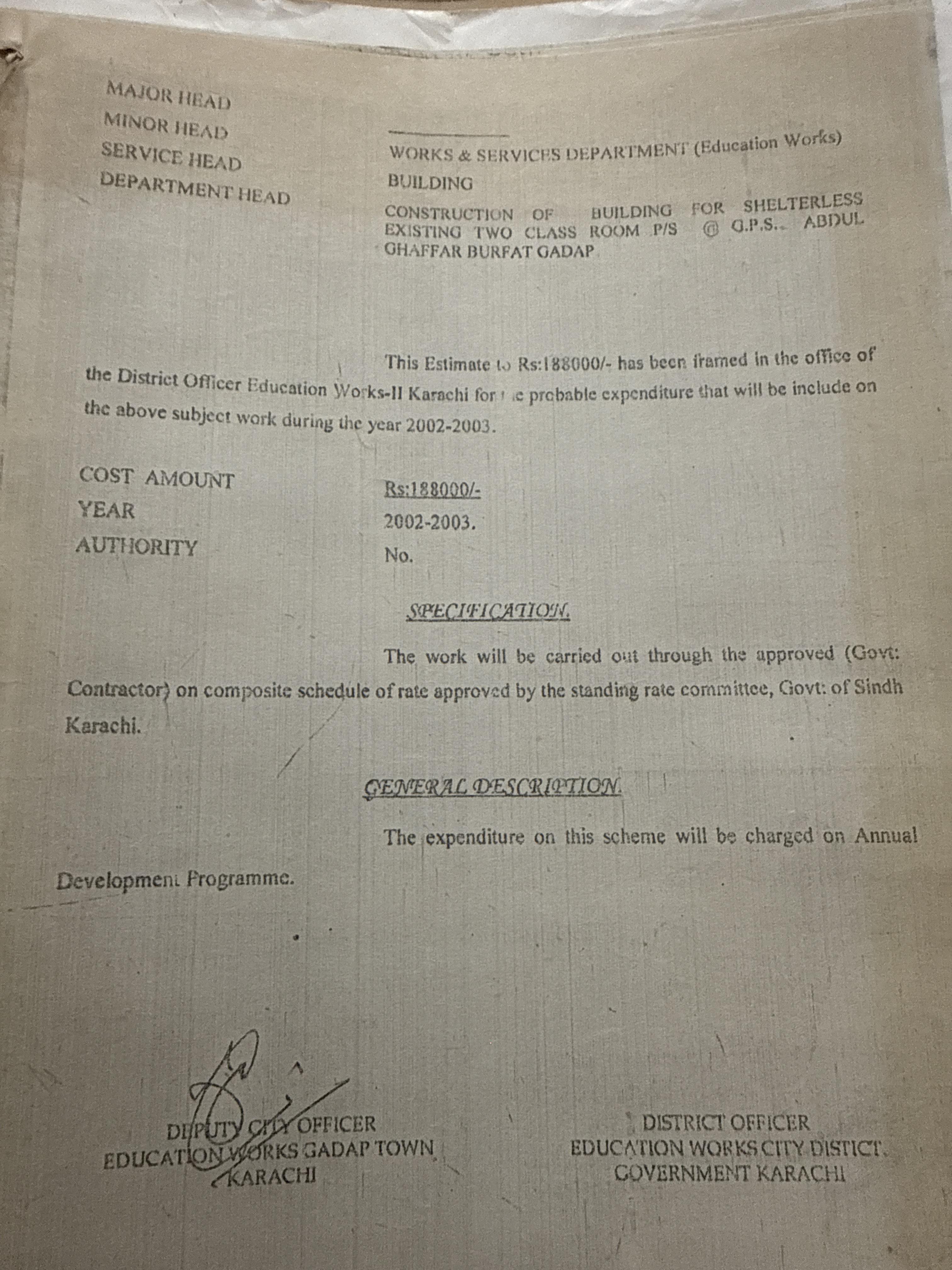
Government tender acceptance and work order for two-classroom shelterless primary school construction at GPS Abdul Ghaffar, Gadap Town, Works & Services Department, CDG Karachi, 2002
The contract was issued under the Annual Development Programme (ADP), the formal government mechanism for capital expenditure on public infrastructure in Pakistan. ADP contracts go through a tendering process, budget line allocation, sanction from the relevant government authority, and then formal work order issuance.
Awarding authority: Works & Services Department (Education Works), City District Government Karachi
Supervising officer: Deputy City Officer Education Works, Gadap Town
Contractor: M/S Nafees & Sons (Naffees & Sons)
Contract value: Rs.1,88,000/- (One lakh eighty-eight thousand rupees)
Period: 2002–03
Programme: ADP (Annual Development Programme), Government of Sindh
At 2026 purchasing power, using Pakistan's SBP CPI data showing approximately 6× inflation since 2002-03, the Rs.1,88,000 contract represents approximately Rs.11–12 lakh in today's money.
The contracting framework was identical to any other government building contract in Karachi: a budget line, a sanctioned project, an issued work order, a specified scope, and a completion requirement.
The school and its location
The site location map, signed by the Deputy City Officer Education Works, Gadap Town, gives a clear picture of where this project was.
GPS Abdul Ghaffar is in Burpat, within Gadap Town (now Gadap Town Union Council, District East, Karachi). The site sits in the peri-urban fringe well beyond Karachi's developed core, accessible via the Super Highway (Karachi–Hyderabad) and National Highway (Karachi–Thatta) corridor.
Key site characteristics from the official location map:
- Approximately 7 miles from Gadap City by road, the nearest administrative centre
- Access via the Super Highway / National Highway junction
- Neighbouring reference points include stone/marble quarry areas, Memon Goth, and Mango Pir, confirming a genuinely remote, rural-fringe location
- No surrounding urban infrastructure to support construction logistics
Every material, cement, aggregate, bricks, reinforcement bar, timber, roofing, had to be sourced in Karachi and transported out. There was no builder's merchant nearby, no reliable water supply, and no established contractor presence in the area.
What "shelterless" means
In Pakistan's government education system, a shelterless school is a formally registered government school with enrolled students, teachers, and a government allocation, but no permanent building. In 2002, GPS Abdul Ghaffar was attempting to run classes without a building: under trees, in improvised shelter, or wherever parents and teachers could manage.
The ADP allocation to build a permanent structure was what changed that. Naffees & Sons was the contractor selected to do the work.
The government face sheet
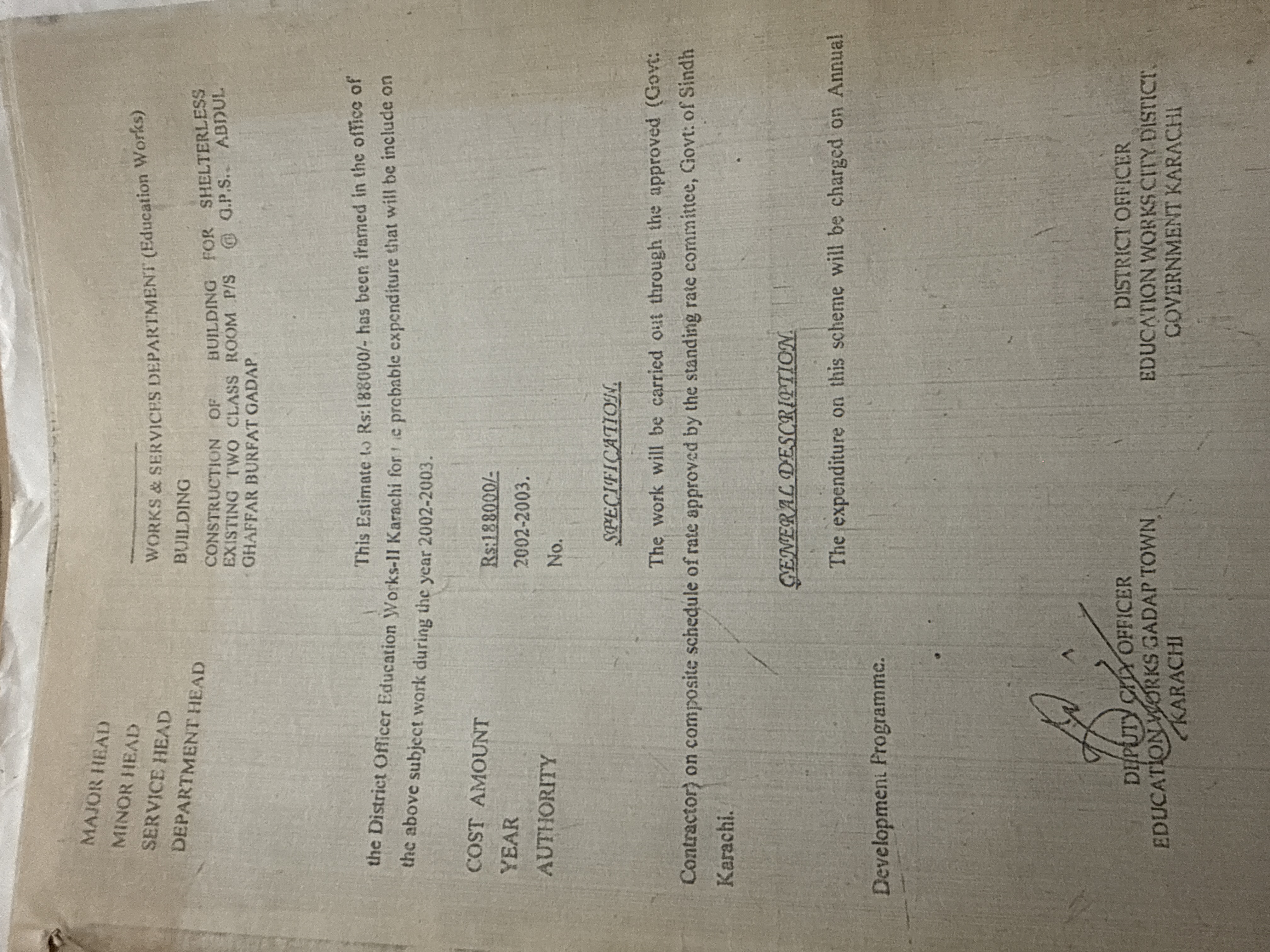
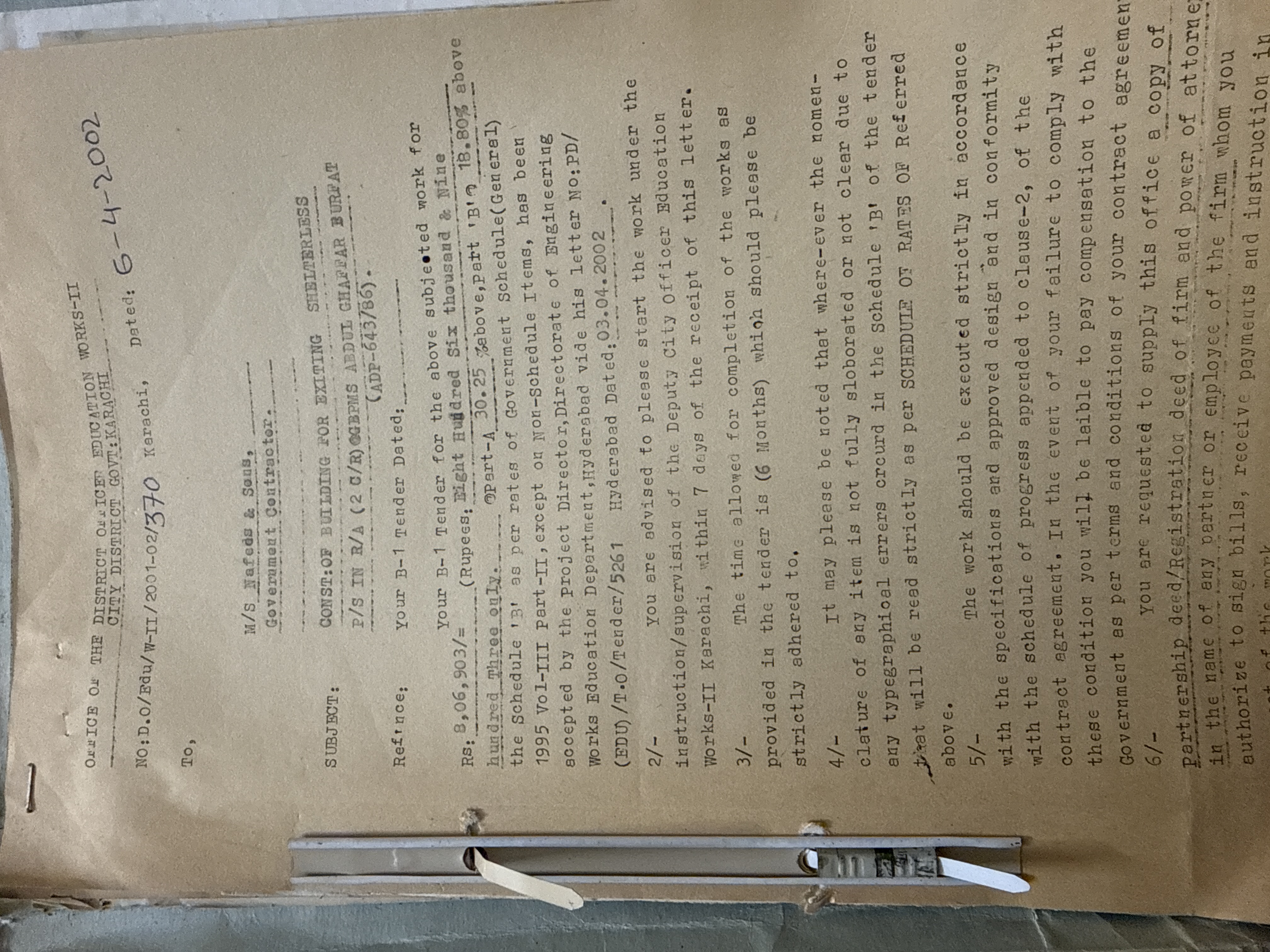
Official government face sheet: construction of two-classroom building for GPS Abdul Ghaffar, Burpat, Gadap Town, contract Rs.1,88,000, Works & Services Department (Education Works), CDG Karachi, 2002–03
The government face sheet is the formal project registration document, the record that a specific contractor, for a specific contract sum, was assigned a specific project under a specific ADP budget line. It names:
- The school: GPS Abdul Ghaffar, Burpat, Gadap Town
- The contractor: M/S Nafees & Sons
- The contract value: Rs.1,88,000/-
- The department: Works & Services (Education Works), CDG Karachi
- The programme: Annual Development Programme, Government of Sindh
This is the government's own administrative record of Naffees & Sons as the appointed contractor. It is not a contractor's claim.
The building: what was constructed
The architectural and structural drawings for the GPS Abdul Ghaffar project show a government-standard specification for a two-classroom primary school building, a designed, engineered structure built to the Works & Services Department's requirements.
Building layout
The building comprises two classrooms arranged in a line, with a covered veranda running the full width:
| Space | Dimensions | Notes |
|---|---|---|
| Classroom 1 | 20 ft × 16 ft | Standard classroom, full-height walls, windows |
| Classroom 2 | 20 ft × 16 ft | Standard classroom, full-height walls, windows |
| Front veranda | 6 ft deep × full width | Covered entry; rain protection; assembly space |
Total building footprint: approximately 46 ft × 16 ft plus the veranda overhang.
Structural specification (from architectural drawing)
The structural detail drawings, Section Main Building and Section C, specify the full build sequence from ground to roof:
- Foundation: Brick/masonry foundation at appropriate depth for soil conditions
- DPC (Damp Proof Course): Specified at plinth level to prevent moisture rise
- Plinth construction: Brick masonry up to floor level
- Wall construction: Standard brick masonry above plinth
- Openings (Schedule of D/W):
- Door D1: 3'6" × 7'0", main classroom doors
- Door D2: 2'6" × 7'0", secondary door
- Windows: 4'0" × 4'0", classroom natural light and ventilation
- Ventilators: 2'0" × 1'6", high-level cross ventilation
- Roof construction: Specified to Works & Services Department standard, flat reinforced roof appropriate for the climate
- Finishing: Internal and external plaster, lime wash/paint
The DPC alone, which is routinely skipped in informal construction, says something about the standard that was applied here.
The cost estimate breakdown
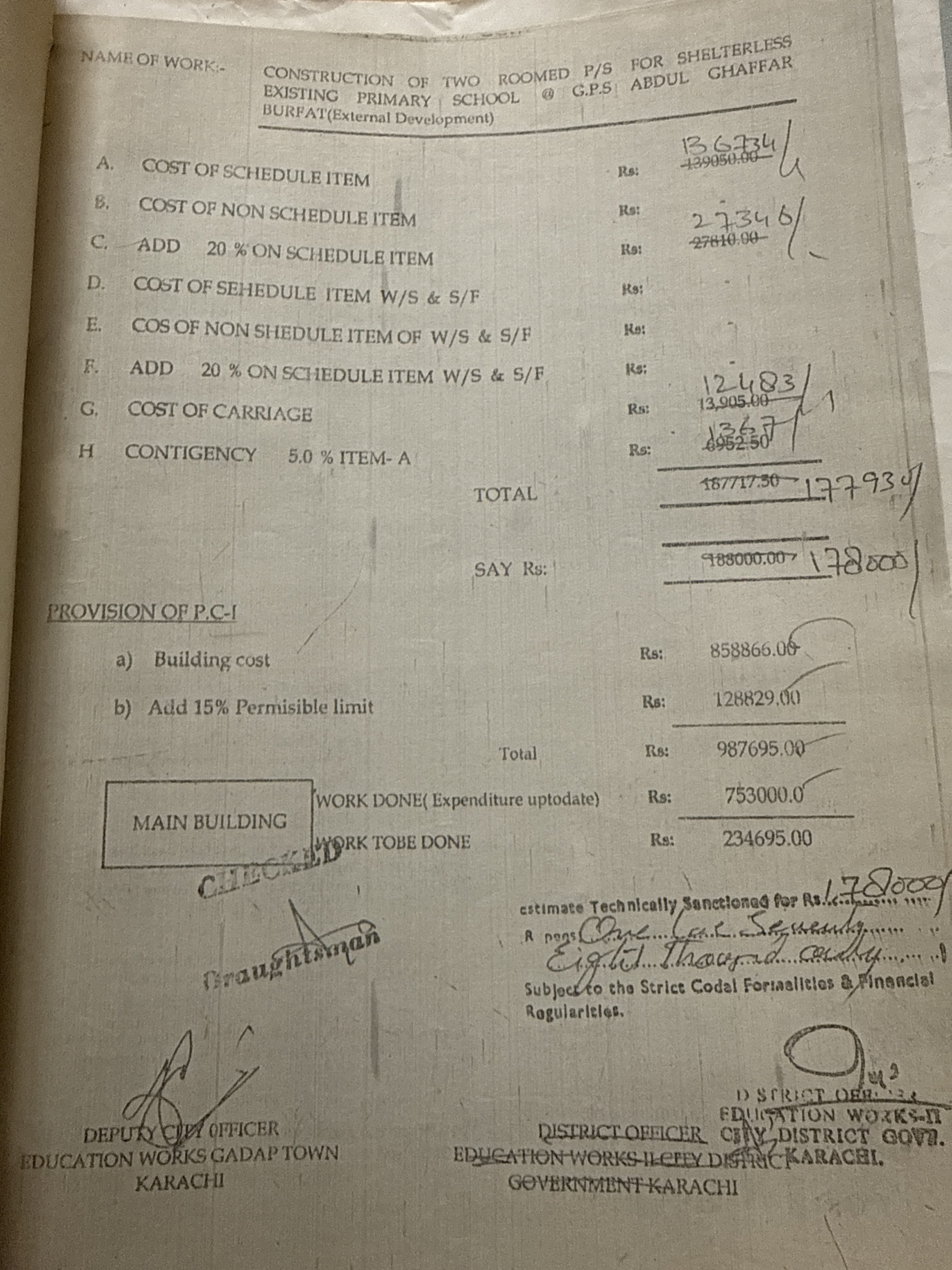
Government cost estimate and bill of quantities: two-room shelterless primary school construction, GPS Abdul Ghaffar, Burpat, Gadap Town, total Rs.1,88,000, Works & Services Department, CDG Karachi, 2002–03
The cost estimate document gives the itemised breakdown of how Rs.1,88,000 was allocated across the building's construction elements. This is the Works & Services Department's own calculated breakdown of materials, labour, and rates, not a contractor's quote. Naffees & Sons tendered against this specification and was awarded the contract.
The estimate covers all elements: earthwork, foundation, plinth, brickwork, roof, plaster, painting, doors and windows (including schedule), and external works.
The challenges: what made this project demanding
1. Site remoteness and logistics
Seven miles from Gadap City, with the Super Highway and quarry sites as the primary navigation references. Every material had to come from Karachi proper and be transported to a site with no contractor infrastructure in the area.
Getting deliveries to a remote site without incurring wastage, materials left unattended, weather exposure, pilferage, required planning and on-site supervision that a short-distance urban project does not demand. The team batched deliveries, maintained daily site presence, and worked within the ADP programme's reporting requirements.
2. Site access in 2002
In 2002, the Super Highway / Gadap corridor had not seen the development that has come since. Access roads to the site were unpaved, and during Karachi's monsoon months, unpaved roads in this part of the city are not reliably passable by heavy vehicles. The construction programme had to account for that.
3. Water supply for construction
Construction requires water for mixing mortar, curing concrete, and maintaining cast elements as they set. There was no reliable municipal water supply at a remote Gadap site in 2002. Water had to be arranged separately, by tanker or on-site storage, and managed carefully to ensure curing was not cut short. Concrete that is under-cured develops strength deficiencies that may not be visible for months or years. This was not skipped.
4. Works & Services Department inspection requirements
ADP contracts under the Works & Services Department are subject to formal stage inspection before proceeding to subsequent phases: foundation, plinth level, roof level. Each requires the designated government officer, in this case the Deputy City Officer Education Works Gadap Town, to physically attend the site, inspect the completed stage, and record approval.
At a remote Gadap site, coordinating those inspections required advance notice, flexibility around the officer's schedule, and confidence that the work would pass at first presentation. With Naffees & Sons' government contracting experience, stage inspections were a procedural step, not a problem.
5. Working within a tight programme value
Rs.1,88,000 in 2002-03 was not a generous figure. A two-classroom building with proper foundation, DPC, structural brickwork, roof, plaster, openings, and finishing, built to specification, in a remote location, with all materials transported from the city, left no room for wastage or rework. The build had to be right the first time.
Naffees & Sons had been working in Karachi's government contracting environment since 1972. Knowing material quantities, managing wastage, buying at the right rates, and holding to specification without overbuilding, these come from decades of doing exactly this kind of work.
What the documents confirm
The documentation for GPS Abdul Ghaffar covers the complete paper trail of a properly executed government contract:
| Document | What it confirms |
|---|---|
| Government face sheet | Naffees & Sons named as ADP contractor for this project, Rs.1,88,000 |
| Work order / tender acceptance | Formal tender process completed, contract awarded, work authorised |
| Cost estimate breakdown | Bill of quantities against which Naffees & Sons tendered, full itemised scope |
| Site location map (signed by DCO) | Official government record of the site, signed by supervising officer |
| Architectural drawing | Engineered two-classroom building specification to Works & Services Dept. standard |
The face sheet, the work order, the estimate, the location map, and the drawings, all issued or countersigned by government officers, form an audit trail that is not contestable.
Contract value in today's money
Rs.1,88,000 sounds modest in isolation. It is not the headline number of a large government building programme. But context matters on two counts.
On purchasing power: SBP CPI data puts cumulative inflation between 2002-03 and 2025 at approximately 6×. Rs.1,88,000 in 2002 is roughly Rs.11–12 lakh in today's money, a meaningful construction contract, and one covering a complete permanent building.
On the selection itself: the Government of Sindh, through the Works & Services Department and CDG Karachi, chose Naffees & Sons for this project. That meant clearing their tendering requirements, being assessed as capable of delivering to specification in a remote location, and being formally awarded the ADP contract. Contract value does not change what that selection means. Naffees & Sons was on the government's approved contractor list, completed the tender process, and delivered the work.
Why this project matters for Naffees & Sons' record
There is a discipline in building small government projects correctly that is easy to neglect. The temptation with a low-value contract in a remote location is to cut where it is unlikely to be noticed: thinner mortar beds, reduced curing time, cheaper materials than specified.
Naffees & Sons did not work that way in 2002, and we do not work that way now.
The students who came to GPS Abdul Ghaffar after this building was completed, children from Burpat and the surrounding Gadap area who had been studying without any shelter, received a properly built classroom. Protected from rising moisture at plinth level. Structurally sound. With windows and ventilation built to specification. It was built correctly, which is why it stood.
Government institutional construction in Karachi is built on an accumulated record: doing the work properly, having the documentation to show it, and being brought back for the next contract because the first one was delivered without problems. From GPS Abdul Ghaffar in 2002 to SM Science College in 2004, to P&T Colony Model School through to 2012, and beyond, the record runs consistently across more than five decades.
Considering construction work in Karachi's peri-urban areas?
Building in Gadap, Malir, Bin Qasim, or other peri-urban areas of Karachi comes with specific problems: site access, utility availability, material logistics, and regulatory requirements that differ from the developed city. Naffees & Sons has worked in these conditions since 1972.
If you are responsible for a government school, community facility, or any construction project in Karachi, urban or peri-urban, and you need a contractor with a documented record of government-approved delivery, we would be glad to discuss your project.
For more on what to look for in a Karachi contractor, read our guide on how to choose a contractor or our overview of the best construction companies in Karachi.
Contact us for a site assessment and honest cost estimate →
Naffees & Sons | Karachi | Chat on WhatsApp
Related Projects
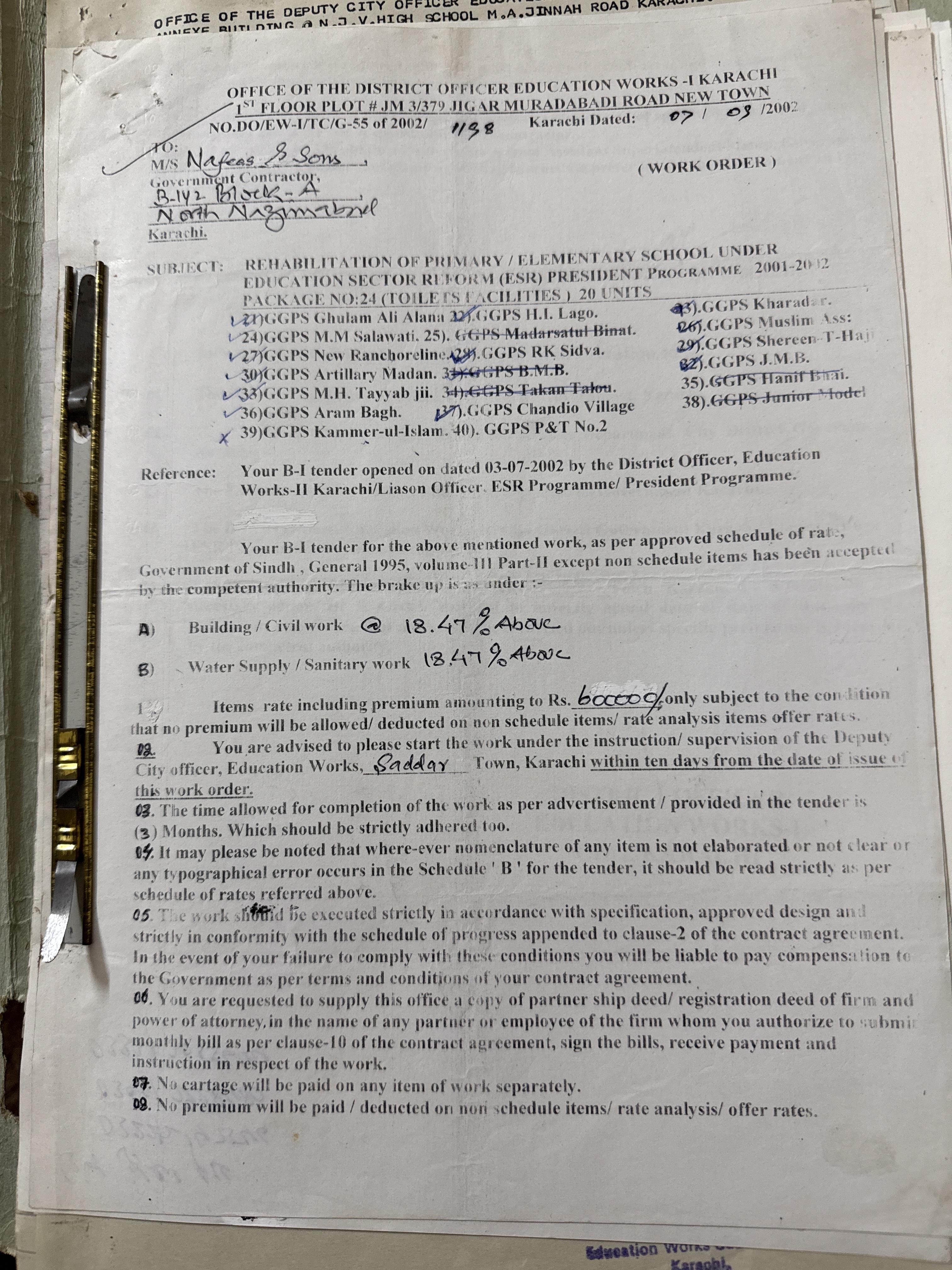
President's Education Sector Reform Programme, Multi-School Toilet Rehabilitation, Karachi (2001–06)
Saddar Town, Karachi — 2001
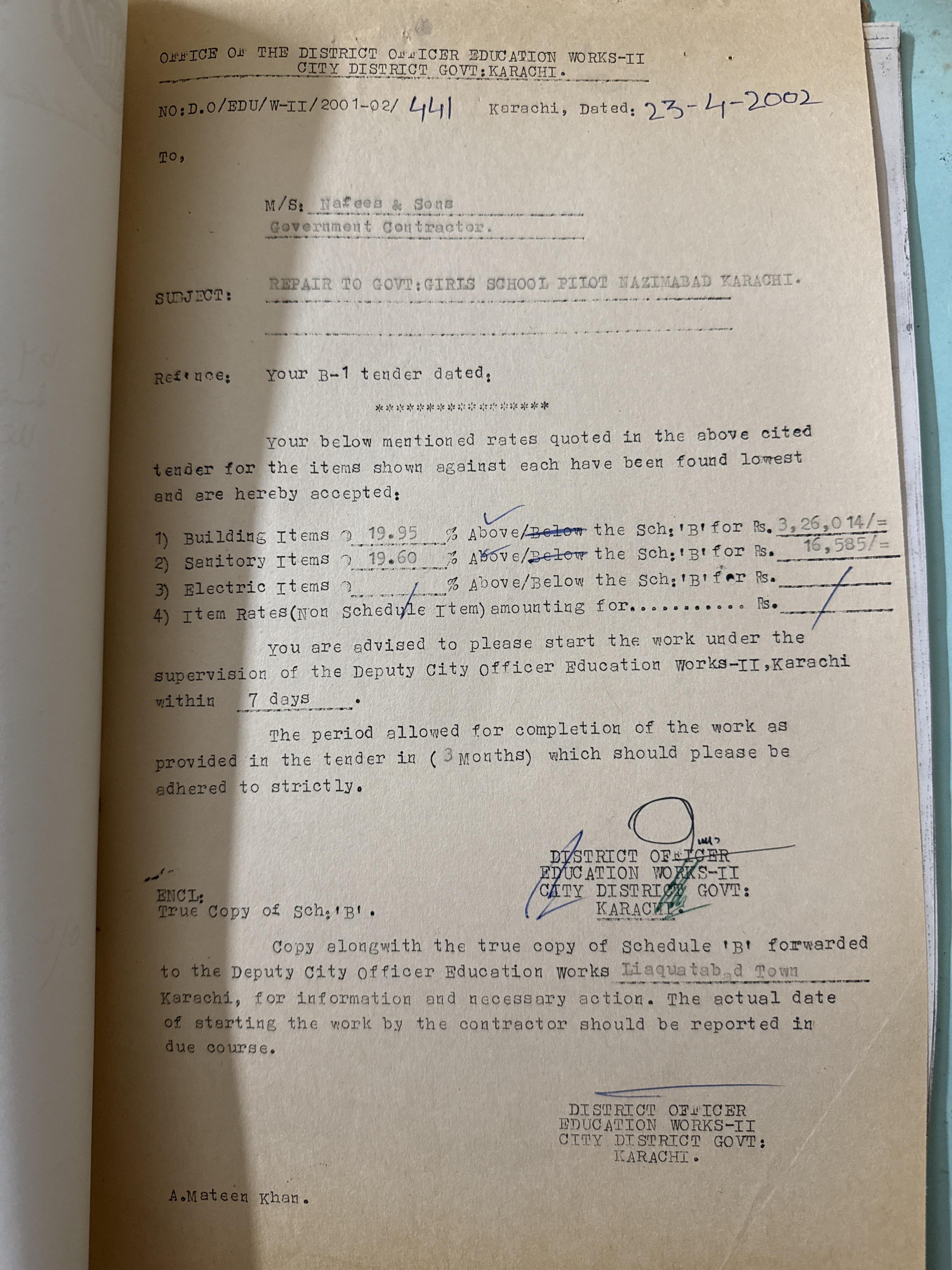
Govt. Girls Pilot Higher Secondary School Renovation, Nazimabad Karachi, Provincial Technical Sanction (2002)
Nazimabad No.1, Karachi — 2002
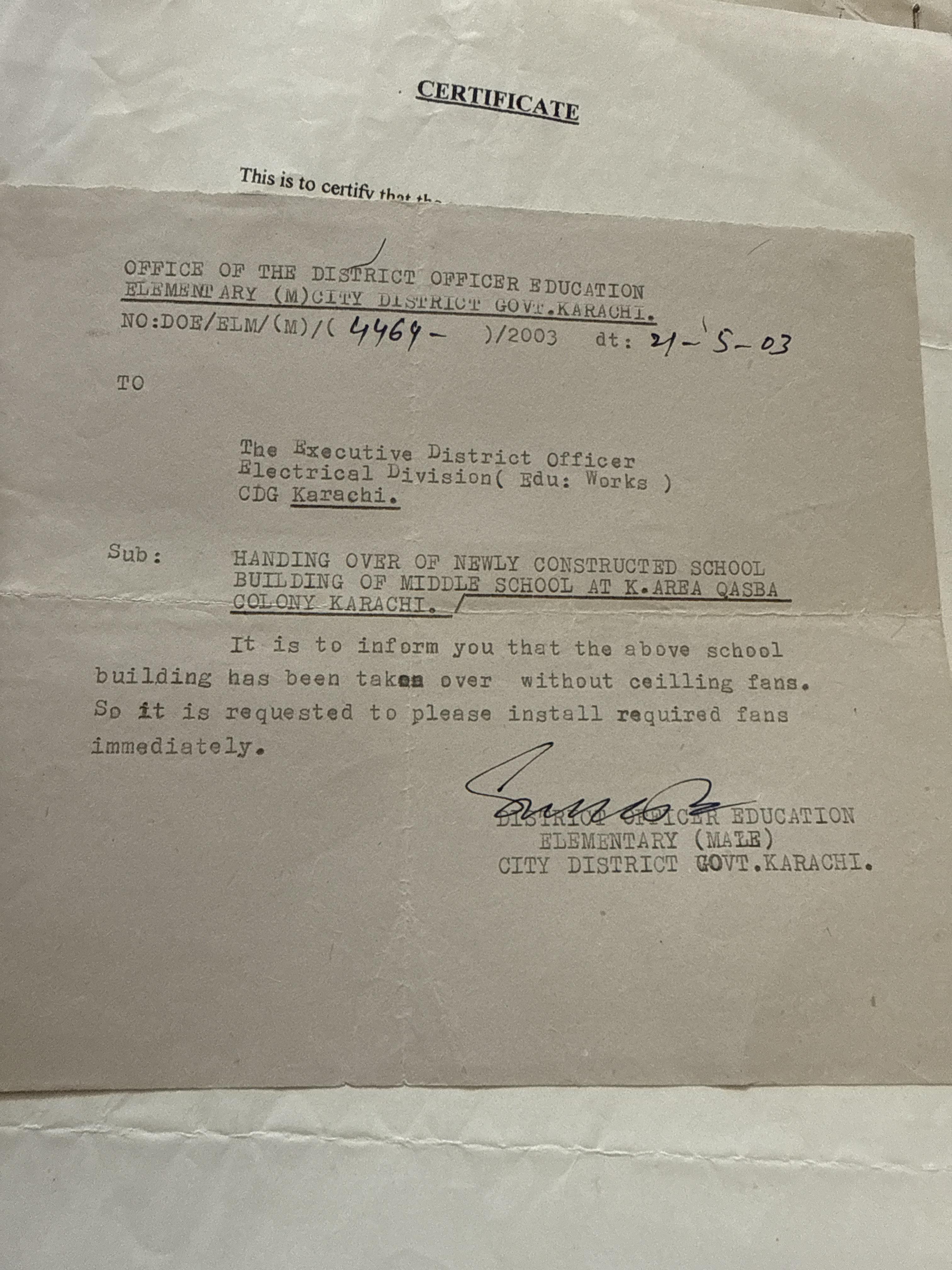
Primary to Middle School Upgradation, K Area, Qasba Colony, Karachi (1998–2003)
K Area, Qasba Colony, Orangi Town, Karachi — 2003