SM Government Arts & Commerce College Renovation – Karachi
Saddar, Karachi — 2012
Renovating an 80-year-old government institution in the middle of an active academic year is not a straightforward job. There are no quiet Saturdays, no empty corridors to work through at your own pace. There are students, staff, and examinations. There are government approval chains. There are buildings that have not seen serious maintenance in decades, and there is the obligation, carrying real weight, to restore a piece of Karachi's institutional history without destroying what makes it worth restoring.
This is the project Naffees & Sons was awarded approximately a decade ago at SM Government Arts & Commerce College in Saddar, Karachi. It remains one of the most significant institutional renovation contracts in our portfolio, and one we are genuinely proud to have delivered.
About the Building and Institution
SM College, formally the Sindh Muslim Government Arts & Commerce College, is one of the oldest and most recognisable educational institutions in Karachi. The institution traces its roots back to 1885, when it began as a school. It became a college in 1943, the same period in which Quaid-i-Azam Muhammad Ali Jinnah was involved in the broader movement that would shape Pakistan's future.
Located on Shahrah-e-Kemal Ataturk in Saddar, the campus sits at the heart of one of Karachi's most historically dense neighbourhoods. The surrounding area, the old commercial and civic core of the city, is home to institutions, government offices, and urban fabric that predates partition. SM College is part of that fabric.
The college offers intermediate programmes across Arts, Commerce, and Science, and operates on both morning and evening schedules. At any given point during the working day, the campus is occupied. Understanding that was the first requirement of this contract.
Why This Renovation Was Needed
Buildings constructed in the 1940s and 1950s, without the benefit of modern waterproofing systems or contemporary structural design codes, age in predictable ways. After six to seven decades of Karachi's humidity, monsoon cycles, and the general wear of high-occupancy institutional use, the SM College buildings had reached a condition where cosmetic maintenance was no longer sufficient.
The problems were structural and systemic:
Moisture ingress was the most pervasive issue. Karachi's climate, high humidity for much of the year, intense monsoon rainfall from June through August, is particularly hard on masonry buildings. Where waterproofing has degraded or was never applied properly, moisture works into brickwork, moves through walls, and causes the plaster inside to bubble, crack, and eventually fall. Several buildings on campus had reached this stage.
Structural cracking in walls and columns, some of it cosmetic, some of it indicating movement that needed assessment before it progressed further.
Flooring deterioration across high-traffic areas: corridors, staircases, and ground-floor classrooms. Decades of heavy footfall had taken the original finishes past the point of repair.
Aged utility systems, water supply lines that had corroded, sanitary installations that had degraded, and electrical distribution that did not meet current safety standards in several blocks.
Facade and external finish that had weathered to a state where the buildings projected an impression of institutional neglect rather than the historical dignity they deserved.
When a government institution reaches this point, the renovation is not optional. It is a matter of basic functionality, safety, and the signal that a government sends to its students about whether their education matters.
Scope of Work
Pre-Construction Assessment
Before a single chisel touched a wall, our team carried out a systematic condition assessment of the campus buildings included in the contract scope. This meant inspecting every wall for cracking patterns, probing plaster to identify hollow sections concealing moisture damage, testing flooring substrate for stability, and reviewing the existing electrical and plumbing layouts.
Assessment-first is the only responsible approach to old-building renovation. What you see on the surface of an 80-year-old building is rarely the full picture. You need to know what is behind the plaster, under the floor, and inside the walls before you commit to a method statement and a price.
The assessment output fed directly into the phasing plan, the material specifications, and the cost estimate submitted to the government client.
Structural Repairs
Structural repair work addressed the cracking and movement identified during assessment. This was not, in most cases, a structural failure scenario, the buildings were sound in their primary load path, but deterioration in secondary elements that, if left unaddressed, would have progressed to more serious problems.
Work included:
- Crack repair and stitching in masonry walls using appropriate mortars matched to the existing substrate
- Repointing of deteriorated brickwork joints in affected areas
- Reinforcement of structural connections where corrosion of embedded steel had caused localised concrete spalling
- Stabilisation of areas where foundation settlement had produced visible cracking at plinth level
All structural repair work was carried out to engineer specification and inspected before being closed in by subsequent trades.
Facade Restoration and Waterproofing
The external face of the buildings required both cosmetic and functional restoration. Damaged render, sections that had cracked, delaminated, or fallen away, was cut out cleanly, substrate prepared, and new render applied in matched specification.
The waterproofing application followed the render repair. A penetrating waterproof treatment was applied to the external masonry surfaces of affected blocks, followed by a breathable external paint system. The principle here is critical: you cannot simply paint over a damp wall and expect the problem to go away. The source of moisture entry has to be addressed first. Only after the structural cracks were repaired and the render restored was the waterproofing system applied in sequence.
Parapets, copings, and the junction between roof slab and external walls received particular attention. These are the most common points of water entry in Karachi's flat-roofed institutional buildings, and they had been neglected on several blocks.
Roof Slab Waterproofing
Flat roofs in Karachi take a beating. The monsoon delivers concentrated rainfall over a short period; the sun in the months before and after bakes the surface at temperatures that degrade waterproofing membranes over time. Several roof slabs on the SM College campus had degraded membranes, ponding water issues, and evidence of slow leakage into the rooms below.
Roof waterproofing works involved:
- Removal of failed existing waterproofing layers
- Cleaning and preparation of the concrete substrate
- Application of a new built-up waterproofing system
- Proper drainage detailing to eliminate ponding
- Protection screed over the waterproofing layer
This was not glamorous work, but it was some of the most consequential work on the contract. Fixing a leaking roof stops a building from continuing to deteriorate.
Interior Renovation, Classrooms
Classrooms across the blocks included in the scope were stripped back and refurbished. The sequence was consistent: ceiling and wall plaster assessed, hollow and damaged sections hacked off and replaced, surfaces made good, and a finish coat applied before painting.
Flooring in classrooms varied in its original specification and its degree of wear. Damaged tiles were replaced on a like-for-like basis where possible; in rooms where the floor was beyond selective repair, full replacement was carried out with a durable ceramic tile appropriate for institutional use.
Doors and windows that had deteriorated beyond serviceable repair were replaced. Timber door frames that had warped or been affected by moisture were taken out and replaced with aluminium alternatives, more appropriate for Karachi's humidity and significantly lower-maintenance over the long term.
Interior Renovation, Administrative Blocks
Administrative offices, staff rooms, and the college's administrative core received the same treatment as the classrooms, with additional attention to the finishes appropriate for office environments, a smoother paint specification, more considered attention to skirting and architrave details.
Corridors, Staircases, and Common Areas
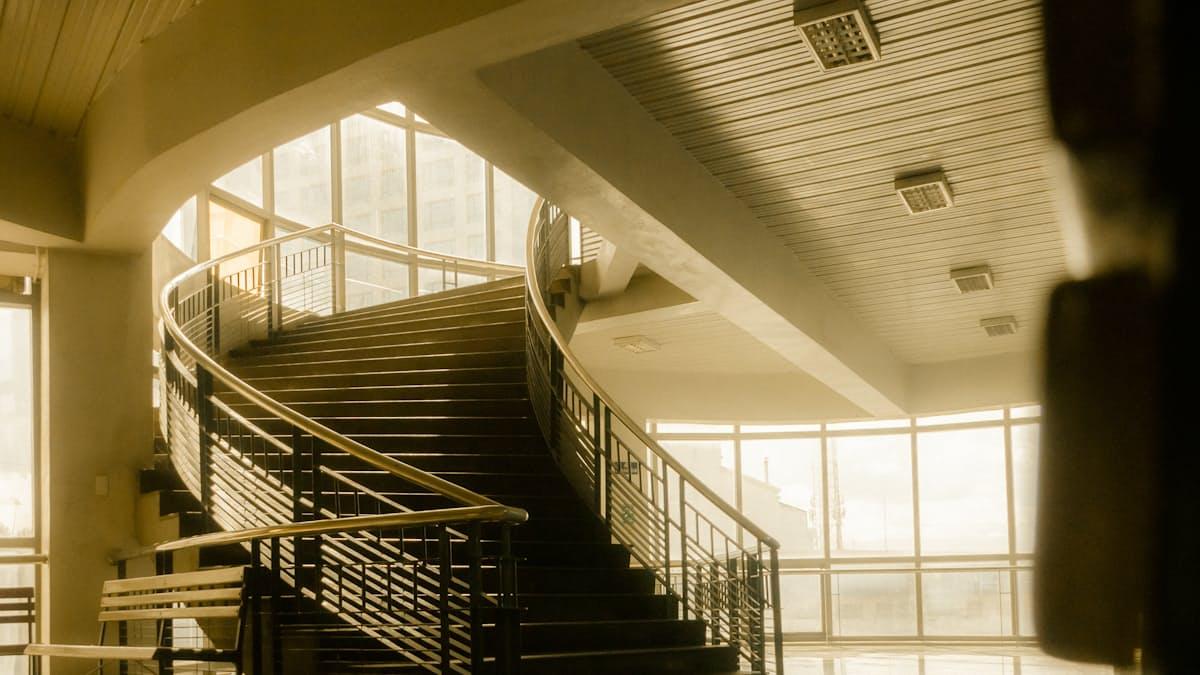
High-traffic circulation areas, corridors and staircases, received full floor replacement. Staircase treads and landings that had worn smooth or cracked were repaired or replaced. Handrails were checked, tightened, and replaced where necessary.
Plumbing
The water supply and drainage systems in the affected blocks were assessed alongside the structural and finish work. Old galvanised iron supply pipes, the standard in buildings of this age, had corroded internally in several runs, reducing flow and affecting water quality. These were replaced with UPVC supply lines in the areas under renovation.
Sanitary fittings were replaced in the ablution facilities and washrooms covered by the contract. WC suites, washbasin units, and associated pipework were renewed as a package.
Electrical Upgrade
Electrical distribution boards in the renovated blocks were replaced. Wiring that had aged beyond safe service life was replaced with new cable to current specification. New conduit was run where the existing surface wiring installation was no longer adequate. Light fittings, switches, and socket outlets were replaced throughout the renovated areas.
Boundary Wall and Entrance
Boundary wall repairs and entrance gate works completed the scope. A school or college campus needs a secure, clearly defined perimeter, practically and symbolically. The deteriorated sections of the perimeter wall were rebuilt and rendered; the entrance gate and associated structures were repaired and repainted.
Managing a Live Campus
This deserves its own section because it was, in practical terms, the defining challenge of the project.
SM College runs morning and evening shifts. There was no period during the working week when the campus was empty. Students were sitting examinations at various points during the project programme. Staff were working. The institution was functioning.
Our approach:
Block-by-block phasing. We did not attempt to work across the entire campus simultaneously. The scope was divided into discrete building blocks, each of which was taken through the full renovation sequence, structural repairs, waterproofing, interiors, before the next block began. This kept the disruption contained and predictable.
Working hours. Noisy structural works, drilling, chasing, hacking, were scheduled outside examination periods and, where possible, in the earlier part of the working day before the institution reached full occupancy.
Dust and debris management. In a functioning educational building, dust is not merely an inconvenience, it affects health and it affects the credibility of the work. Containment hoarding was installed at the boundary of each work zone. Debris was bagged and removed daily rather than allowed to accumulate.
Government client communication. The client, a government education department, had approval and inspection requirements that formed part of the project rhythm. Stage-by-stage sign-offs, material approvals, and variation management were handled through the correct formal channels throughout.
What Was Delivered
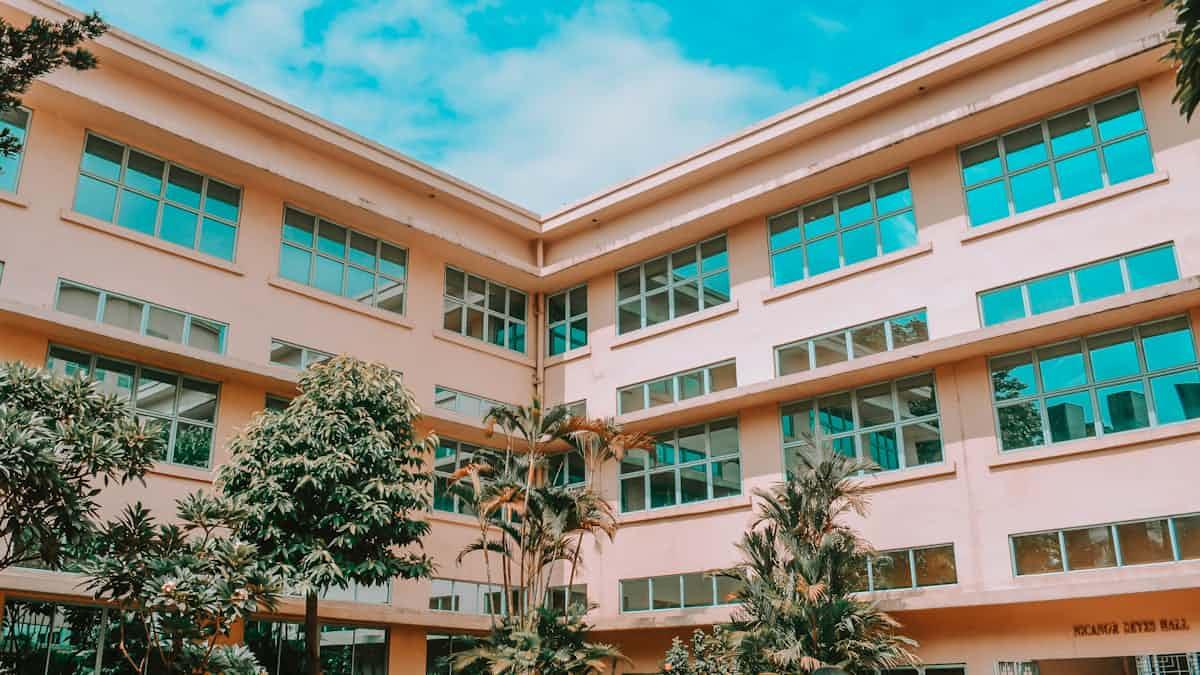
A campus that had been showing its age in ways that were affecting daily use, damp walls, deteriorated floors, unreliable utilities, was returned to a clean, functional, and structurally sound condition.
The buildings look like what they are: important public institutions that have been looked after. The moisture cycle that had been damaging internal finishes was broken at the source. Classrooms and offices that had been uncomfortable and visually neglected were refurbished to a standard appropriate for public education. Utility systems that had degraded to a point of unreliability were replaced and upgraded.
The contract was completed on schedule and handed over to the government client with all documentation in order.
Institutional Renovation in Karachi, What Contractors Need to Understand
Government institutional renovation in Karachi is a different discipline from private residential or commercial work. The differences matter.
Approval processes are multi-layer. Government clients operate within administrative structures that require formal approvals at each stage, materials, variations, stage completions. A contractor who does not understand this, or who chafes against it, will create problems for their client and themselves.
Working around occupants demands a level of site management discipline that many contractors underestimate. It is not enough to say you will be careful. You need a phasing plan, a containment strategy, a communication protocol with the institution's management, and the supervision on site to enforce it every day.
Documentation standards for government contracts are non-negotiable. Every instruction, every variation, every completion sign-off needs to be formally recorded. Naffees & Sons has been operating in this environment since the 1970s. We understand what government clients need administratively, and we deliver it.
Building with history deserves care. SM College is not just a building. It is part of Karachi's civic and educational story. The approach to renovation on a building like this is not to strip it back to a blank canvas and rebuild it in a contemporary specification. It is to understand what you are working with, repair what needs repairing, and leave the building in better condition than you found it while respecting what it is.
Considering a Government or Institutional Renovation Project?
Naffees & Sons has been undertaking institutional and government construction work in Karachi since 1972. Our experience spans schools, colleges, commercial buildings, and residential projects across the city.
If you are responsible for a school, college, mosque, community hall, or government office in Karachi that needs renovation, structural repairs, waterproofing, interior refurbishment, utility upgrades, or any combination, we would be glad to assess the building and give you an honest view of what is needed and what it will cost.
For related case studies, see the SM Science College renovation (2004–05), P&T Colony Model School conversion, and Gizri School construction. For context on what to ask any contractor handling government institutional work, read our commercial construction guide.
Contact us for a site visit and assessment →
Naffees & Sons | Karachi | Chat on WhatsApp