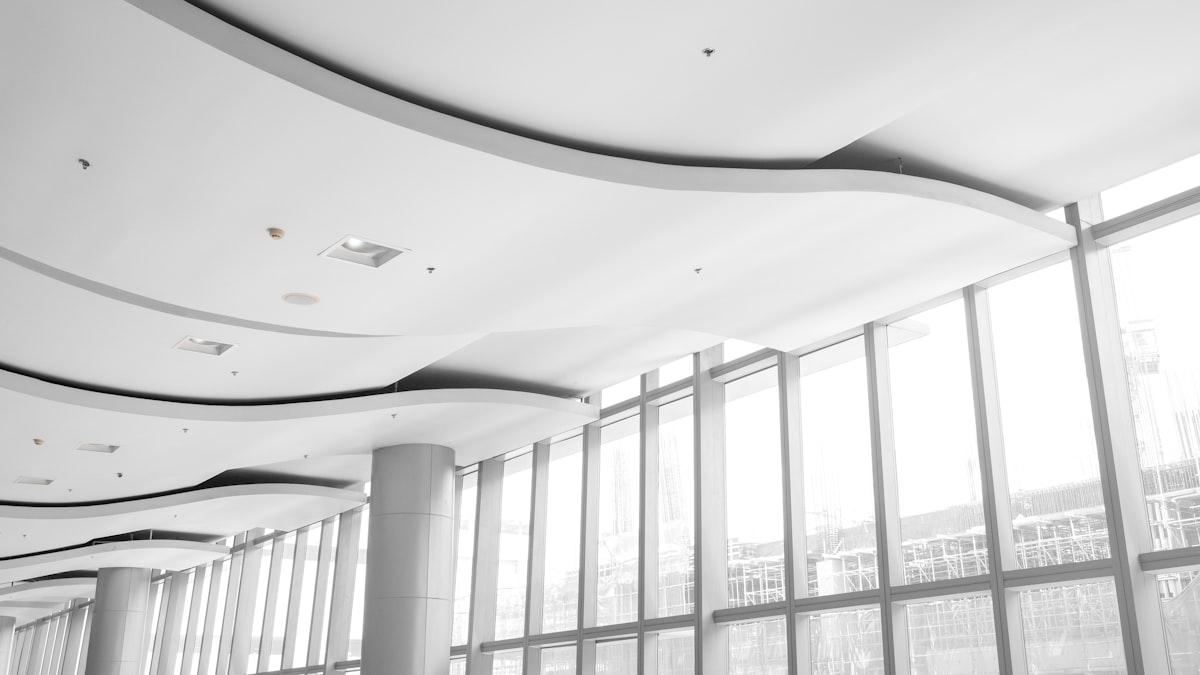
A false ceiling is the cheapest change that makes a Karachi room look expensive, which is exactly why it attracts the widest range of quotes of any renovation line item. The same 15 by 12 foot bedroom can be quoted at PKR 40,000 or PKR 160,000, and the difference is almost never visible on the day the work finishes. It becomes visible in year three, when the sheets between the frame members start to dip.
This guide gives you current false ceiling rates in Karachi for 2026-2027 by material and by room, explains what actually drives the price, and shows you the two or three specification points that separate a ceiling that lasts fifteen years from one that needs redoing after four.
False Ceiling Cost in Karachi at a Glance
| Type | Rate per sq ft (supply and fix) | Expected life | Best for |
|---|---|---|---|
| PVC panel | 180 – 300 | 8 – 12 years | Bathrooms, kitchens, utility areas, tight budgets |
| POP (Plaster of Paris) | 200 – 400 | 10 – 15 years | Curved profiles, decorative traditional work |
| Gypsum board, regular | 250 – 450 | 15 – 20 years | The standard for Karachi bedrooms and living rooms |
| Gypsum board, moisture-resistant | 350 – 600 | 15 – 20 years | Wet areas and coastal properties |
| Grid or tile ceiling (mineral fibre) | 220 – 420 | 10 – 15 years | Offices, clinics, anywhere services need access |
| Designer gypsum with coves and cornice | 500 – 1,200 | 15 – 20 years | Premium living and dining rooms with cove lighting |
| Wood or WPC slat ceiling | 800 – 2,200 | 15 – 25 years | Feature ceilings, premium specification |
These are supply-and-fix rates covering frame, board, jointing, finishing and basic labour. They do not include electrical work, light fittings, or paint unless stated. Rates move with steel and gypsum prices, so treat them as current market orientation rather than a fixed quotation.
Room-by-Room Budgets
Per sq ft rates are useful for comparing quotes but useless for planning a budget, because small rooms carry a higher effective rate. A tiny ceiling still needs a perimeter channel, a full frame setup and a finishing crew.
| Room | Typical area | Standard gypsum | Designer with cove lighting |
|---|---|---|---|
| Bedroom, 12 x 10 ft | 120 sq ft | 32,000 – 54,000 | 62,000 – 145,000 |
| Bedroom, 15 x 12 ft | 180 sq ft | 45,000 – 81,000 | 90,000 – 180,000 |
| Living room, 20 x 15 ft | 300 sq ft | 75,000 – 135,000 | 150,000 – 360,000 |
| Dining room, 14 x 12 ft | 168 sq ft | 42,000 – 76,000 | 84,000 – 200,000 |
| Kitchen, 12 x 10 ft (moisture-resistant) | 120 sq ft | 42,000 – 72,000 | not typical |
| Bathroom, 8 x 6 ft (PVC or MR gypsum) | 48 sq ft | 9,000 – 29,000 | not typical |
| Corridor, 20 x 4 ft | 80 sq ft | 20,000 – 36,000 | 40,000 – 96,000 |
| Whole house, 1,800 sq ft covered | ~1,100 sq ft of ceiling | 275,000 – 495,000 | 550,000 – 1,320,000 |
The whole-house row is the one worth pausing on. False ceiling across an entire house is rarely the right call. Most Karachi homeowners get better value putting designer work in the living and dining rooms, plain gypsum in bedrooms, and moisture-resistant board only in wet areas. Blanket-ceilinging every room including store rooms and corridors is how a renovation budget quietly loses several hundred thousand rupees to a finish nobody looks at.
For where this sits inside a full renovation budget, see our Karachi home renovation cost guide.
What Actually Drives the Price
Four things move a false ceiling quote, and only one of them is the board.
Frame spacing. This is the single biggest hidden variable and the one that decides whether your ceiling sags. A correctly built gypsum ceiling uses main channels and cross furring at defined centres, typically around 2 feet for main channels and 1 to 1.5 feet for the furring that carries the board. Widening that spacing uses less steel and less labour, cuts the quote by 15 to 25 percent, and is completely invisible once the board is up and painted. It becomes visible when the unsupported spans between members begin to deflect under their own weight and Karachi's humidity, usually in the third or fourth year.
Board thickness and grade. Standard gypsum board for ceilings is 12.5 mm. Some quotes use 9 mm, which is a wall board, not a ceiling board, and it deflects more over the same span. Moisture-resistant board (usually green-faced) costs 30 to 40 percent more and is genuinely necessary in bathrooms, kitchens, and in coastal properties where humidity is sustained.
Design complexity. A flat ceiling with a simple perimeter drop is at the bottom of the range. Every additional level, curve, cove, cutout and cornice adds framing labour disproportionately to the area covered. A two-level ceiling with a continuous cove is not twice the price of a flat one, it is often three times, because the framing work is where the hours go.
Electrical integration. Recessed lights, cove lighting strips, concealed AC grilles, speakers and sensors all need coordination with the ceiling frame before boarding. Done in sequence it costs little. Done afterwards it means cutting a finished ceiling.
Gypsum, POP or PVC: The Honest Comparison
Gypsum board is the right default for most Karachi rooms. It gives a flat, seamless, paintable surface, installs faster than POP, produces far less site mess, and holds its line well over time when the frame is right. It is manufactured board on a steel frame, so quality is consistent and predictable.
POP is the traditional Karachi approach and still has a genuine place. It is applied wet over a base, which means it can be shaped into curves, domes and decorative profiles that board cannot easily match. The tradeoffs are real: it is heavier, it is far messier to install, it takes longer to dry and cure, and repairs are harder to make invisible. If your design is rectilinear, gypsum is the better tool. If you want curved or ornamental work, POP earns its place.
PVC panels are the budget option and are frequently dismissed unfairly. In a bathroom, a utility area, or a rented property, PVC is genuinely sensible: it is completely unaffected by moisture, it wipes clean, and it costs less than half of moisture-resistant gypsum. In a living room it looks like what it is, and that is the reason to avoid it there rather than any performance failure.
Grid ceilings with lay-in mineral fibre tiles are worth mentioning because homeowners rarely consider them and offices should. Every service above the ceiling stays accessible without cutting anything. In a clinic, an office, or any space where wiring and ducting will change, that access is worth more than the seamless look.
Karachi-Specific Considerations
Humidity and coastal moisture. Karachi is humid for much of the year, and properties in Clifton, Bath Island and other coastal zones deal with sustained salt-laden air. Standard gypsum board absorbs ambient moisture over time, which accelerates deflection and can lift joint tape. In these areas, moisture-resistant board is not a premium upgrade, it is the correct specification, and galvanised frame sections rather than plain steel are worth the small premium.
Floor-to-floor height. This is the constraint that catches apartment owners. A great deal of Karachi's older apartment stock, particularly pre-2000 buildings in PECHS, Gulshan-e-Iqbal, Nazimabad and North Nazimabad, has floor-to-floor heights of 9 to 10 feet. A false ceiling drops the finished level by 4 to 10 inches depending on design, and once you add floor build-up from new tiling, a room can end up feeling low. In those buildings, keep the drop to 4 to 5 inches, use shallow coves rather than deep bulkheads, and consider ceiling only the perimeter rather than the full room. Our apartment renovation guide covers the wider set of constraints in Karachi flats.
Leaks above the ceiling. A false ceiling hides the underside of the slab, which is where a roof or bathroom leak first shows itself. Installing a ceiling over an untreated leak means the first warning you get is a stained, sagging board and a repair that involves removing finished work. If the room is on the top floor, or sits below a bathroom, resolve the waterproofing before the ceiling goes up. Our waterproofing cost guide covers how to find the actual source of a leak before spending money on the wrong surface.
Sequence within a renovation. Ceilings go in after MEP rough-in and plaster, and before painting and final fixtures. Getting this order wrong is expensive. The full sequence is set out in our full house renovation guide.
How the Work Actually Runs
A single room takes 3 to 5 working days, and a full house 2 to 3 weeks, assuming continuous access and no waiting on electrical decisions.
Day 1, marking and perimeter. Levels are marked around the room and the perimeter channel is fixed. This is where you find out whether the room is square and whether the slab is level. Older Karachi slabs frequently are not, and the ceiling level has to be set from the lowest point.
Day 1 to 2, frame. Main channels are suspended from the slab on adjustable hangers, then cross furring is fixed at centres. This is the stage worth photographing before it is covered, because it is the only chance to see what you actually bought.
Day 2 to 3, electrical first fix. Wiring for recessed lights, cove strips and any concealed services is run above the frame and pulled through to the marked positions.
Day 3 to 4, boarding. Sheets are cut and screwed to the furring, with joints staggered and cutouts made for fittings.
Day 4 to 5, jointing and finishing. Joints are taped and filled, screw heads spotted, and the surface sanded to a paintable finish. Rushing the fill and sand stage is what produces visible joint lines under downlights later.
Then painting, then light fittings.
How to Tell a Cheap Ceiling From a Fair Price
Since the difference is invisible after completion, check these before the board goes up.
Ask for the frame specification in writing. Main channel and furring centres, section gauge, and hanger spacing. A contractor who will not put numbers on this is quoting a frame they do not want examined.
Photograph the frame before boarding. Take pictures of the grid with something for scale. It costs nothing and it is your only record.
Check the board. 12.5 mm for ceilings, and moisture-resistant board in wet areas and coastal properties. Look at the board edge and the facing colour.
Ask what the hangers are fixed to. Hangers should be anchored into the concrete slab, not into plaster or into a suspended element.
Confirm the joint treatment. Taped and filled joints with proper compound, not just filler smeared over a butt joint.
Check the light cutouts are planned. If nobody has asked you where the lights go before the frame is up, the cutouts will be made after boarding and the frame will be in the wrong place.
Confirm who does what. Whether the quote includes electrical first fix, and whether it includes paint. These two exclusions are the most common reason a false ceiling quote looks cheaper than the one next to it.
Common Mistakes
Ceiling the whole house on principle. Corridors, store rooms and small bedrooms rarely justify it. Spend the same money on better work in the rooms people actually sit in.
Standard board in wet areas. A gypsum ceiling in a Karachi bathroom without moisture-resistant board will discolour and sag. This is the most common false economy in the category.
Deep bulkheads in a low room. A dramatic multi-level ceiling in a room with a 9 foot 6 slab makes the room feel smaller, not more luxurious.
Installing over an unresolved leak. Covered above, and worth repeating because it is the most expensive version of this mistake.
Leaving lighting decisions until after the frame. Cove lighting in particular has to be designed into the frame. Adding it later means rebuilding the cove.
Comparing per sq ft rates across different specifications. A PKR 250 quote and a PKR 420 quote are not the same ceiling at different prices. Get both to state frame centres and board grade, then compare.
What We Do
Naffees & Sons has been finishing Karachi interiors since 1972, which means we have also been called back to strip out a good number of ceilings installed by someone else. The pattern almost never varies: the board was adequate and the frame was not.
We specify frame centres, section gauge and board grade in writing before work starts, use moisture-resistant board in wet areas and coastal properties as standard rather than as an upsell, coordinate the electrical first fix before boarding so cutouts land where the design says they should, and photograph the frame before it is covered so you can see what you paid for. We also hold the price we quote at contract signing, so movement in steel and gypsum prices after that point is ours to absorb rather than yours.
Frequently Asked Questions, False Ceiling Cost in Karachi
How much does a false ceiling cost per square foot in Karachi? Between PKR 180 and PKR 1,200 per sq ft depending on material and design. PVC panel runs PKR 180 to 300, POP PKR 200 to 400, standard gypsum PKR 250 to 450, moisture-resistant gypsum PKR 350 to 600, and designer gypsum with coves and cornice PKR 500 to 1,200.
How much does a false ceiling cost for one bedroom in Karachi? A 15 by 12 ft bedroom of about 180 sq ft costs PKR 45,000 to 81,000 in standard gypsum, and PKR 90,000 to 180,000 for a designed ceiling with cove lighting.
Which is better, gypsum or POP? Gypsum for flat, rectilinear ceilings: faster, cleaner, more consistent, and easier to repair. POP for curved, domed or ornamental profiles that board cannot easily form. Gypsum is the right default for most Karachi rooms.
How long does a false ceiling last in Karachi? PVC 8 to 12 years, POP 10 to 15, gypsum 15 to 20 when the frame is correctly specified. A ceiling built on widened frame centres commonly starts deflecting visibly in year three or four regardless of the board used.
Why do false ceilings sag? Almost always frame spacing. Widening the centres of the main channels and cross furring saves steel and labour, is invisible after boarding, and leaves unsupported spans that deflect under their own weight and ambient humidity. Insufficient board thickness and hangers fixed into plaster instead of the slab are the next two causes.
Do I need moisture-resistant board in Karachi? Yes in bathrooms, kitchens and utility areas, and yes throughout in coastal properties in Clifton, Bath Island and similar zones where humidity and salt air are sustained. It costs 30 to 40 percent more than standard board and prevents the discolouration and sagging that standard board develops in those conditions.
How much height does a false ceiling take? Typically 4 to 10 inches depending on design and on what services run above it. In older apartments with 9 to 10 foot floor-to-floor heights, keep the drop to 4 to 5 inches and avoid deep bulkheads.
Does a false ceiling help with heat or noise? It provides a modest improvement to both, mainly through the air gap. If heat is the actual problem, particularly on a top floor, insulation above the ceiling or an insulated roof treatment does far more than the ceiling itself.
How long does false ceiling installation take? Three to five working days for a single room, and two to three weeks for a full house, assuming continuous access and that lighting positions have already been decided.
Should the false ceiling go in before or after painting? Before. Ceilings follow MEP rough-in and plaster, and precede painting and final fixtures. Painting first means repainting.
Get a False Ceiling Quote
Naffees & Sons quotes false ceilings with the frame specification stated in writing, moisture-resistant board where Karachi conditions require it, and the electrical first fix coordinated before boarding.
Related guides: