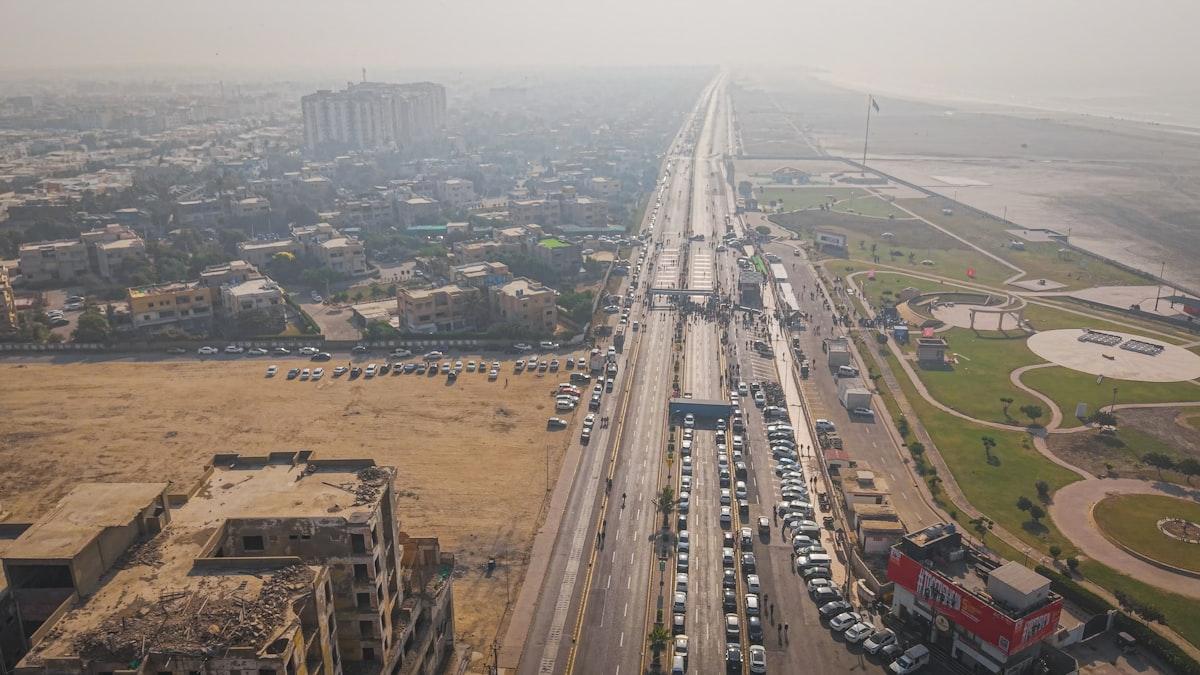
Karachi is Pakistan's primary industrial city. The Korangi Industrial Area, SITE (Sindh Industrial Trading Estate), Landhi Industrial Area, and the North Karachi Industrial Zone collectively host thousands of manufacturing plants, processing facilities, warehouses, and logistics operations. Karachi's port, KPAS (Karachi Port Authority) and Port Qasim, is the entry and exit point for the vast majority of Pakistan's import and export cargo, making the city the fulcrum of Pakistan's industrial economy.
Building industrial facilities in Karachi requires a contractor who understands the structural demands of industrial loading, the complexity of industrial MEP (mechanical, electrical, plumbing and process services), the specific regulatory environment governing industrial construction in Sindh, and the supply chain realities of heavy-duty construction in this city. Naffees & Sons has been delivering industrial construction projects in Karachi since 1972.
Industrial Construction Costs in Karachi: 2025–2026
Industrial construction costs in Karachi vary substantially based on the type of industrial facility, structural loading requirements, and the complexity of process services. The table below covers common industrial facility types.
| Facility Type | Cost Per Sq Ft (PKR) | Notes |
|---|---|---|
| Basic Industrial Shell | 3,000 – 4,500 | Steel portal frame or RCC, basic fit-out |
| Standard Factory/Plant | 4,500 – 7,000 | RCC frame, crane loads, industrial electrical |
| Warehouse (single storey) | 2,800 – 4,500 | Portal steel frame or RCC, loading dock |
| Logistics Hub (with office) | 4,500 – 8,000 | Warehouse + admin block, dock levellers |
| Cold Storage | 7,000 – 14,000 | Insulated panels, refrigeration plant, specialist slab |
| Pharmaceutical/Clean Room | 10,000 – 20,000+ | Controlled environment, specialist MEP |
| Heavy Industry / Foundry | 8,000 – 15,000+ | Crane rails, overhead crane, heat-resistant slab |
Current material costs relevant to industrial construction (June 2026):
- Steel sections (RSJ, UC, UB): PKR 270,000–300,000 per tonne
- Grade 60 rebar: PKR 228,000–242,000 per tonne
- Cement: PKR 1,520–1,560 per 50kg bag in Karachi (post-FED-doubling)
- Profiled steel roofing sheets: PKR 4,500–7,000 per m²
- Industrial glazed block: PKR 120–180 per block
Pakistan Federal Budget 2025–2026: Industrial Construction Impacts
Cement FED doubling, direct cost increase. The Federal Excise Duty on cement increased 100% (from PKR 2/kg to PKR 4/kg) in Budget 2025–26. For large industrial projects consuming 1,000–5,000+ tonnes of cement, this represents PKR 2–10 million in additional FED versus pre-budget estimates. Industrial projects with concrete flooring, loading ramps, and heavy concrete structures are most significantly affected.
Tariff rationalisation, significant benefit for industrial equipment. Budget 2025–26 introduced a sweeping tariff overhaul covering 7,523 items with reduced Additional Customs Duties (ACD) and 1,149 items with abolished or reduced regulatory duties. For industrial construction, this directly reduces the cost of importing:
- Industrial equipment not manufactured in Pakistan
- Specialist MEP plant (chiller plant, compressor systems, process equipment)
- Construction equipment (cranes, concrete pumps, formwork systems)
- Electrical switchgear and distribution equipment
The reduction in ACD from 4% to 2% (on items under the 15% tariff slab) and from 2% to 0% (on items under the 0%, 5%, and 10% slabs) translates to meaningful savings on imported industrial plant.
PSDP infrastructure spending, demand driver for industrial construction. The Rs 328 billion federal PSDP allocation for transport and communication in FY2025-26, combined with Karachi's 15x jump in mega-project funding (Rs 21 billion), is driving infrastructure development that increases industrial construction demand. Road upgrades, port expansion, and K-IV water supply project completion will reduce bottlenecks for industrial operators, attracting further investment and new facility construction.
SEZs and industrial zones. Pakistan's Special Economic Zone (SEZ) framework provides tax exemptions and infrastructure support for designated industrial zones. Karachi has multiple active SEZ designations. Construction within designated SEZs can benefit from import duty exemptions on materials and equipment, a significant advantage for large industrial projects.
Steel prices easing. Grade 60 rebar is down 10–15% from 2024 peaks, with current prices at PKR 228,000–242,000/tonne. Steel-intensive industrial structures, portal frames, crane rails, mezzanine systems, benefit from this moderation.
Industrial Construction Services
Manufacturing Plants and Factories
Factory construction in Karachi typically involves one of two structural systems: reinforced concrete (RCC) frames for multi-storey or high-load applications, or structural steel portal frames for single-storey large-span manufacturing sheds. We design and build in both systems, and can advise on the optimal choice for your manufacturing process, location, and budget.
Key considerations for factory construction we address from design stage:
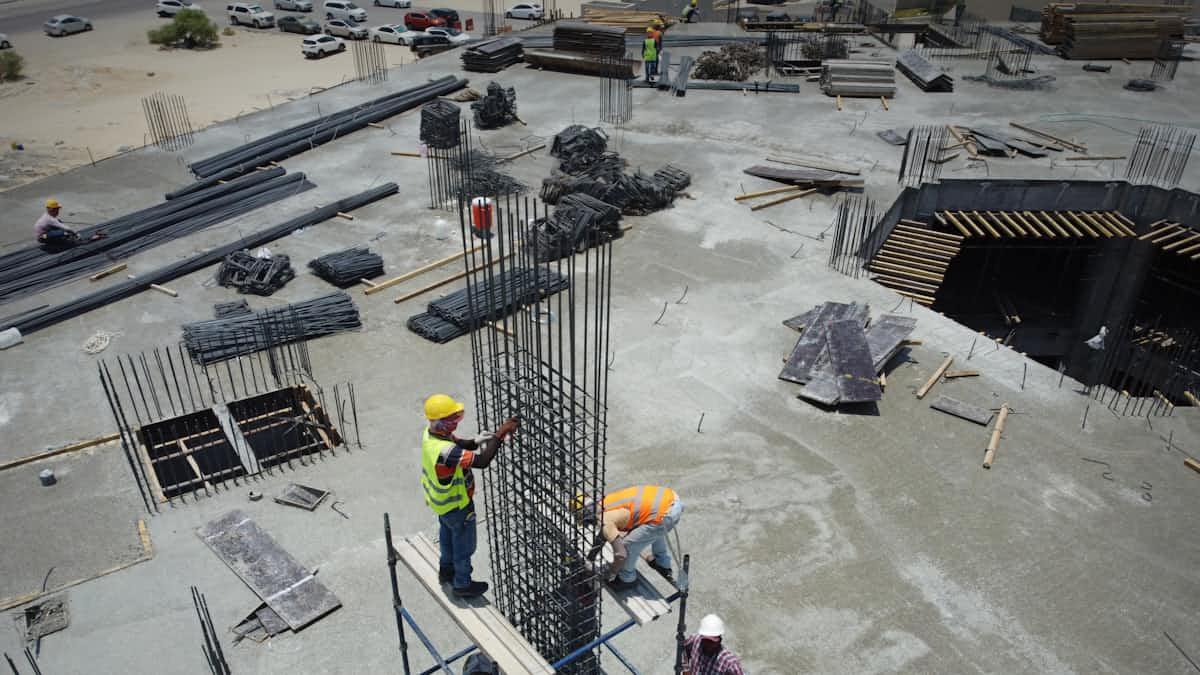
- Floor loading: Manufacturing equipment can impose point loads of 5–50 tonnes. Concrete floor slabs must be designed for the specific equipment layout, not a generic industrial slab. We require equipment loading data before finalising the slab design.
- Crane systems: Overhead crane rails require dedicated structural brackets or building-wide crane girders. Cranes of more than 2-tonne capacity typically require a separate structural engineer assessment for the crane support system.
- Process service integration: Factory MEP includes compressed air, process water, steam, and drainage systems specific to the manufacturing process. We coordinate with your process engineer to ensure infrastructure is correctly positioned and sized.
- Utility connections: Industrial facilities require commercial HESCO connections, often at 11kV (HT) rather than the standard LT service. We handle HESCO liaison, substation design, and generator infrastructure.
- Waste and effluent management: Manufacturing facilities must have SEPA-compliant (Sindh Environmental Protection Agency) effluent treatment systems. We design and build ETP infrastructure as part of the factory project.
Warehouses and Logistics Facilities
Karachi's logistics sector is growing rapidly, driven by e-commerce, the China-Pakistan Economic Corridor (CPEC) land routes, and port hinterland demand. Modern warehousing in Karachi has specific construction requirements:
- Clear-span height: Modern racking systems require 8–12m clear internal height. Standard RCC construction is uneconomical at these heights; structural steel portal frames are the standard solution.
- Slab specification: Warehouse slabs must accommodate forklift traffic (wheel loads of 2–6 tonnes per wheel) and rack leg point loads. A purpose-designed industrial slab with appropriate reinforcement and polished/hardened finish is essential.
- Dock levellers and loading bays: Number, height, and configuration of loading bays must match the truck types and volumes to be served. Dock leveller systems require concrete pit structures designed into the slab.
- Sprinkler systems: Insurance requirements for warehouses holding combustible goods typically mandate fire sprinkler systems compliant with NFPA or equivalent standards.
- Office and amenity blocks: All warehouses require associated office, security, and amenity space. We design and build integrated facilities that meet both warehouse efficiency and staff comfort requirements.
Cold Storage and Temperature-Controlled Facilities
Cold storage construction is among the most technically demanding industrial construction types. It requires:
- Insulated panel systems (polyurethane-core sandwich panels, typically 100–150mm thick for frozen storage) for walls, roof, and floor
- Vapour barriers correctly installed throughout the building envelope
- Refrigeration plant (condensing units, evaporators, and controls) sized for the storage temperature and volume
- Hardened and insulated concrete floor slabs with under-slab heating (for frozen storage, to prevent permafrost heave of the floor slab)
- Door systems with insulated high-speed doors and airlock antechambers
- Specialist fire detection systems compatible with cold storage environments
We have experience building cold storage facilities in Karachi and coordinate closely with refrigeration equipment suppliers to ensure the building infrastructure integrates correctly with the plant specification.
Industrial Estate and Park Development
For developers building industrial estates, multiple-unit factory and warehouse shells on a serviced land parcel, we offer comprehensive development management. This covers:
- Master planning and plot layout optimisation
- Infrastructure (roads, drainage, electrical reticulation, water supply) design and construction
- Multiple shell units construction simultaneously, with consistent specification and quality
- Amenity buildings (mosque, canteen, security post, administrative block)
- Boundary walls, gate structures, and external hard-landscaping
Industrial estate developers benefit from our ability to manage multiple simultaneous construction sites under a single project management umbrella.
Industrial Renovation and Expansion
Many of Karachi's existing industrial facilities were built in the 1970s–1990s and require significant upgrading for contemporary manufacturing standards. Common industrial renovation requirements include:
- Structural strengthening for increased floor loading (new machinery heavier than original design)
- Adding mezzanine levels for storage or administration within existing structures
- MEP infrastructure upgrades (HESCO tariff upgrade, new substation, compressed air reticulation)
- Roof replacement (corrugated steel deterioration, asbestos-cement sheet removal)
- SEPA compliance upgrades (ETP installation, drainage containment)
- Fire suppression and detection installation (retrofitting)
We have experience assessing existing industrial structures and designing appropriate upgrade programmes. See our renovation and restoration page for our broader renovation capability.
Karachi's Industrial Zones: What to Know Before You Build
Korangi Industrial Area
Korangi is Karachi's largest and most established industrial zone, housing hundreds of textile mills, chemical plants, food processing units, and light engineering firms. Construction in Korangi involves coordinating with SITE Authority or KDA (Karachi Development Authority) for plot approvals, depending on the specific plot location. Traffic and access logistics are significant, Korangi's road network is heavily loaded during peak hours, and construction material deliveries must be planned accordingly.
SITE (Sindh Industrial Trading Estate)
SITE covers three sub-zones (SITE I, II, and Super Highway SITE) and remains one of Pakistan's most active industrial areas. Industrial plot approvals in SITE involve SITE Authority's building control department. SITE Authority has its own building bylaw requirements separate from SBCA. We have navigated SITE approvals across multiple industrial projects.
Landhi Industrial Area
Landhi is home to significant textile, garment, and light manufacturing operations. Access from Port Qasim, Karachi's second port, is better from Landhi than from Korangi. Construction in Landhi follows KDA/SBCA approval channels.
North Karachi Industrial Zone
Established more recently than Korangi and SITE, North Karachi Industrial Zone (NKIZ) has modern plot layouts and better road access than the older established zones. Approval processes are through KDA/SBCA. We are based in North Nazimabad and have strong familiarity with North Karachi's industrial geography.
Port Qasim and Bin Qasim Industrial Clusters
Port Qasim Industrial Area (PQIA) and the surrounding bin Qasim industrial cluster represent Karachi's newest and fastest-growing industrial zone. Proximity to Port Qasim gives import-dependent manufacturers and logistics operators a significant supply chain advantage. Construction approvals in this zone involve Port Qasim Authority (PQA) for port-area plots and KDA/SBCA for adjacent private industrial areas.
The Industrial Construction Process in Karachi
Phase 1: Site Assessment and Design Coordination (Weeks 1–8)
Industrial construction begins with a detailed site assessment: soil investigation (borehole testing for foundation design), utility infrastructure assessment (HESCO connection availability, water supply, drainage), and regulatory review (applicable approval authority, environmental clearances required). We coordinate with your process engineer, mechanical consultant, and architect from the outset to ensure the building design is matched to the process requirements.
Phase 2: Regulatory Approvals (Weeks 4–16)
Industrial projects in Karachi require approvals from the applicable industrial zone authority (SITE Authority, KDA, PQA) plus environmental clearance from SEPA for projects with process effluent. We handle all regulatory processes, including NOC applications, building plan submission, and fire department clearances.
Phase 3: Substructure and Slab (Months 3–8)
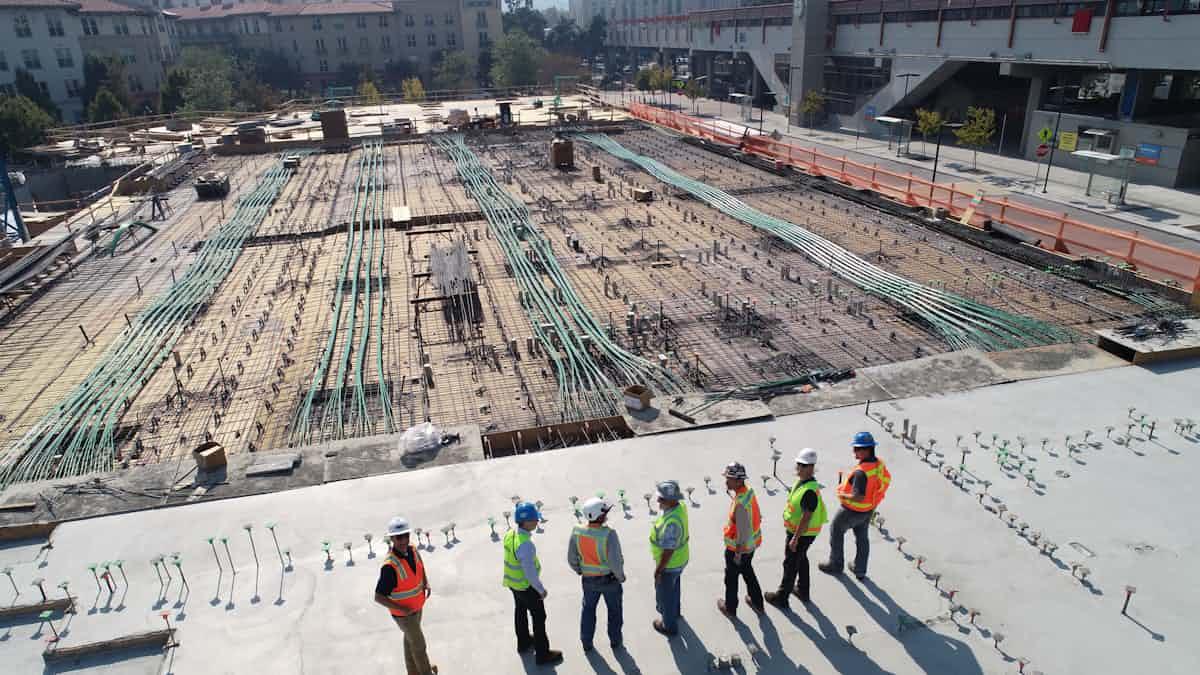
Industrial foundations range from simple strip foundations for lightly loaded structures to deep pile foundations for heavy machinery mounts. Industrial floor slabs, particularly for warehouse racking and forklift operations, require specialist design and construction. We use laser-guided screed machines for floor flatness specification (often F-number specification for high-bay warehousing).
Phase 4: Superstructure (Months 5–16)
Whether RCC frame or structural steel portal frame, the superstructure is erected in this phase. For steel structures, we coordinate fabrication with certified structural steelwork fabricators and manage erection with our own supervision team. For RCC, our standard structural supervision protocols apply.
Phase 5: Building Envelope and Services (Months 8–20)
Roof cladding, wall cladding or brickwork, windows and access doors, and the rough-in of MEP services. Industrial MEP coordination is complex and requires close management to avoid interference between structural, mechanical, electrical, and process service systems.
Phase 6: Fit-Out, Equipment Setting, and Commissioning (Months 14–26)
Process equipment installation, MEP commissioning, and handover. We coordinate with equipment suppliers for machinery bedding, anchor bolt setting, and commissioning utilities. SEPA inspections and HESCO final connection occur in this phase.
Frequently Asked Questions: Industrial Construction in Karachi
How long does factory construction take in Karachi?
A standard single-storey factory (10,000–30,000 sq ft) with RCC frame takes 12–18 months from design to handover. Large or complex industrial facilities (50,000+ sq ft, multi-storey, specialist plant) take 18–30 months. Environmental and regulatory approvals are the most variable timeline factor for industrial projects.
What structural system is best for a warehouse in Karachi?
For single-storey warehouses with 8–12m clear height and large column-free spans, structural steel portal frame is the most economical solution. For multi-storey warehousing or facilities with heavy process loads, RCC frames are more appropriate. We advise on the optimal system for your specific use case.
Does industrial construction in Karachi require an Environmental Impact Assessment?
Depending on the industry type and SEPA's regulatory schedule, some industrial projects require an IEE (Initial Environmental Examination) or full EIA (Environmental Impact Assessment) before construction approval. We advise clients on whether their project falls within SEPA's regulated categories and manage the IEE/EIA process with our retained environmental consultants.
Can you handle HESCO HT (11kV) industrial connections?
Yes. We manage HESCO HT connection applications, design on-site substations, and coordinate with HESCO's industrial connection department. This is typically on the critical path for industrial project completion.
Commission Your Industrial Project in Karachi
We provide site visits, preliminary feasibility assessments, and cost estimates for industrial construction projects across all Karachi industrial zones.
Contact us:
- Chat with us on WhatsApp
- Contact form
- Office: B-142, Block A, North Nazimabad, Karachi
Related reading: civil work contractor in Karachi, commercial construction in Karachi, grey structure contractor in Karachi, best construction company in Karachi.