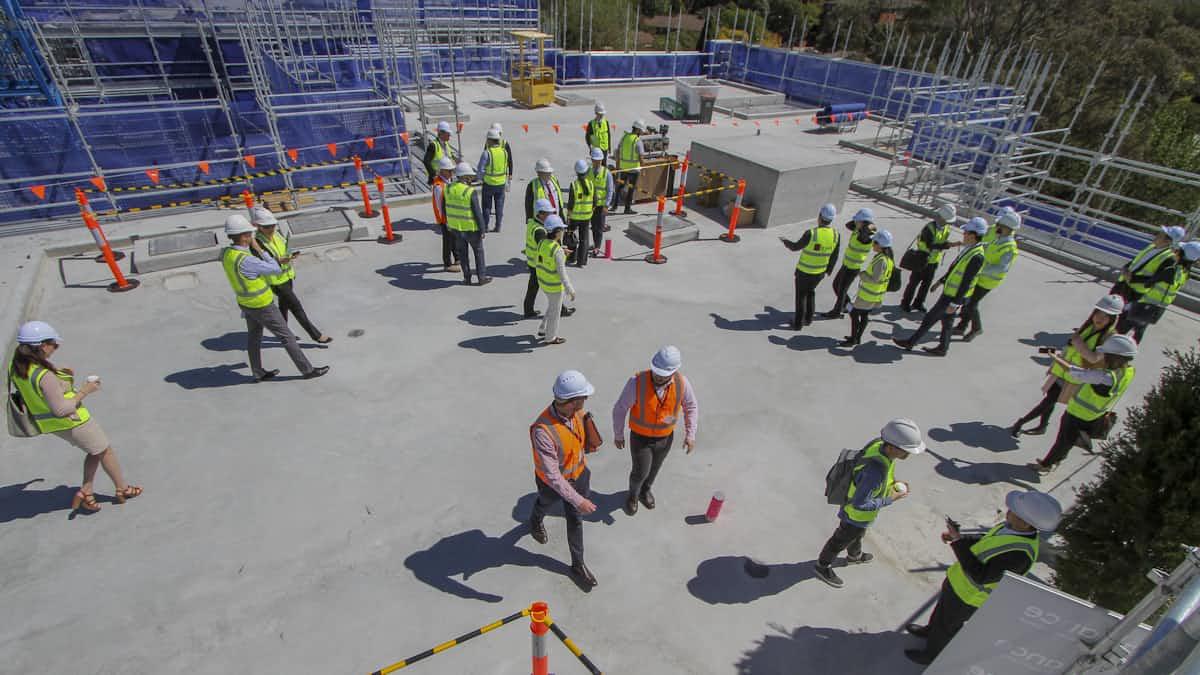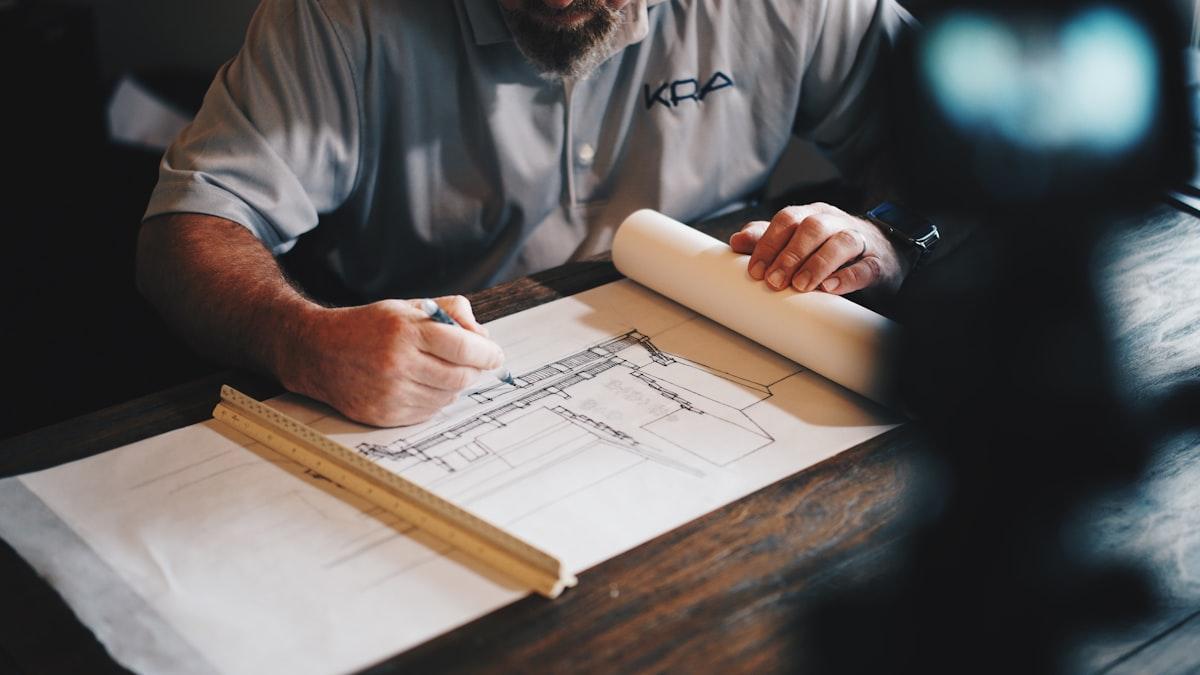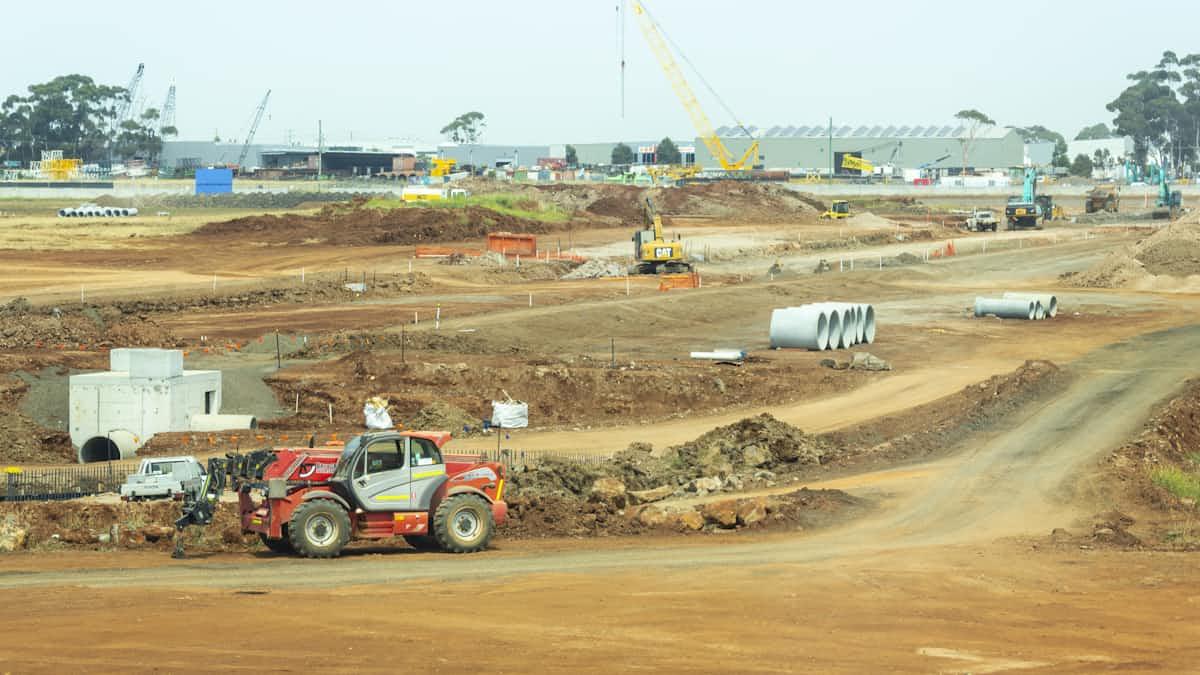
Scheme 33 is where a large share of Karachi's new residential construction is actually happening. Not renovation, not additions to existing houses, but first builds on empty plots by owners who bought land here over the last decade and are now ready to build on it.
That makes it a different job from most of the city. In North Nazimabad or PECHS we are usually working around an existing structure and a settled street. In Scheme 33 we are often the first construction on a plot, on a road where the infrastructure is still catching up with the plots being sold. If you own land here and are getting ready to build, this page covers what that actually involves: approvals, soil, costs, timeline, and the specific things that go wrong on new-development plots.
Smallest job we take: PKR 5 lakh. Largest plot we build on: 1,000 sq yd. Everything in between is the same contract, materials, labour, approvals and supervision from one party, at one price agreed before work starts. We do not do labour-only or material-excluded contracts.
Where Scheme 33 Sits and Why It Is Building Fast
Scheme 33 spreads across a large area of eastern Karachi around Gulzar-e-Hijri, bounded broadly by University Road on one side and reaching toward the Super Highway. It has grown for a straightforward reason: land in the established central areas became scarce and expensive, and Scheme 33 offered plot sizes at prices that ordinary buyers could still reach.
The result is an unusually high proportion of first-time builders. Most of our Scheme 33 clients are not people who have built before. They bought a plot as a long-term decision, held it, and are now building the house they intend to live in. That shapes how we work here: more time at the start explaining the process, and more attention to the approval and soil questions that experienced builders already know to ask.
The area falls under Sindh Building Control Authority jurisdiction for building plan approval, with the land authority handling lease and land clearance separately. This is the standard Karachi arrangement and it catches new plot owners out regularly, because obtaining one does not give you the other.
Approvals: What You Actually Need Before Building
You need a sanctioned building plan from SBCA before construction starts. Not during. Before.
The submission requires registered ownership documents with a clean chain of transfer, current paid property and betterment tax receipts, the site plan from the relevant land authority, architectural drawings, structural drawings and calculations signed by a PEC-registered engineer, a structural stability certificate, CNIC copies, and the scrutiny fee challan. A soil investigation report is required for larger and multi-storey projects and is worth doing on every plot here regardless.
Realistic timeline: 6 to 10 weeks for a complete, correctly prepared residential submission. One round of objections pushes that to 3 to 5 months. Objections are normal and are not a rejection, but each round restarts the clock, which is why the quality of the first submission matters more than anything else in the process.
On Scheme 33 plots specifically, the two things that most often hold up a file are an incomplete ownership chain on a plot that has changed hands since the original allotment, and drawings that exceed the permissible envelope because they were designed before anyone confirmed the zoning parameters. Both are avoidable and both are expensive to fix retroactively.
Our SBCA building regulations guide sets out the full process, the documentation, and what happens if construction proceeds without sanction. On our projects the approvals are our responsibility, not yours: we coordinate the architect and structural engineer, assemble and verify the file before submission, lodge and track it, respond to objections, and close out the completion certificate at the end.
That last document matters more than most first-time owners realise. A completion certificate is what makes the property cleanly saleable and mortgageable. Its absence surfaces years later, at sale or at a bank's due diligence, when it is slow and costly to remedy.
Soil and Foundations on New-Development Plots
This is the technical issue specific to building here, and it is the one where money is genuinely saved or lost.
Ground conditions across Scheme 33 are not uniform. Parts of the area sit on firm, stable ground where a conventional strip or pad foundation is entirely appropriate. Other localities have higher groundwater or less consistent bearing capacity and need a deeper foundation or a raft design. That difference is worth PKR 150 to 300 per sq ft on foundation cost, which on a standard house is a substantial number in either direction.
There is no way to know which situation your plot is in by looking at it, or by asking what the neighbour did. A soil investigation costs PKR 25,000 to 60,000 and tells you definitively. Building without one means either over-engineering the foundation and paying for capacity you do not need, or under-engineering it and finding out through settlement cracks in year three.
Because much of Scheme 33 is newly developed, there is also less accumulated local knowledge than in an area that has been built out for forty years. In North Nazimabad an experienced builder broadly knows what the ground does. Here, test it.
What Building in Scheme 33 Costs
| Specification | Cost per sq ft (PKR) | What it covers |
|---|---|---|
| Grey structure only | 2,800 – 4,000 | Foundation, frame, slabs, masonry, plaster, MEP rough-in |
| Standard turnkey finish | 3,800 – 5,500 | Complete build, standard local material specification |
| Upper-mid finish | 5,500 – 7,000 | Better tiles, joinery, fittings, designed ceilings |
| Premium finish | 7,000 – 9,500+ | Imported finishes, custom joinery, full interior specification |
Scheme 33 sits below the established central and coastal areas on cost, which is a genuine advantage of building here rather than buying elsewhere. For comparison, the same standard specification runs roughly PKR 5,000 to 6,500 in North Nazimabad and PECHS, and PKR 5,500 to 7,500 in the Clifton blocks where coastal foundation conditions add further cost.
Pre-construction costs are separate and worth budgeting from the start:
| Item | Typical cost (PKR) |
|---|---|
| SBCA building plan approval and scrutiny fees | 50,000 – 200,000 |
| Architect fees | 30,000 – 150,000 |
| Structural engineer fees | 30,000 – 100,000 |
| Soil investigation | 25,000 – 60,000 |
| KWSB water and sewerage connection | 30,000 – 80,000 |
Full breakdowns by plot size are in our house construction cost guide and our plot size construction guide, which covers what you can realistically build on each standard Karachi plot size from 80 to 1,000 square yards.
Timeline
A standard double-storey house of 2,000 to 3,500 sq ft takes 9 to 13 months from foundation start to handover. Add 6 to 10 weeks before that for approvals. Total, from first site visit to moving in, is typically 12 to 18 months.
Those figures already include a 15 to 20 day buffer per phase. That buffer is not padding and it is not pessimism. It is an acknowledgement of how construction actually operates in this city: Friday is a half or full day for much of the workforce, Eid ul-Fitr and Eid ul-Adha bring one to two week stoppages as workers travel home, Muharram and other observances cause partial stoppages, and city-wide strikes can halt a site with no notice.
A contractor who quotes you a seven month turnkey build on a five-day working week with none of this accounted for is not being efficient. They are quoting a schedule that has never been achieved, and the overrun will arrive as a series of explanations rather than as a revised date. We plan around the calendar instead, front-loading material and phases before known disruption windows, and we run a seven-day rotation, which is unusual in this market and is a large part of how our schedules hold.
Our construction timeline guide breaks this down phase by phase.
Materials and Access
Scheme 33 sits at a reasonable distance from the material markets that supply a Karachi build: Shershah and the SITE Industrial Area for steel and structural material, Jodia Bazaar for tiles, plumbing and electrical, Bolton Market for electrical goods, Essa Nagri for timber. Access via University Road and the Super Highway is workable for material delivery, which is not true of every developing area.
The relevant point for a first-time builder is not distance but price. The same grade of steel, cement or tile varies by 10 to 30 percent depending on where in Karachi it is bought and whether the buyer has a trade account. A first-time owner walking into Shershah alone is quoted retail. Branded steel through an established contractor's account typically runs 3 to 6 percent below the counter price, and a cement dealer account beats retail by PKR 20 to 40 per bag, which on a 900 to 1,100 bag house is real money.
We source across all these zones through relationships built since 1972. Our guide on who buys the material, you or your contractor sets out honestly which categories reward buying yourself and which do not, and it is written to be useful even if you decide to self-source.
How We Work in Scheme 33
A site visit before we quote. We look at the plot, the access, the neighbouring construction and the ground conditions before putting a number on anything. Quotes given over the phone from a plot size are guesses.
Approvals handled end to end. Drawings, documentation, submission, objections and the completion certificate. You are not sitting in a queue at a zonal office.
A written scope before work starts. Every phase defined, materials named by brand and grade, an explicit exclusions list, and a change order procedure with rates agreed at signing so variations are priced before anyone has leverage. Our scope of work guide explains what that document contains and why it matters more than the headline price.
Payments tied to verified physical stages, not to calendar dates, with retention held past handover through the defects period. Our payment schedule guide sets out the milestone structure we use.
A fixed price at contract signing. Movement in steel, cement and fuel after signing is ours to absorb. Petrol is now repriced daily and feeds into every delivered material rate, and we do not pass that through as a surcharge.
One accountable party. Labour, materials, procurement, approvals and the schedule sit with us. When something goes wrong between two trades, it is our problem to resolve rather than a conversation you have to referee on your own plot.
Why Experience Matters More on a First Build
Most Scheme 33 clients are building for the first time, and the single largest risk on a first build is not price. It is scope.
When an owner engages labour directly without an experienced builder in between, every change becomes an opening. A design revision, an unforeseen site condition, a small request, and the price for that additional work is set on the spot by whoever has more leverage, which on a live site is the party holding the tools. Refusing risks the crew slowing down or leaving mid-phase, at exactly the point where replacing them is hardest. Across a nine to twelve month build with dozens of small decisions, this compounds. It is the main reason direct-hire projects routinely finish 20 to 40 percent over their original budget.
We absorb that entirely. Scope is defined in writing before each phase, variations are priced against rates agreed at contract signing, and all negotiation with labour happens internally. You never stand on your own plot arguing with a mason about the price of a doorway.
Our comparison of hiring labour directly versus a contractor covers the full trade-off with real numbers.
Frequently Asked Questions
How much does it cost to build a house in Scheme 33 Karachi?
Standard turnkey construction runs PKR 3,800 to 5,500 per sq ft in 2026. Grey structure only is PKR 2,800 to 4,000. Upper-mid finish is PKR 5,500 to 7,000, and premium specification runs PKR 7,000 to 9,500 and above. Scheme 33 sits below the established central and coastal areas, which is a genuine cost advantage of building here.
Do I need SBCA approval to build in Scheme 33?
Yes. Scheme 33 falls under Sindh Building Control Authority jurisdiction for building plan approval, with the land authority handling lease and land clearance separately. Obtaining one does not cover the other. Construction without a sanctioned plan exposes you to a stop-work notice, penalty charges, demolition of unauthorised portions, and a property that cannot be cleanly sold or mortgaged.
How long does approval take for a Scheme 33 plot?
Six to ten weeks for a complete, correctly prepared submission. One round of objections extends that to three to five months. The most common delays here are an incomplete ownership chain on a plot that has changed hands, and drawings that exceed the permissible envelope because they were designed before the zoning parameters were confirmed.
Do I need a soil test before building in Scheme 33?
Yes, and this is the single most worthwhile PKR 25,000 to 60,000 you will spend here. Ground conditions across the area are not uniform. Some localities take a conventional strip or pad foundation; others need a deeper or raft design, a difference worth PKR 150 to 300 per sq ft. You cannot determine which by looking, and Scheme 33 has less accumulated local knowledge than older areas.
How long does construction take in Scheme 33?
Nine to thirteen months from foundation start to handover for a standard double-storey house of 2,000 to 3,500 sq ft, plus six to ten weeks of approvals beforehand. Twelve to eighteen months in total from first site visit to moving in, with realistic buffers for Karachi's working calendar included.
Can you build on my plot if I have only the allotment documents?
We can start the design and soil work, but the building plan submission needs a clean, current ownership chain. If there is a gap between the original allotment and your present title, that has to be resolved before a file will clear. We will tell you plainly at the site visit whether your documentation is submission-ready.
Do you handle the utility connections as well?
Yes. KWSB water and sewerage connections and electrical supply are part of what we coordinate. Budget PKR 30,000 to 80,000 for the water and sewerage connection separately from the construction cost.
Is the price you quote fixed?
Yes. The quotation we give at contract signing holds regardless of how steel, cement and fuel prices move afterward. We absorb that volatility rather than passing it through as a mid-project surcharge.
Do you take small construction and renovation jobs?
Yes. We work on projects from PKR 500,000 upward. A single bathroom, a kitchen, or an upper-portion addition is scoped, contracted and supervised exactly the same way as a full build: a written Bill of Quantities with named materials, a fixed price, and daily site supervision. The only thing that changes with project size is the programme length.
Is there a minimum plot size you will build on?
No. We build on plots from 80 square yards upward, and the majority of what we do sits between 120 and 400 sq yd, the standard Karachi plot sizes across Gulshan-e-Iqbal, PECHS, Nazimabad and Gulistan-e-Johar. For what each size costs to build in 2026, see our house construction cost by plot size guide.
What does it cost to build a house on a 120 square yard plot in Karachi?
A ground-plus-one 120 sq yard house, about 1,800 sq ft covered, costs roughly PKR 68–90 lac at economy specification and PKR 90 lac–1.35 crore at standard, excluding land, approvals and professional fees. Full breakdowns for every size from 80 to 1,000 sq yd are in our plot size cost guides.
Build on Your Scheme 33 Plot
Naffees & Sons has been building in Karachi since 1972, with a documented record that includes government-contracted school and college projects for the Works and Services Department. We visit your plot, assess ground conditions and access, handle the approvals, and give you a written scope and a fixed price before any work starts.
Book a Free Scheme 33 Site Visit →
Related reading: