If you own property in Askari or one of Karachi's cantonment areas, the most important thing to understand before you build or renovate is that the Sindh Building Control Authority is not your approving body. The Cantonment Board is.
That single fact changes the documentation, the process, the timeline and the site rules. It also means that a contractor who has built across the rest of Karachi and never worked inside a cantonment will be learning your project's approval process on your project, which is an expensive way for them to learn it.
Naffees & Sons has worked across Karachi since 1972, including inside cantonment jurisdictions. This page covers what building in Askari and the cantonment areas actually involves.
Smallest job we take: PKR 5 lakh. Largest plot we build on: 1,000 sq yd. Everything in between is the same contract, materials, labour, approvals and supervision from one party, at one price agreed before work starts. We do not do labour-only or material-excluded contracts.
Which Areas This Covers
Karachi has several cantonment jurisdictions, each administered by its own board:
| Area | Administering body |
|---|---|
| Askari housing schemes | The relevant Cantonment Board for the location |
| Malir Cantonment | Malir Cantonment Board |
| Faisal Cantonment | Faisal Cantonment Board |
| Korangi Creek Cantonment | Korangi Creek Cantonment Board |
| Clifton Cantonment | Clifton Cantonment Board |
| Manora Cantonment | Manora Cantonment Board |
The practical point is that these are not one authority with one rulebook. Each board administers its own area under the Cantonments Act and its own local bylaws, and the details, permissible coverage, height limits, setback requirements, fee schedules and processing times, vary between them. Confirm which board governs your specific property before commissioning drawings, not after.
Property in these areas also frequently sits on a different tenure basis from freehold or standard leasehold land elsewhere in Karachi, which affects what you can do with it and what documentation an approval requires. If your property is on cantonment land under a lease, read the lease conditions before planning any extension or change of use, because restrictions there are enforceable in ways that surprise owners who assumed general city rules applied.
How Cantonment Approval Differs From SBCA
Most of Karachi answers to SBCA under the Karachi Building and Town Planning Regulations. Our SBCA building regulations guide sets out that process in full, and it is worth reading for the general shape of building control in this city. But do not apply it directly to a cantonment property. The differences that matter:
A different authority and a different file. The application goes to the Cantonment Board, not to an SBCA zonal office. Different forms, different fee schedule, different officers.
Different bylaws. Permissible ground coverage, height limits and setbacks are set by the board's own regulations. Cantonment areas were generally planned to lower densities than the surrounding city, and the boards have tended to hold those planning standards, so what your plot size permits here is often less than the same plot size would permit under SBCA.
Tenure conditions layered on top. Where the property is held on a cantonment lease, the lease terms themselves can restrict extensions, additional floors, subdivision and commercial use, independently of what the building bylaws would otherwise allow.
Security clearance for site working. This has no SBCA equivalent and it is the one that most affects day-to-day execution.
Completion certification. As with SBCA, the completion certificate is what makes the building legally occupiable and cleanly transferable. Skipping it stores up a problem that surfaces at sale.
Realistically, budget a similar order of time to an SBCA submission, six to ten weeks for a clean, complete file, with the same caveat that objections restart the clock. Where cantonment approvals differ is in predictability rather than raw speed: the boards administer smaller, more defined areas, and a correctly prepared file with clean tenure documentation tends to move through a well-defined process.
For the actual bye-law figures, height limits, footprint, FAR and the general conditions that have no SBCA equivalent, see our Cantonment Board bye-laws vs SBCA comparison, which works from an official cantonment bye-law document rather than a general "rules vary" caution.
Working Inside a Cantonment: The Practical Constraints
This is where contractors without cantonment experience come unstuck, and where a client pays for that inexperience in delays.
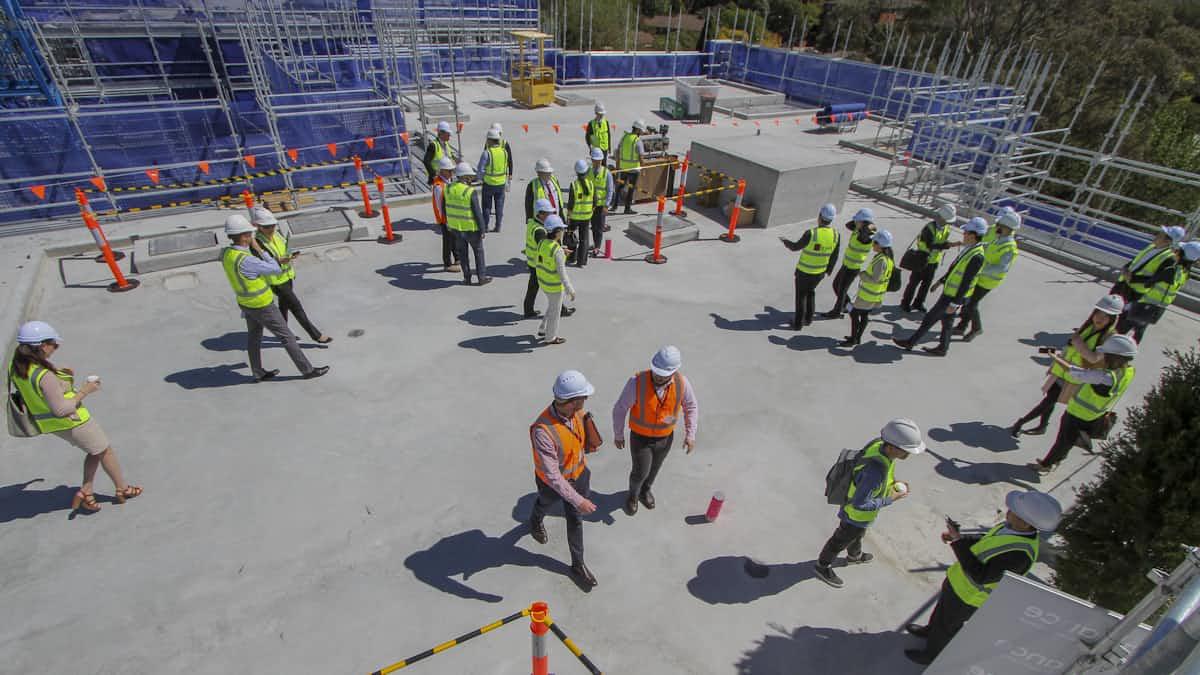
Labour access and clearance. Entry to cantonment areas is controlled. Workers need to be identified and cleared, and that clearance takes lead time. A contractor who turns up on day one with an unvetted crew does not start on day one. We handle worker documentation and clearance as part of mobilisation, before the schedule assumes anyone is on site.
Crew stability matters more here. In most of Karachi, swapping in additional labour mid-phase is trivial. Inside a cantonment, every new face is another clearance cycle. That makes a contractor with a stable, directly-managed workforce materially more efficient here than one who assembles crews per job from the daily market.
Vehicle and material access. Delivery vehicles need clearance too, and there are typically defined access points, permitted hours and route restrictions. Material deliveries have to be planned around those windows rather than arriving when the supplier finds it convenient. Bulk deliveries in particular need scheduling.
Working hours and noise. Cantonment areas are residential and generally quieter than comparable Karachi neighbourhoods, and boards enforce working hours. Demolition, breaking and other high-noise work is confined to permitted windows.
Debris removal. Waste has to leave through the same controlled access, on schedule, rather than accumulating on a plot edge as it might elsewhere. Budget for it as a real line item.
None of this makes cantonment work difficult. It makes it a project that has to be planned rather than improvised, and it is the reason to ask any prospective contractor directly how many cantonment projects they have completed and how they handle labour clearance.
The Housing Stock and What It Usually Needs
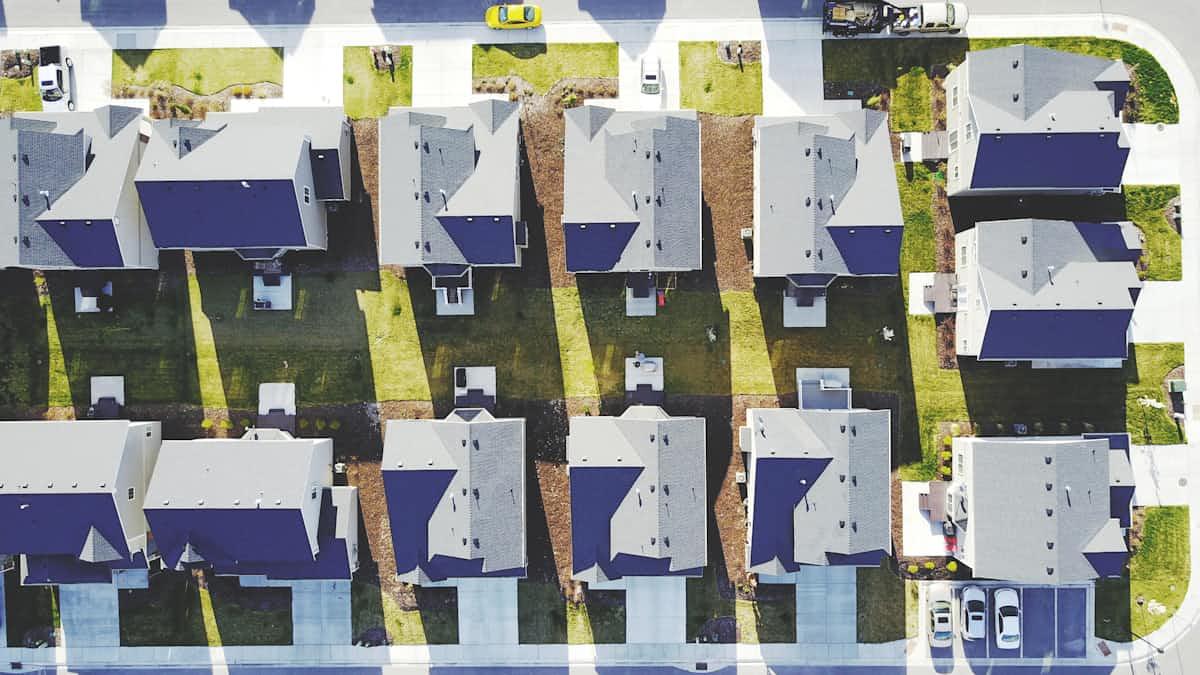
Cantonment housing in Karachi is generally planned, uniform and built to a consistent standard for its period, which makes the work here more predictable than in the organically-developed parts of the city. It also means the issues cluster by vintage rather than by street.
Older cantonment housing carries the same end-of-life problems as the rest of Karachi's stock from that era. Electrical systems designed for a fraction of today's load, with no provision for multiple air conditioners, an inverter or UPS setup, or a solar system. Galvanised iron supply plumbing that corrodes internally and fails inside a wall. Waterproofing that has been patched repeatedly rather than stripped and redone. On a full renovation, none of these are optional extras; they are the reason to renovate now rather than in three years, because every one of them gets buried under new finishes and is expensive to reach afterwards.
Layout is the other recurring driver. Houses built to the standards of their period have small closed kitchens, no laundry provision, single-point water heating and bathrooms sized for a different era of fittings. Opening those layouts is what turns a standard renovation into a structural one, and it runs directly into the load-bearing question: on older construction the wall you want to remove is frequently carrying load, and it is frequently not obvious which walls are. That gets assessed by a structural engineer before anything comes down, not after.
Coastal exposure applies to some cantonment areas. Where a property sits near the water, sustained salt-laden air drives chloride ingress into concrete and corrodes reinforcement from within. Visible spalling on a soffit or column face usually understates the actual condition. Specification changes for these properties: sulphate-resistant cement below grade, moisture-resistant board in ceilings, and a genuine survey before pricing any structural repair.
Our full house renovation guide sets out the correct phase sequence for this kind of work, and why getting the order wrong means paying for the same surface twice.
What Building and Renovating Costs Here
| Scope | Cost per sq ft (PKR) |
|---|---|
| Grey structure only | 3,000 – 4,200 |
| Standard turnkey construction | 4,500 – 6,500 |
| Upper-mid finish | 6,500 – 8,500 |
| Standard full renovation | 1,500 – 2,800 |
| Full gut renovation | 2,800 – 4,500 |
| Second floor addition | 2,800 – 7,500 |
Cantonment area construction sits in the mid-to-upper band for Karachi. That reflects two things: the areas are generally well-serviced with good access, and the specification expectation is higher than in the lower-cost outer areas, so the same house is typically finished to a better standard.
Add pre-construction costs on top: Cantonment Board approval and scrutiny fees, architect fees of PKR 30,000 to 150,000, structural engineer fees of PKR 30,000 to 100,000, and a soil investigation at PKR 25,000 to 60,000 where the project warrants one.
Broader cost context is in our house construction cost guide and, for renovation, our home renovation cost guide.
Additions and Second Floors
A large share of the work we are asked about in Askari and the cantonment areas is not new construction. It is adding to an existing house, most often an additional floor for a growing family.
Three things decide whether that is feasible.
What the bylaws permit. Height limits and coverage in cantonment areas are set by the board and are frequently more restrictive than the surrounding city. Confirm the permissible envelope before designing anything.
What the lease permits. Where the property is on a cantonment lease, the lease conditions may restrict additions independently of the bylaws. This is checked first, because it can end the conversation.
What the existing structure can carry. This is the engineering question and it is not optional. An additional floor imposes loads on foundations and columns that were designed for the original building. Older cantonment housing was frequently built to a modest specification, and the foundation and column capacity has to be assessed by a structural engineer before any design proceeds. Sometimes the answer is that strengthening is needed first, and occasionally the answer is that it is not viable.
Our second floor addition guide covers the structural assessment and cost side in detail.
How We Work in Cantonment Areas
Tenure and bylaw check first. Before drawings, we establish which board governs the property, what the bylaws permit, and what the lease conditions allow. This ordering saves clients from paying an architect to design something that cannot be approved.
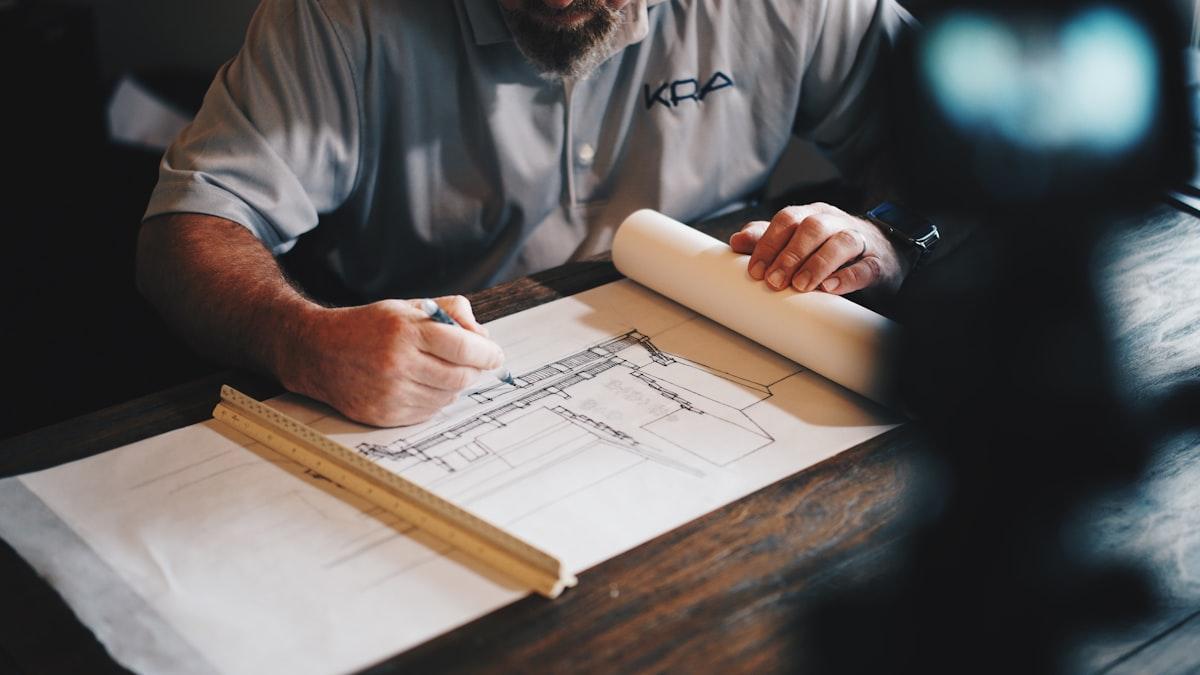
Approvals handled end to end. Drawings, documentation, submission to the correct board, responses to objections, and the completion certificate.
Labour clearance built into mobilisation. Worker documentation and clearance handled before the programme assumes site access, not after.
Deliveries scheduled around access windows. Material planned and staged to the permitted hours and routes rather than arriving on supplier convenience.
Written scope before work starts, with materials named by brand and grade, an explicit exclusions list, and a change order procedure with rates agreed at signing. Our scope of work guide explains why that document does more to protect a project than the headline price.
Payments tied to verified physical stages rather than calendar dates, with retention held past handover. See our payment schedule guide.
Fixed price at contract signing. Movement in steel, cement and fuel afterwards is ours to absorb.
A seven-day rotation. Karachi's calendar takes days out of every month, Friday half-days, one to two week Eid closures, Muharram observances and occasional city-wide strikes. We plan around it, front-load material before known disruption windows, and run crews in rotation, which is unusual in this market. Combined with the 15 to 20 day per-phase buffer we build in from the start, it is how our programmes hold. Our construction timeline guide sets out realistic durations.
Frequently Asked Questions
Do I need SBCA approval to build in a cantonment area?
No. Cantonment areas are administered by their own Cantonment Board under the Cantonments Act and local bylaws, not by the Sindh Building Control Authority. The application, forms, fee schedule and approving officers are all different. Confirm which board governs your specific property before commissioning drawings.
How long does Cantonment Board approval take in Karachi?
Budget a similar order of time to an SBCA submission, roughly six to ten weeks for a complete and correctly prepared file, with objections restarting the clock. Boards administer smaller and more defined areas than SBCA zones, so a clean file with sound tenure documentation tends to move through a well-defined process.
Can I add a second floor to a house in Askari?
Sometimes. Three things have to line up: the board's bylaws must permit the additional height and coverage, the lease conditions must not restrict additions, and the existing foundations and columns must be capable of carrying the added load, which requires a structural engineer's assessment. Cantonment bylaws are often more restrictive than the surrounding city, so check before designing.
What does construction cost in Askari and cantonment areas?
Standard turnkey construction runs PKR 4,500 to 6,500 per sq ft, grey structure only PKR 3,000 to 4,200, and upper-mid finish PKR 6,500 to 8,500. Renovation runs PKR 1,500 to 2,800 per sq ft for a standard full renovation and PKR 2,800 to 4,500 for a full gut.
Do your workers need security clearance to work in a cantonment?
Yes, and we handle it. Entry to cantonment areas is controlled, workers have to be identified and cleared, and that clearance takes lead time. We complete worker documentation as part of mobilisation so the programme does not assume site access it does not yet have.
Are there restrictions on working hours or deliveries?
Yes. Boards enforce working hours, and high-noise work such as demolition and breaking is confined to permitted windows. Vehicle access is through defined points on permitted routes and hours, so material deliveries have to be scheduled rather than arriving at supplier convenience.
Does property tenure affect what I can build?
It can, significantly. Property in cantonment areas frequently sits on a lease rather than freehold, and the lease conditions can restrict extensions, additional floors, subdivision and change of use independently of what the building bylaws allow. Read the lease before planning, because it is enforceable.
Do I still need a completion certificate?
Yes. As with SBCA areas, the completion certificate is what confirms the finished building matches the sanctioned plan, and it is what makes the property legally occupiable and cleanly transferable. Its absence surfaces at sale or during a bank's due diligence, when it is slow and expensive to remedy.
Is your quoted price fixed?
Yes. The quotation we give at contract signing holds regardless of how steel, cement and fuel prices move afterwards. We absorb that rather than passing it through as a mid-project surcharge.
Do you take small construction and renovation jobs?
Yes. We work on projects from PKR 500,000 upward. A single bathroom, a kitchen, or an upper-portion addition is scoped, contracted and supervised exactly the same way as a full build: a written Bill of Quantities with named materials, a fixed price, and daily site supervision. The only thing that changes with project size is the programme length.
Is there a minimum plot size you will build on?
No. We build on plots from 80 square yards upward, and the majority of what we do sits between 120 and 400 sq yd, the standard Karachi plot sizes across Gulshan-e-Iqbal, PECHS, Nazimabad and Gulistan-e-Johar. For what each size costs to build in 2026, see our house construction cost by plot size guide.
What does it cost to build a house on a 120 square yard plot in Karachi?
A ground-plus-one 120 sq yard house, about 1,800 sq ft covered, costs roughly PKR 68–90 lac at economy specification and PKR 90 lac–1.35 crore at standard, excluding land, approvals and professional fees. Full breakdowns for every size from 80 to 1,000 sq yd are in our plot size cost guides.
Build or Renovate in Askari and the Cantonment Areas
Naffees & Sons has built across Karachi since 1972, including inside cantonment jurisdictions where the approval process, site access and labour clearance are all different from the rest of the city. We check tenure and bylaws before drawings, handle the board submission, clear the crew, and give you a written scope and a fixed price before work starts.
Book a Free Site Consultation →
Related reading: